García-López Rodrigo, Cornejo-Granados Fernanda, Lopez-Zavala Alonso A, Sánchez-López Filiberto, Cota-Huízar Andrés, Sotelo-Mundo Rogerio R, Guerrero Abraham, Mendoza-Vargas Alfredo, Gómez-Gil Bruno, Ochoa-Leyva Adrian
Departamento de Microbiología Molecular, Instituto de Biotecnología (IBT), Universidad Nacional Autónoma de México (UNAM) Av. Universidad #2001, Col. Chamilpa, Cuernavaca, Morelos 62210, Mexico.
Departamento de Ciencias Químico Biológicas, Universidad de Sonora (UNISON). Blvd., Rosales y Luis Encinas, Hermosillo, Sonora 83000, Mexico.
Microorganisms. 2020 Jan 17;8(1):134. doi: 10.3390/microorganisms8010134.
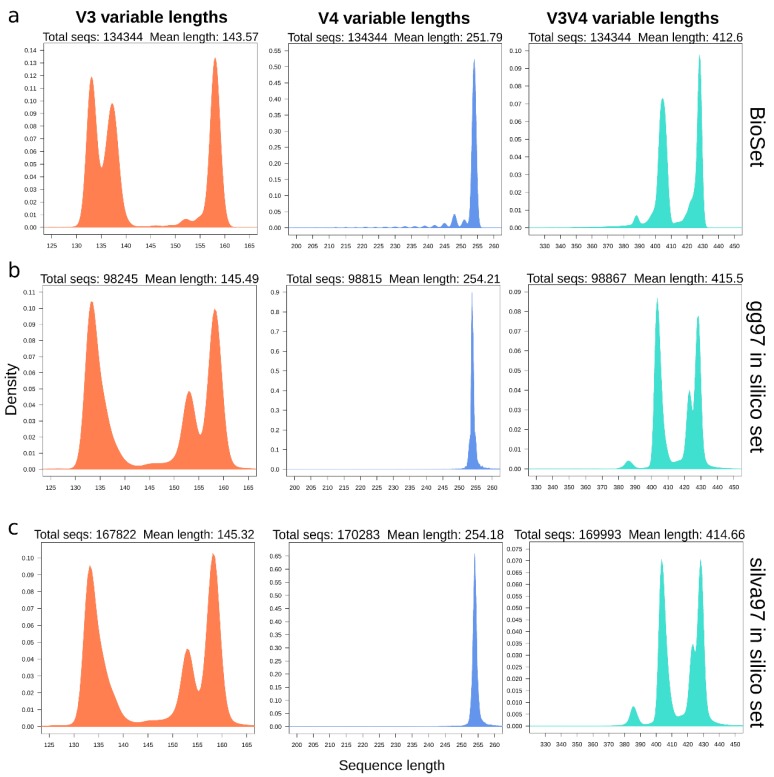
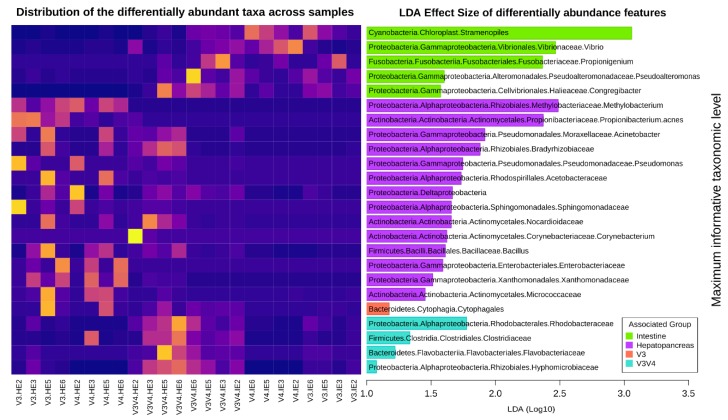
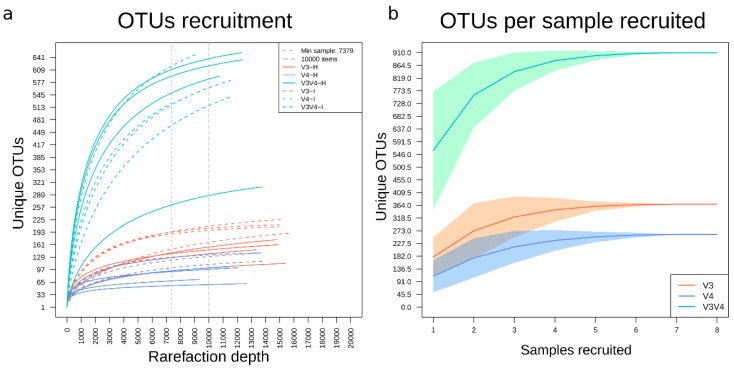
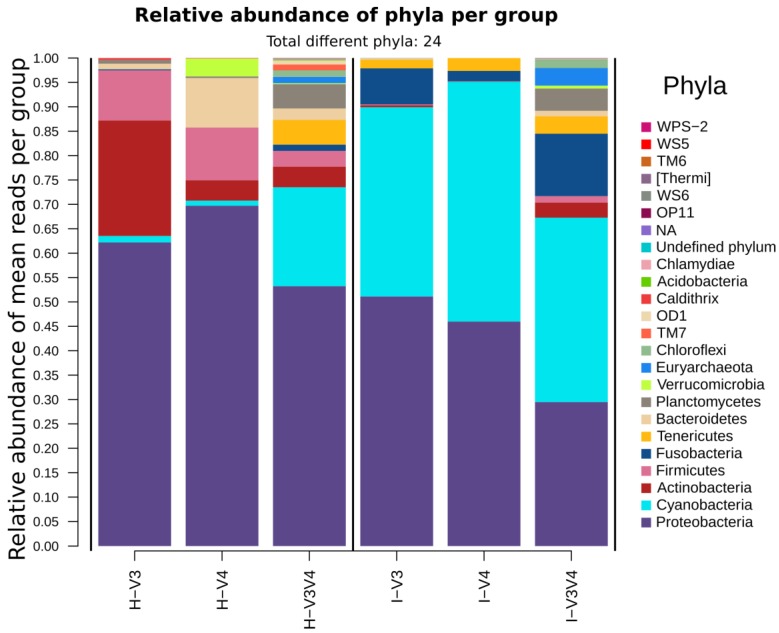
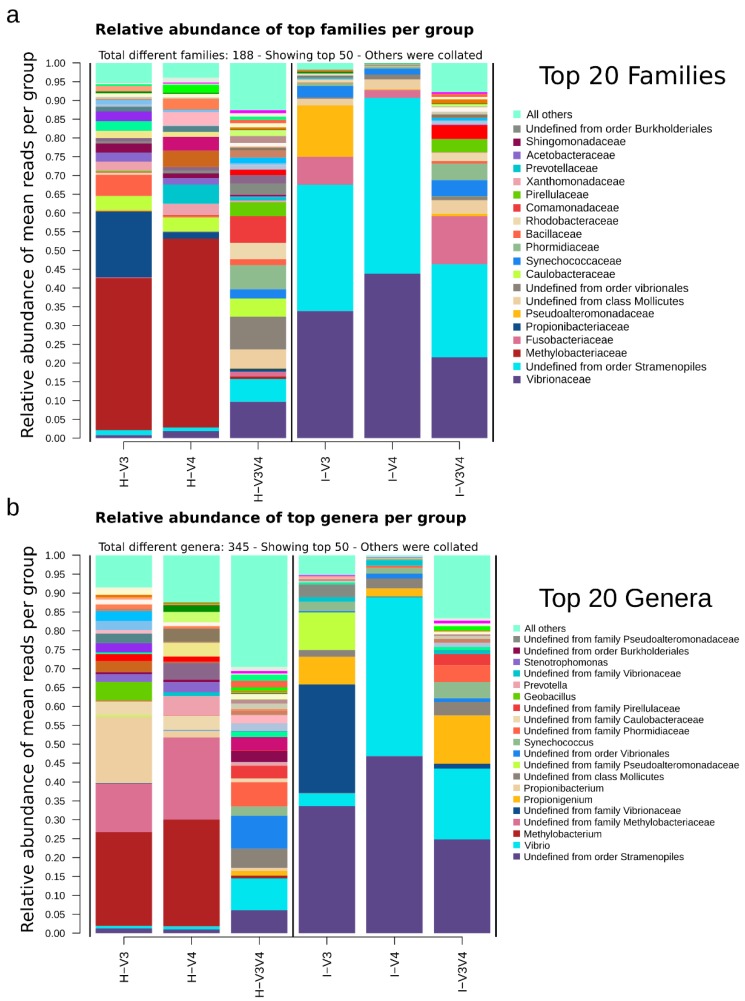
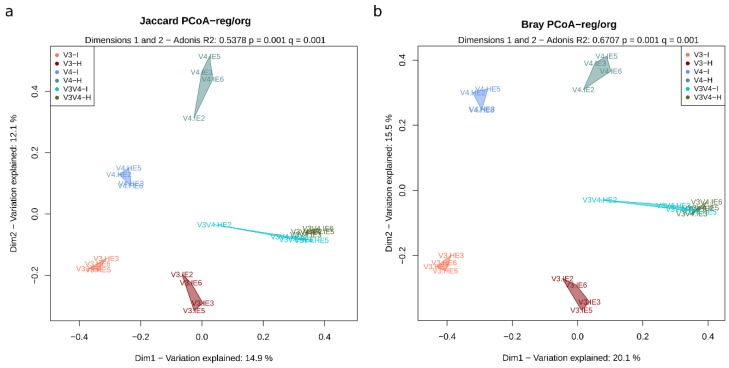
The shrimp has become the most valuable traded marine product in the world, and its microbiota plays an essential role in its development and overall health status. Massive high-throughput sequencing techniques using several hypervariable regions of the 16S rRNA gene are broadly applied in shrimp microbiota studies. However, it is essential to consider that the use of different hypervariable regions can influence the obtained data and the interpretation of the results. The present study compares the shrimp microbiota structure and composition obtained by three types of amplicons: one spanning both the V3 and V4 hypervariable regions (V3V4), one for the V3 region only (V3), and one for the V4 region only (V4) using the same experimental and bioinformatics protocols. Twenty-four samples from hepatopancreas and intestine were sequenced and evaluated using the GreenGenes and silva reference databases for clustering and taxonomic classification. In general, the V3V4 regions resulted in higher richness and diversity, followed by V3 and V4. All three regions establish an apparent clustering effect that discriminates between the two analyzed organs and describe a higher richness for the intestine and a higher diversity for the hepatopancreas samples. Proteobacteria was the most abundant phyla overall, and Cyanobacteria was more common in the intestine, whereas Firmicutes and Actinobacteria were more prevalent in hepatopancreas samples. Also, the genus was significantly abundant in the intestine, as well as and in the hepatopancreas suggesting these taxa as markers for their respective organs independently of the sequenced region. The use of a single hypervariable region such as V3 may be a low-cost alternative that enables an adequate description of the shrimp microbiota, allowing for the development of strategies to continually monitor the microbial communities and detect changes that could indicate susceptibility to pathogens under real aquaculture conditions while the use of the full V3V4 regions can contribute to a more in-depth characterization of the microbial composition.
虾已成为世界上最具价值的贸易海产品,其微生物群在虾的生长发育和整体健康状况中起着至关重要的作用。利用16S rRNA基因的几个高变区的大规模高通量测序技术广泛应用于虾类微生物群研究。然而,必须考虑到使用不同的高变区会影响所获得的数据和结果的解释。本研究使用相同的实验和生物信息学方案,比较了通过三种扩增子获得的虾类微生物群结构和组成:一种跨越V3和V4高变区(V3V4),一种仅针对V3区(V3),另一种仅针对V4区(V4)。对来自肝胰腺和肠道的24个样本进行测序,并使用GreenGenes和silva参考数据库进行聚类和分类学分类评估。总体而言,V3V4区的丰富度和多样性更高,其次是V3和V4。所有三个区域都建立了明显的聚类效应,能够区分两个分析的器官,并表明肠道样本的丰富度更高,肝胰腺样本的多样性更高。变形菌门是总体上最丰富的门类,蓝细菌在肠道中更常见,而厚壁菌门和放线菌门在肝胰腺样本中更普遍。此外,[具体属名1]属在肠道中显著丰富,[具体属名2]和[具体属名3]在肝胰腺中显著丰富,这表明这些分类群是其各自器官的标志物,与测序区域无关。使用单个高变区(如V3)可能是一种低成本的替代方法,能够充分描述虾类微生物群,有助于制定策略来持续监测微生物群落,并检测在实际水产养殖条件下可能表明对病原体易感性的变化,而使用完整的V3V4区有助于更深入地表征微生物组成。