Microbiome Unit, Canadian Centre for Computational Genomics, Department of Human Genetics, McGill University, Montréal, Canada.
Centre for Microbiome Research, McGill University, Montréal, Canada.
NPJ Biofilms Microbiomes. 2024 Aug 29;10(1):71. doi: 10.1038/s41522-024-00545-1.
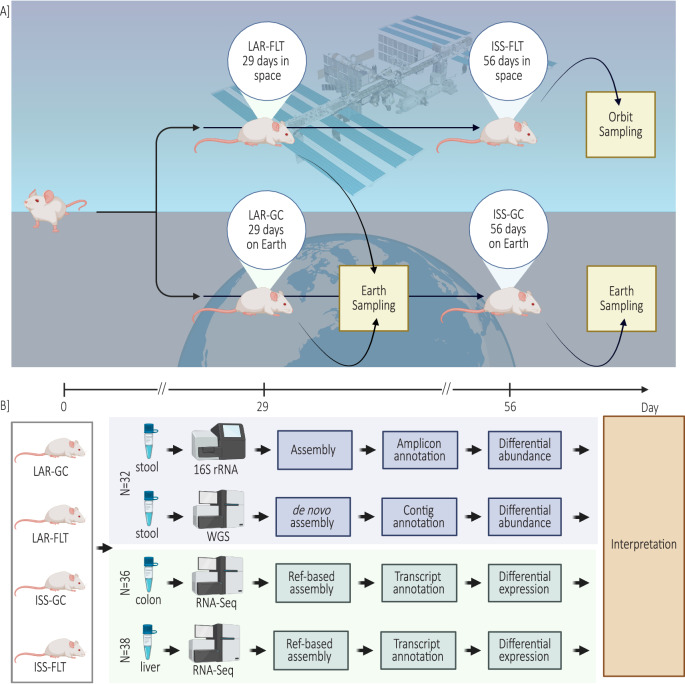
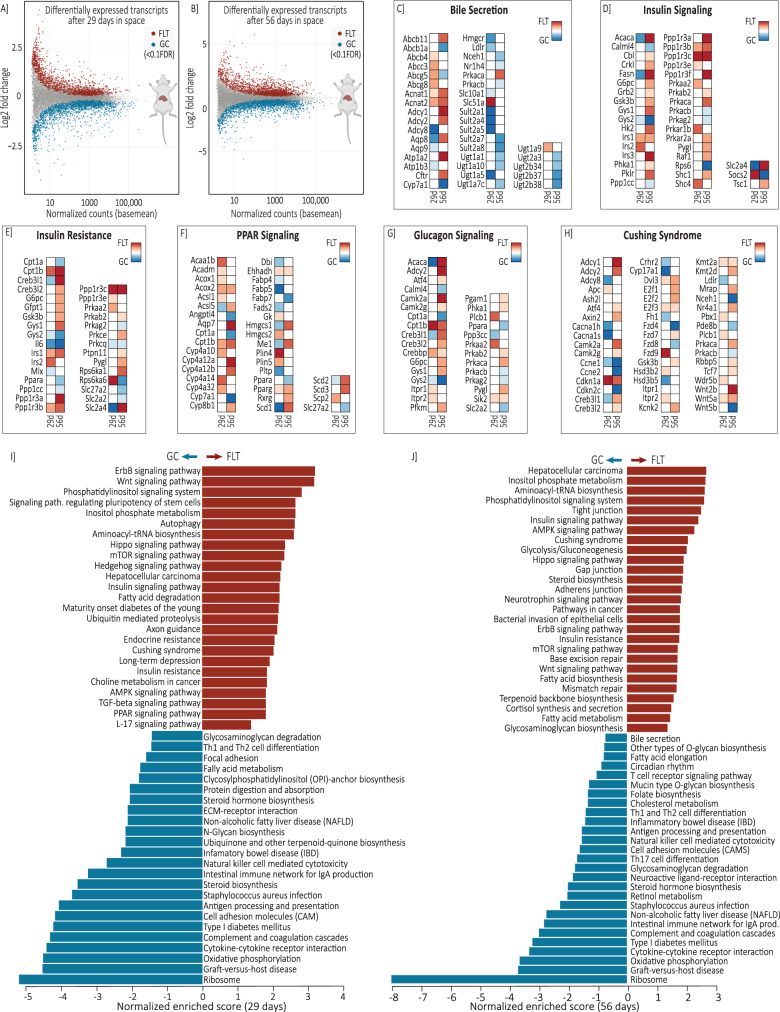
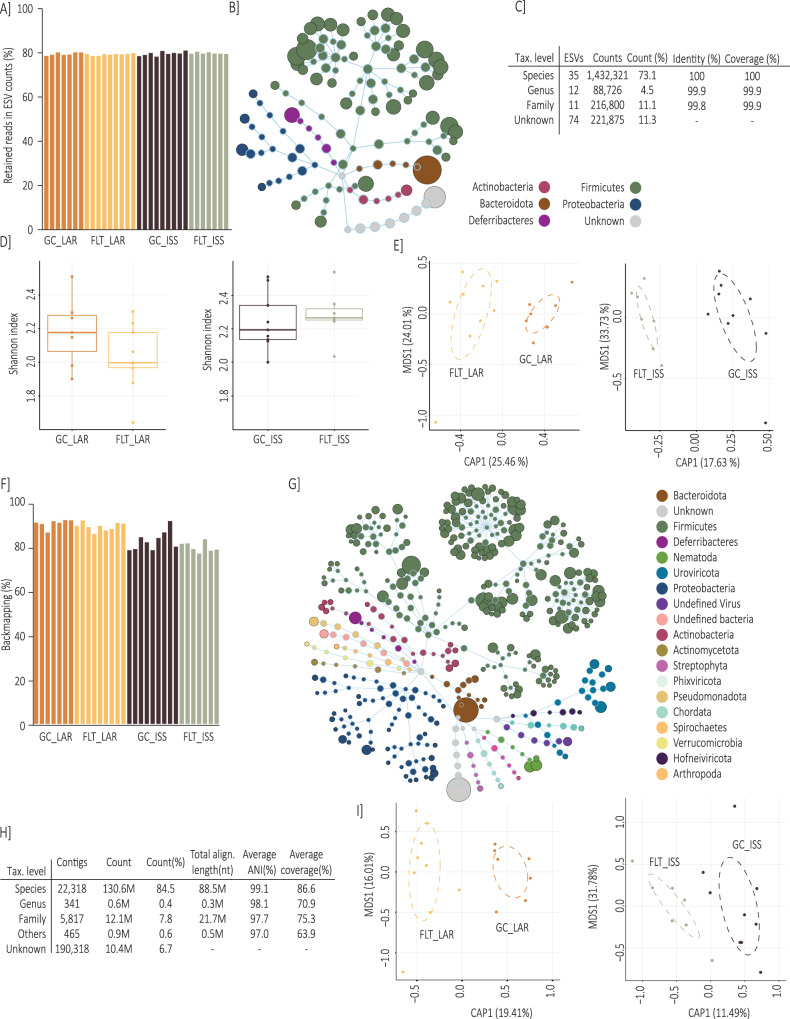
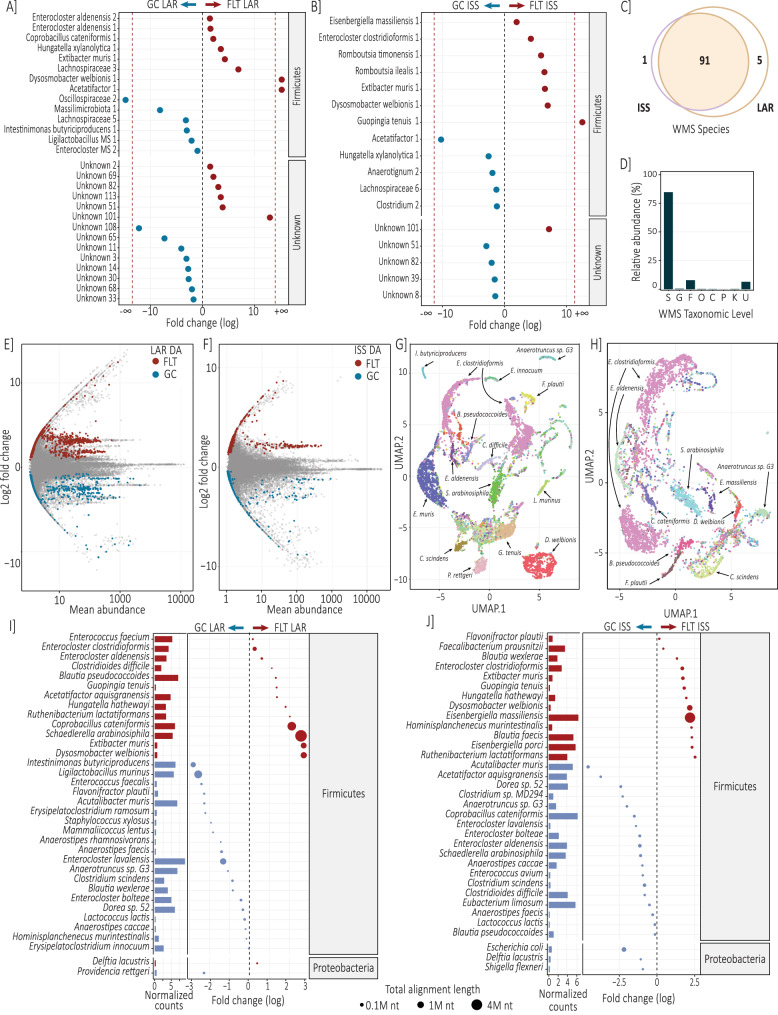
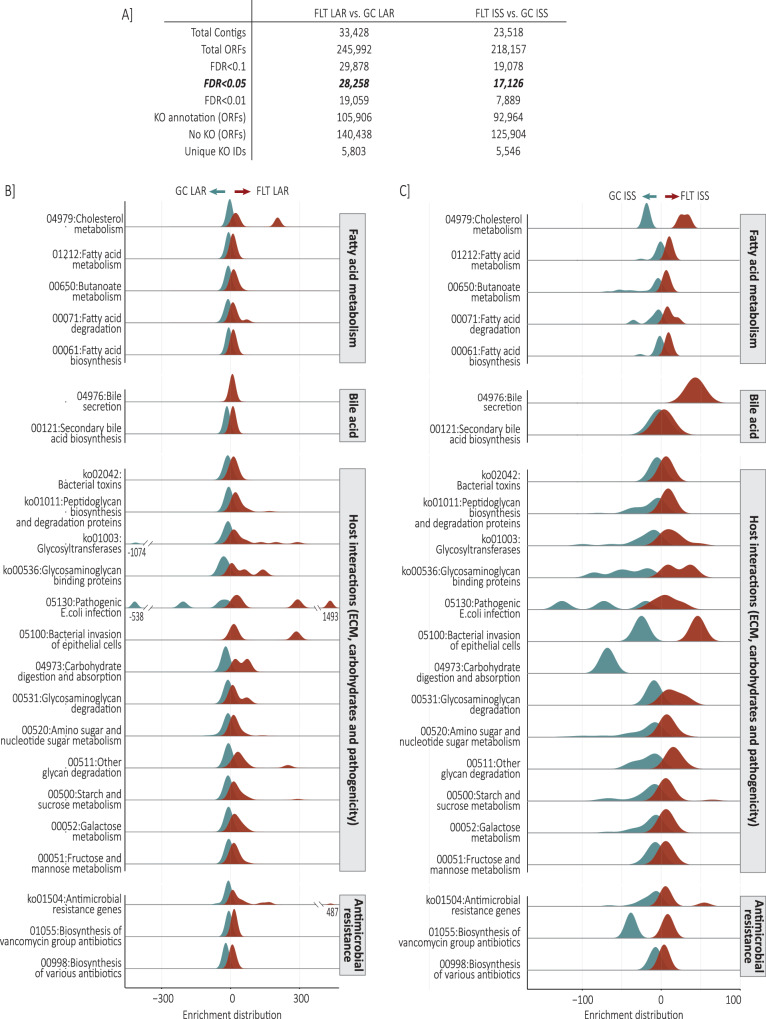
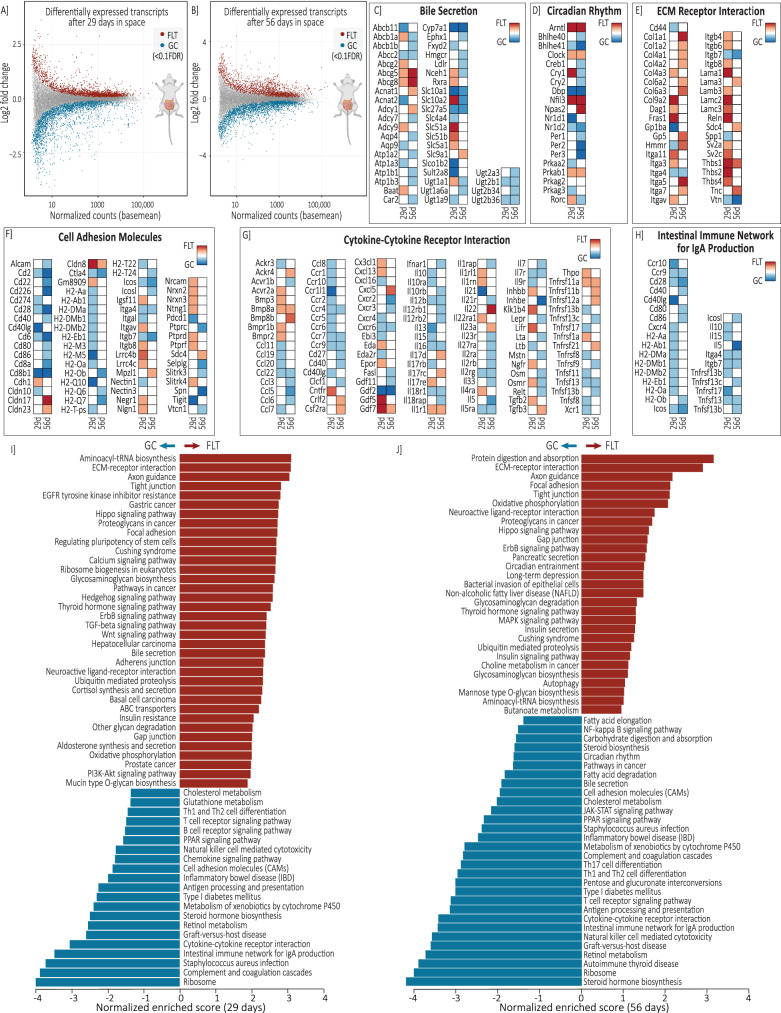
The ISS rodent habitat has provided crucial insights into the impact of spaceflight on mammals, inducing symptoms characteristic of liver disease, insulin resistance, osteopenia, and myopathy. Although these physiological responses can involve the microbiome on Earth, host-microbiota interactions during spaceflight are still being elucidated. We explore murine gut microbiota and host gene expression in the colon and liver after 29 and 56 days of spaceflight using multiomics. Metagenomics revealed significant changes in 44 microbiome species, including relative reductions in bile acid and butyrate metabolising bacteria like Extibacter muris and Dysosmobacter welbionis. Functional prediction indicate over-representation of fatty acid and bile acid metabolism, extracellular matrix interactions, and antibiotic resistance genes. Host gene expression described corresponding changes to bile acid and energy metabolism, and immune suppression. These changes imply that interactions at the host-gut microbiome interface contribute to spaceflight pathology and that these interactions might critically influence human health and long-duration spaceflight feasibility.
国际空间站啮齿动物栖息地为研究太空飞行对哺乳动物的影响提供了重要见解,诱发了与肝病、胰岛素抵抗、骨质疏松症和肌病特征一致的症状。尽管这些生理反应在地球上可能涉及微生物组,但宿主-微生物组在太空飞行中的相互作用仍在阐明之中。我们使用多组学方法研究了经过 29 天和 56 天太空飞行后的小鼠肠道微生物组和结肠及肝脏中的宿主基因表达。宏基因组学揭示了 44 种微生物物种的显著变化,包括胆汁酸和丁酸盐代谢细菌如 Extibacter muris 和 Dysosmobacter welbionis 的相对减少。功能预测表明脂肪酸和胆汁酸代谢、细胞外基质相互作用和抗生素耐药基因过度表达。宿主基因表达描述了胆汁酸和能量代谢以及免疫抑制的相应变化。这些变化意味着宿主-肠道微生物组界面的相互作用导致了太空飞行病理学,并且这些相互作用可能严重影响人类健康和长时间太空飞行的可行性。