School of Life science, Fujian Agriculture and Forestry University, Fuzhou, Fujian, China.
Fujian Key Laboratory of Medical Measurement, Fujian Academy of Medical Sciences, Fuzhou, Fujian, China.
PLoS One. 2019 Mar 13;14(3):e0212863. doi: 10.1371/journal.pone.0212863. eCollection 2019.
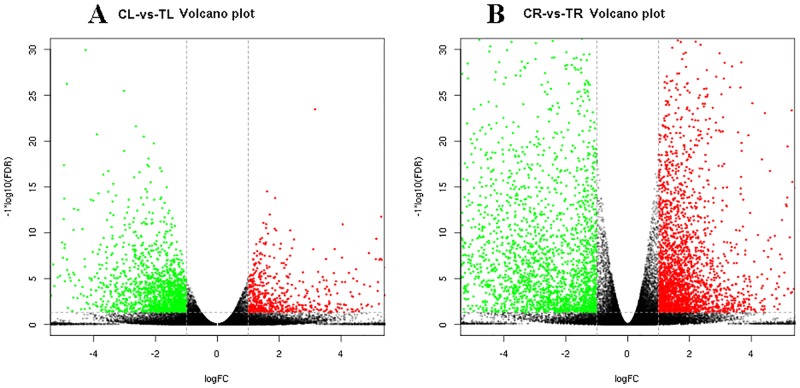
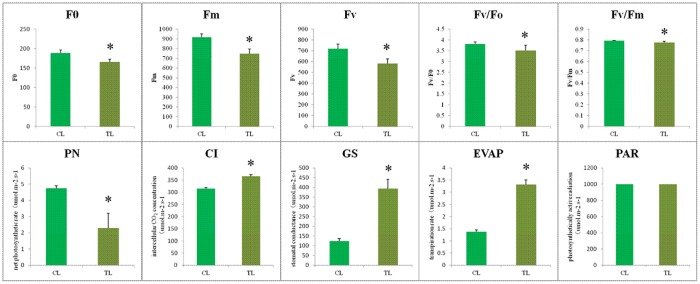
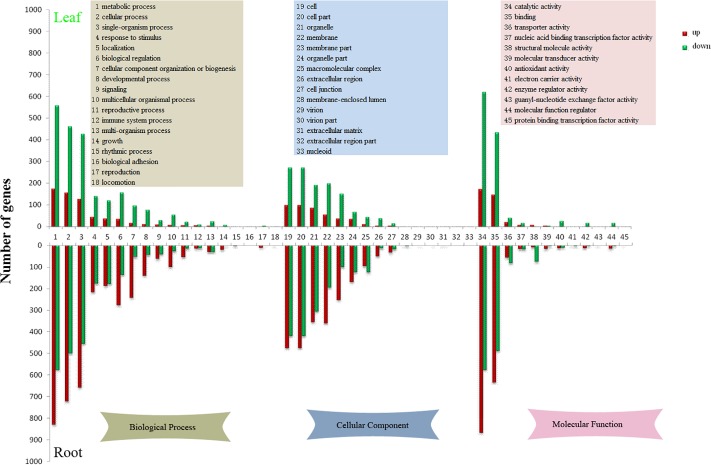
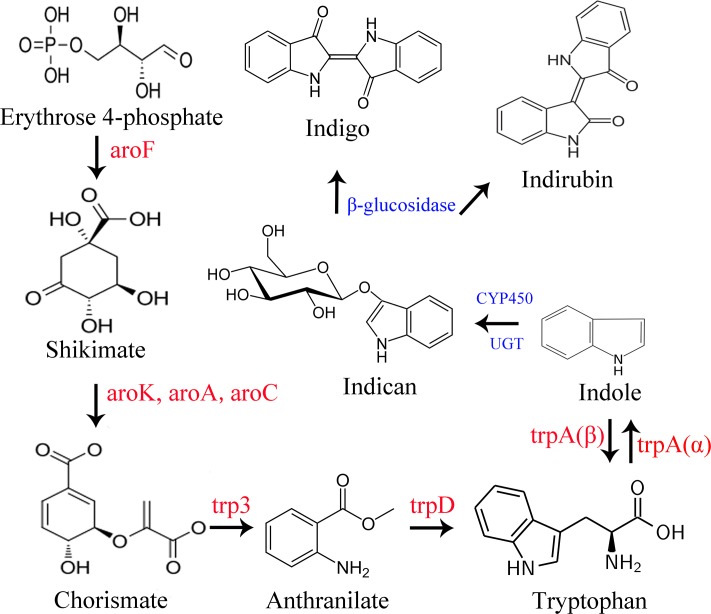
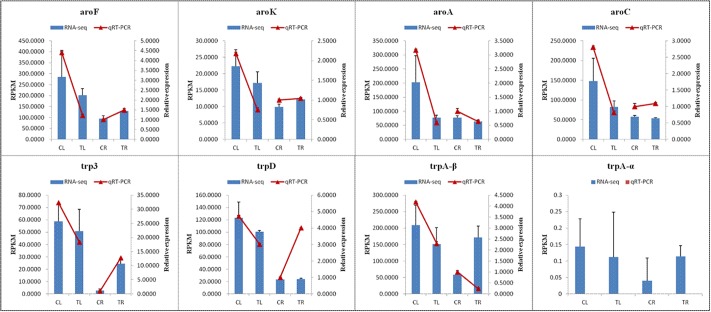
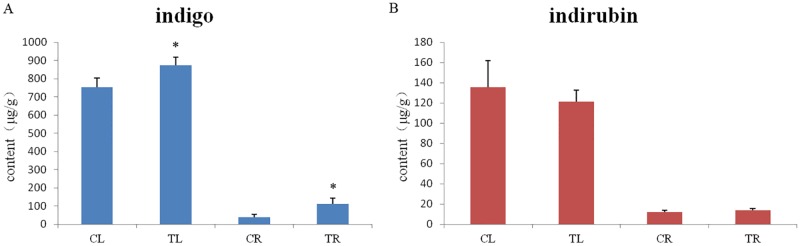
Baphicacanthus cusia (Nees) Bremek (B. cusia) is an effective herb for the treatment of acute promyelocytic leukemia and psoriasis in traditional Chinese medicine. Methyl jasmonate (MeJA) is a well-known signaling phytohormone that triggers gene expression in secondary metabolism. Currently, MeJA-mediated biosynthesis of indigo and indirubin in B. cusia is not well understood. In this study, we analyzed the content of indigo and indirubin in leaf and root tissues of B. cusia with high-performance liquid chromatography and measured photosynthetic characteristics of leaves treated by MeJA using FluorCam6 Fluorometer and chlorophyll fluorescence using the portable photosynthesis system CIRAS-2. We performed de novo RNA-seq of B. cusia leaf and root transcriptional profiles to investigate differentially expressed genes (DEGs) in response to exogenous MeJA application. The amount of indigo in MeJA-treated leaves were higher than that in controled leaves (p = 0.004), and the amounts of indigo in treated roots was higher than that in controlled roots (p = 0.048); Chlorophyll fluorescence of leaves treated with MeJA were significantly decreased. Leaves treated with MeJA showed lower photosynthetic rate compared to the control in the absence of MeJA. Functional annotation of DEGs showed the DEGs related to growth and development processes were down-regulated in the treated leaves, while most of the unigenes involved in the defense response were up-regulated in treated roots. This coincided with the effects of MeJA on photosynthetic characteristics and chlorophyll fluorescence. The qRT-PCR results showed that MeJA appears to down-regulate the gene expression of tryptophan synthase β-subunits (trpA-β) in leaves but increased the gene expression of anthranilate synthase (trp 3) in roots responsible for increased indigo content. The results showed that MeJA suppressed leaf photosynthesis for B. cusia and this growth-defense trade-off may contribute to the improved adaptability of B. cusia in changing environments.
美登木(Baphicacanthus cusia (Nees) Bremek)是一种治疗急性早幼粒细胞白血病和银屑病的中药。茉莉酸甲酯(MeJA)是一种众所周知的信号植物激素,可触发次生代谢物的基因表达。目前,美登木中靛蓝和靛玉红的 MeJA 介导生物合成还不太清楚。在这项研究中,我们使用高效液相色谱法分析了美登木叶片和根组织中靛蓝和靛玉红的含量,并使用 FluorCam6 荧光计测量了 MeJA 处理叶片的光合作用特性,使用便携式光合作用系统 CIRAS-2 测量了叶绿素荧光。我们对美登木叶片和根转录组的从头 RNA-seq 进行了分析,以研究外源性 MeJA 应用下差异表达基因(DEGs)的表达情况。MeJA 处理叶片中的靛蓝含量高于对照叶片(p = 0.004),处理根中的靛蓝含量高于对照根(p = 0.048);MeJA 处理叶片的叶绿素荧光显著降低。与对照相比,在没有 MeJA 的情况下,用 MeJA 处理的叶片表现出较低的光合速率。DEGs 的功能注释表明,处理叶片中与生长发育过程相关的 DEGs 下调,而处理根中大多数与防御反应相关的基因上调。这与 MeJA 对光合作用特性和叶绿素荧光的影响一致。qRT-PCR 结果表明,MeJA 似乎下调了叶片中色氨酸合酶β亚基(trpA-β)的基因表达,但增加了根中负责增加靛蓝含量的邻氨基苯甲酸合酶(trp 3)的基因表达。结果表明,MeJA 抑制了美登木的叶片光合作用,这种生长-防御权衡可能有助于美登木在不断变化的环境中提高适应性。