Chen Haimei, Shao Junjie, Zhang Hui, Jiang Mei, Huang Linfang, Zhang Zhao, Yang Dan, He Molly, Ronaghi Mostafa, Luo Xi, Sun Botao, Wu Wuwei, Liu Chang
Key Laboratory of Bioactive Substances and Resource Utilization of Chinese Herbal Medicine, Ministry of Education, Institute of Medicinal Plant Development, Chinese Academy of Medical Sciences and Peking Union Medical College, Beijing, China.
Illumina, Inc., San Diego, CA, United States.
Front Plant Sci. 2018 Mar 14;9:324. doi: 10.3389/fpls.2018.00324. eCollection 2018.
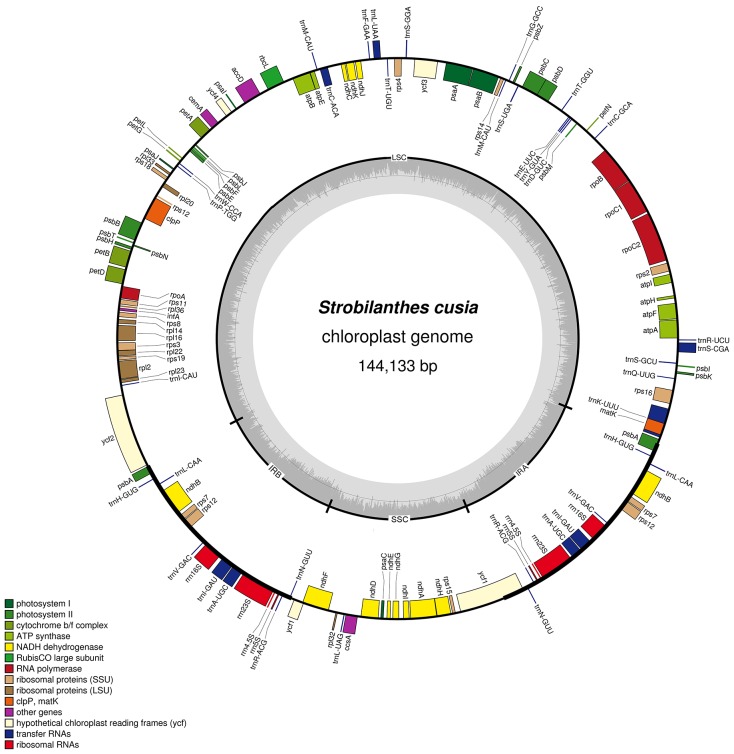
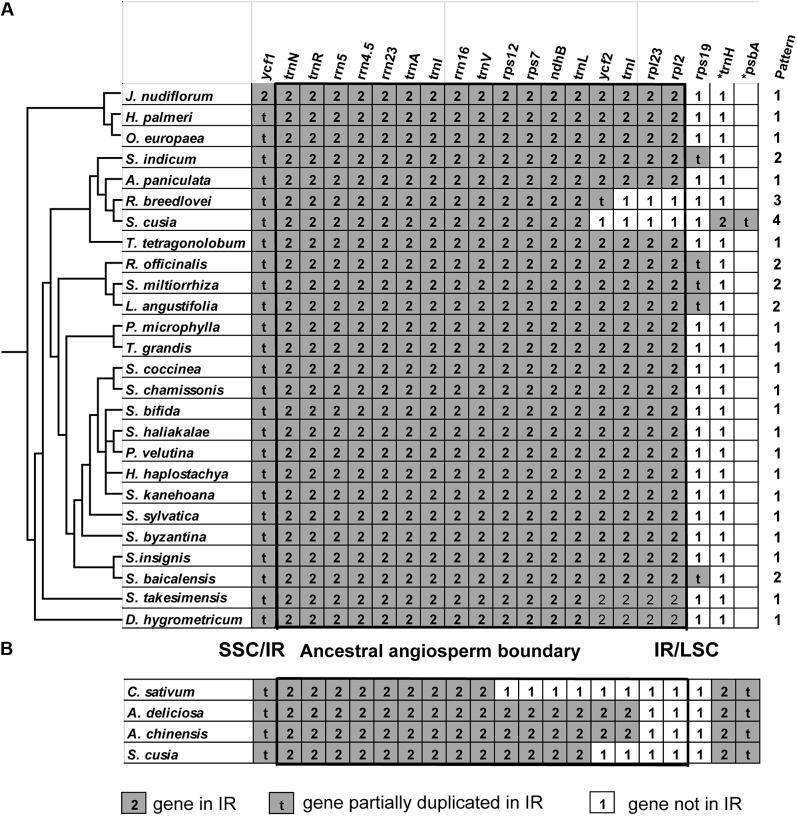
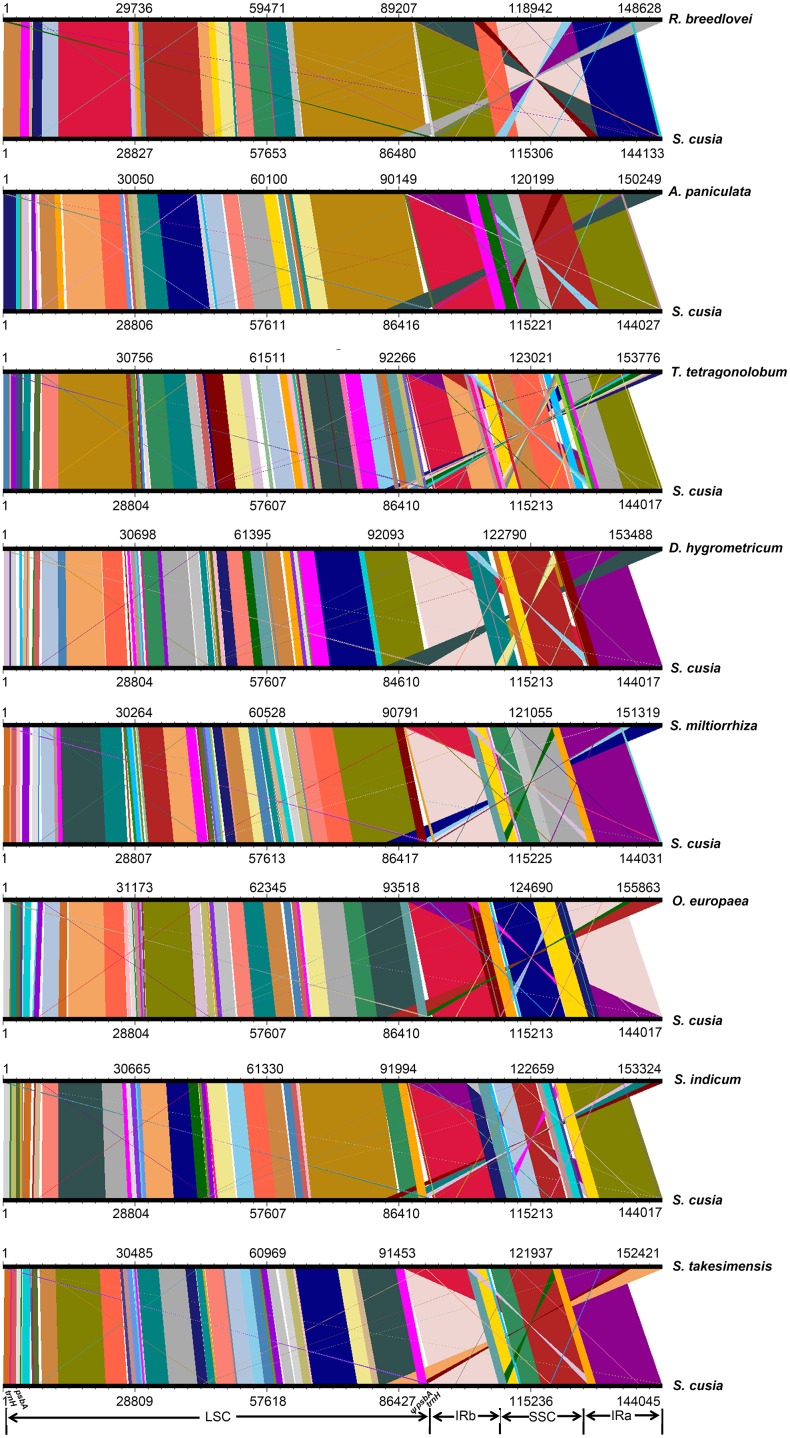
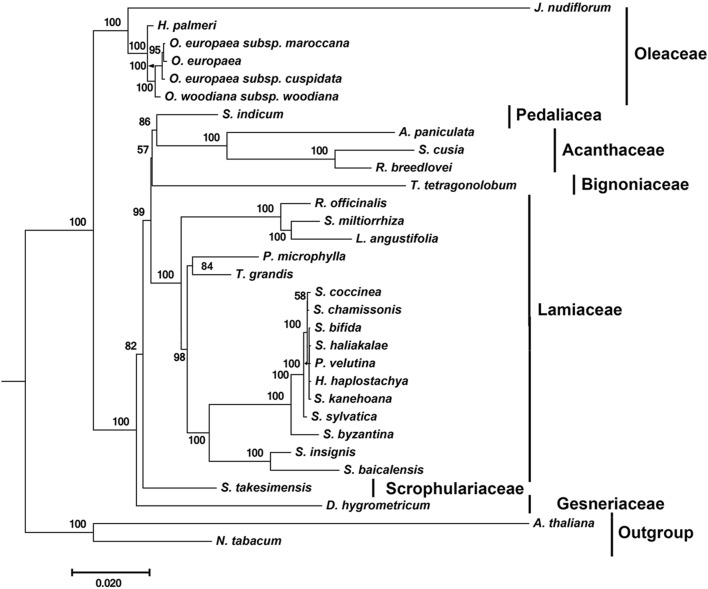
Ban-Lan-Gen, the root tissues derived from several morphologically indistinguishable plant species, have been used widely in traditional Chinese medicines for numerous years. The identification of reliable markers to distinguish various source plant species is critical for the effective and safe use of products containing Ban-Lan-Gen. Here, we analyzed and characterized the complete chloroplast (cp) genome sequence of (Nees) Kuntze to identify high-resolution markers for the species determination of Southern Ban-Lan-Gen. Total DNA was extracted and subjected to next-generation sequencing. The cp genome was then assembled, and the gaps were filled using PCR amplification and Sanger sequencing. Genome annotation was conducted using CpGAVAS web server. The genome was 144,133 bp in length, presenting a typical quadripartite structure of large (LSC; 91,666 bp) and small (SSC; 17,328 bp) single-copy regions separated by a pair of inverted repeats (IRs; 17,811 bp). The genome encodes 113 unique genes, including 79 protein-coding, 30 transfer RNA, and 4 ribosomal RNA genes. A total of 20 tandem, 2 forward, and 6 palindromic repeats were detected in the genome. A phylogenetic analysis based on 65 protein-coding genes showed that was closely related to and , which belong to the same family, Acanthaceae. One interesting feature is that the IR regions apparently undergo simultaneous contraction and expansion, resulting in the presence of single copies of rps19, rpl2, rpl23, and ycf2 in the LSC region and the duplication of psbA and trnH genes in the IRs. This study provides the first complete cp genome in the genus , containing critical information for the classification of various species in the future. This study also provides the foundation for precisely determining the plant sources of Ban-Lan-Gen.
板蓝根,来源于几种形态上难以区分的植物物种的根组织,多年来一直在传统中药中广泛使用。鉴定可靠的标记物以区分各种来源植物物种对于有效和安全使用含有板蓝根的产品至关重要。在此,我们分析并表征了(Nees)Kuntze的完整叶绿体(cp)基因组序列,以鉴定用于确定南板蓝根物种的高分辨率标记物。提取总DNA并进行下一代测序。然后组装cp基因组,并使用PCR扩增和桑格测序填补缺口。使用CpGAVAS网络服务器进行基因组注释。该基因组长度为144,133 bp,呈现出典型的四分体结构,由一对反向重复序列(IRs;17,811 bp)分隔的大单拷贝区域(LSC;91,666 bp)和小单拷贝区域(SSC;17,328 bp)。该基因组编码113个独特基因,包括79个蛋白质编码基因、30个转运RNA基因和4个核糖体RNA基因。在基因组中总共检测到20个串联重复、2个正向重复和6个回文重复。基于65个蛋白质编码基因的系统发育分析表明,与属于同一科爵床科的和密切相关。一个有趣的特征是IR区域明显同时发生收缩和扩张,导致LSC区域中rps19、rpl2、rpl23和ycf2存在单拷贝,以及IRs中psbA和trnH基因的重复。本研究提供了该属的首个完整cp基因组,包含未来对各种物种进行分类的关键信息。本研究还为精确确定板蓝根的植物来源提供了基础。