Zhang Weiwen, Qin Peiting, Wang Zhi, Yang Chao, Kollo Lauri, Grzesiak Dariusz, Prashanth Konda Gokuldoss
Guangdong Key Laboratory for Processing and Forming of Advanced Metallic Materials, South China University of Technology, Guangzhou 510640, China.
National Engineering Research Center of Near-net-shape Forming for Metallic Materials, South China University of Technology, Guangzhou 510640, China.
Materials (Basel). 2019 Mar 7;12(5):782. doi: 10.3390/ma12050782.
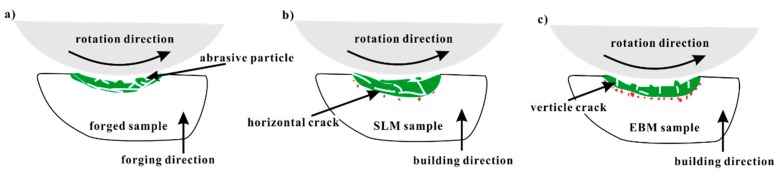
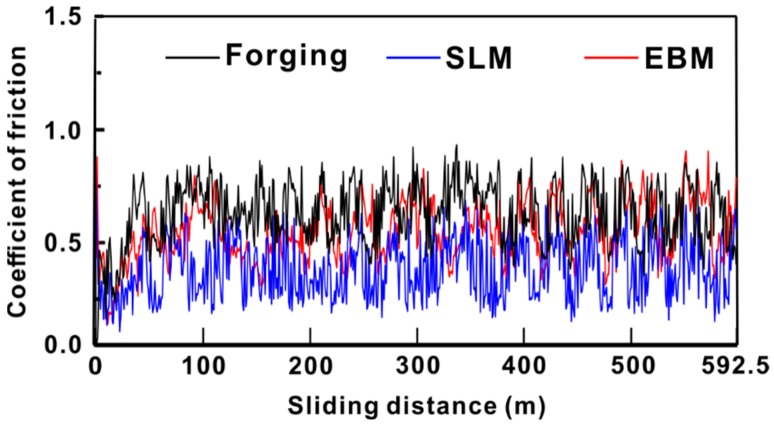
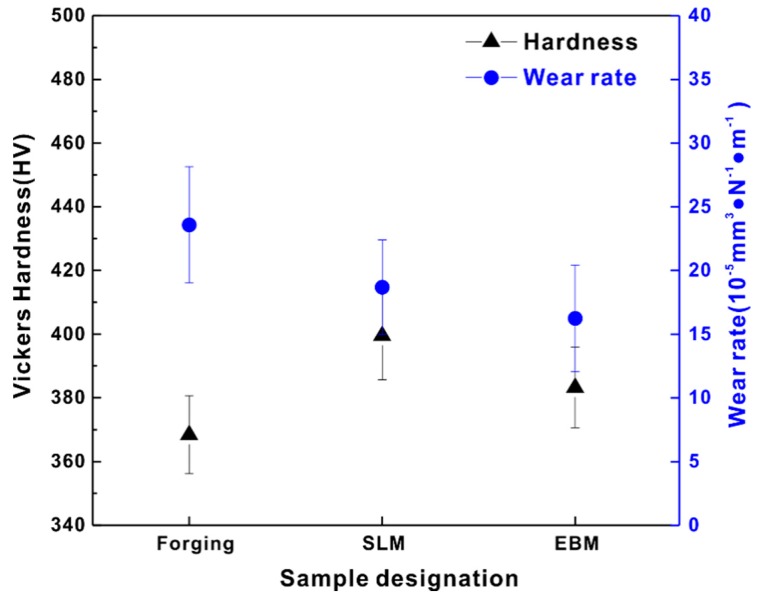
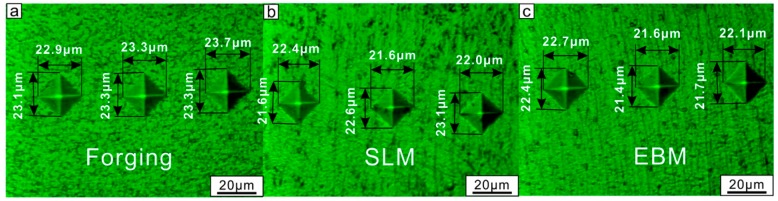
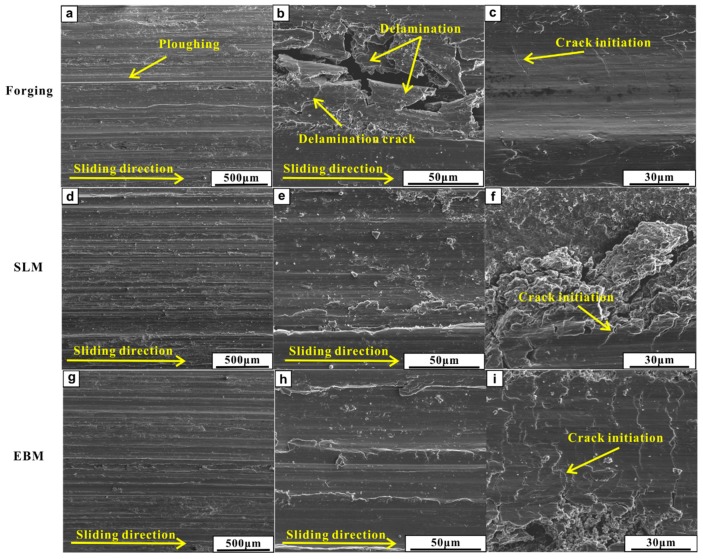
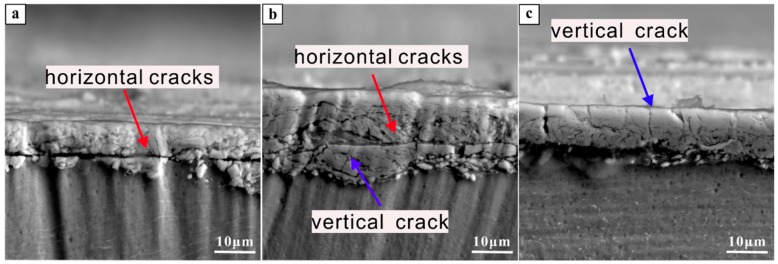
The wear properties of Ti-6Al-4V alloy have drawn great attention in both aerospace and biomedical fields. The present study examines the wear properties of Ti-6Al-4V alloy as prepared by selective laser melting (SLM), electron beam melting (EBM) and conventional forging processes. The SLM and EBM samples show better wear resistance than the forged sample, which correlates to their higher hardness values and weak delamination tendencies. The EBM sample shows a lower wear rate than the SLM sample because of the formation of multiple horizontal cracks in the SLM sample, which results in heavier delamination. The results suggest that additive manufacturing processes offer significantly wear-resistant Ti-6Al-4V specimens in comparison to their counterparts produced by forging.
Ti-6Al-4V合金的磨损性能在航空航天和生物医学领域都备受关注。本研究考察了通过选择性激光熔化(SLM)、电子束熔化(EBM)和传统锻造工艺制备的Ti-6Al-4V合金的磨损性能。SLM和EBM样品显示出比锻造样品更好的耐磨性,这与其较高的硬度值和较弱的分层倾向相关。由于SLM样品中形成了多条水平裂纹,导致更严重的分层,EBM样品的磨损率低于SLM样品。结果表明,与锻造生产的Ti-6Al-4V试样相比,增材制造工艺可提供显著耐磨的试样。