Division of Gynecologic Oncology, Department of Obstetrics and Gynecologic, University of Iowa Hospitals and Clinics, Iowa City, IA 52242, USA.
Compass Oncology, Portland, OR 97227, USA.
Int J Mol Sci. 2019 Mar 7;20(5):1175. doi: 10.3390/ijms20051175.
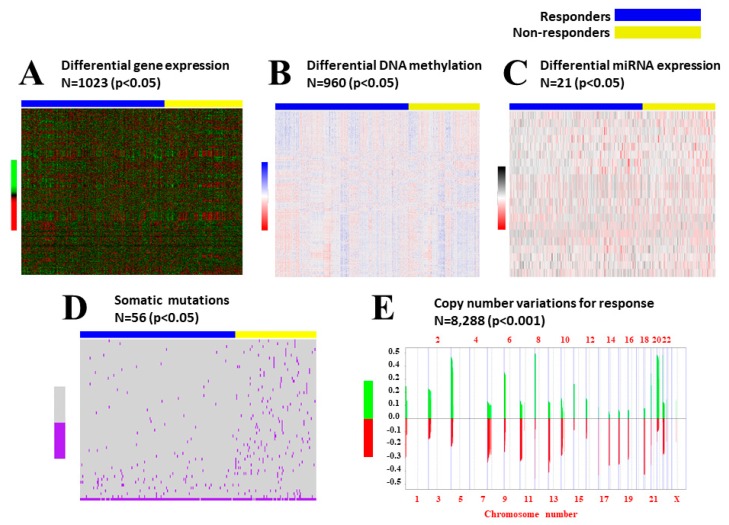
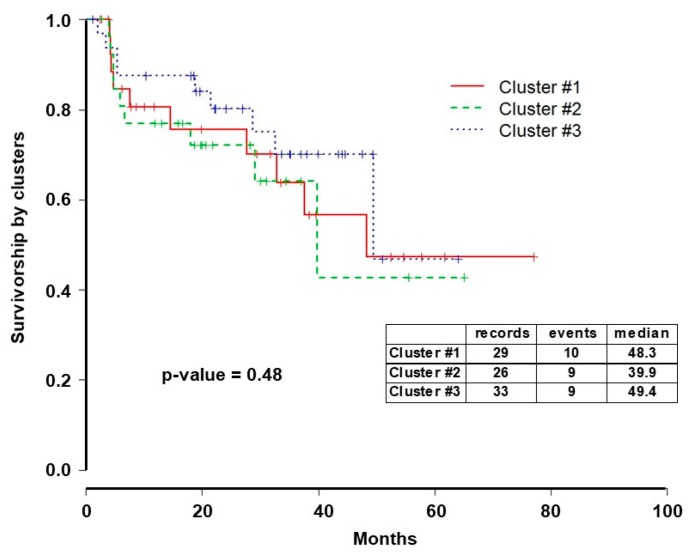
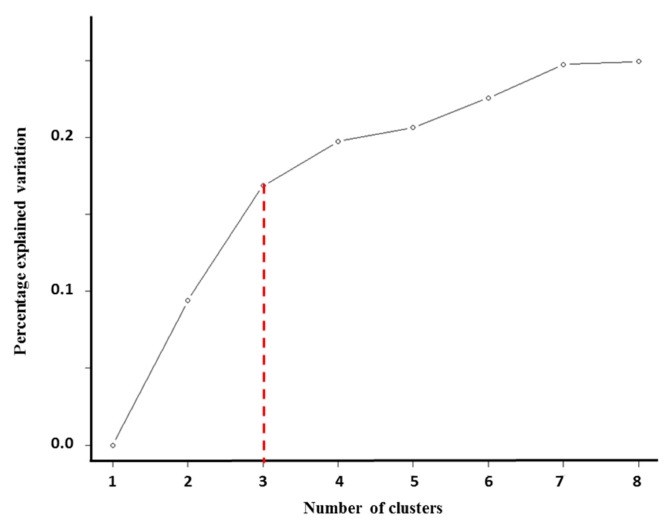
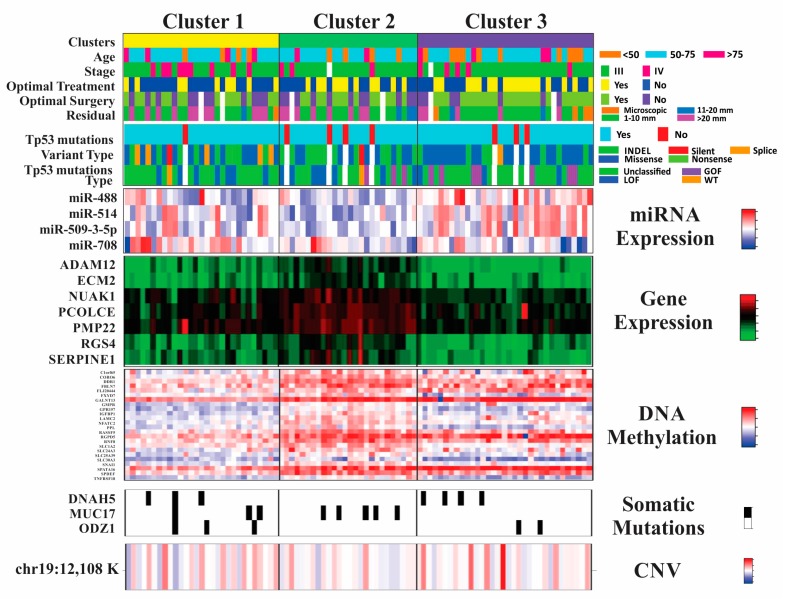
Nearly one-third of patients with high-grade serous ovarian cancer (HGSC) do not respond to initial treatment with platinum-based therapy. Genomic and clinical characterization of these patients may lead to potential alternative therapies. Here, the objective is to classify non-responders into subsets using clinical and molecular features. Using patients from The Cancer Genome Atlas (TCGA) dataset with platinum-resistant or platinum-refractory HGSC, we performed a genome-wide unsupervised cluster analysis that integrated clinical data, gene copy number variations, gene somatic mutations, and DNA promoter methylation. Pathway enrichment analysis was performed for each cluster to identify the targetable processes. Following the unsupervised cluster analysis, three distinct clusters of non-responders emerged. Cluster 1 had overrepresentation of the stage IV disease and suboptimal debulking, under-expression of miRNAs and mRNAs, hypomethylated DNA, "loss of function" mutations, and the overexpression of genes in the pathway. Cluster 2 had low miRNA expression, generalized hypermethylation, mutations, and significant activation of the HIF-1 signaling pathway. Cluster 3 had more optimally cytoreduced stage III patients, overexpression of miRNAs, mixed methylation patterns, and "gain of function" mutations. However, the survival for all clusters was similar. Integration of genomic and clinical data from patients that do not respond to chemotherapy has identified different subgroups or clusters. Pathway analysis further identified the potential alternative therapeutic targets for each cluster.
近三分之一的高级别浆液性卵巢癌(HGSC)患者对初始铂类治疗无反应。对这些患者进行基因组和临床特征分析可能会导致潜在的替代治疗方法。在这里,我们的目的是使用临床和分子特征将无应答者分为亚组。使用来自癌症基因组图谱(TCGA)数据集的铂耐药或铂难治性 HGSC 患者,我们进行了全基因组无监督聚类分析,该分析整合了临床数据、基因拷贝数变化、基因体细胞突变和 DNA 启动子甲基化。对每个聚类进行了途径富集分析,以确定可靶向的过程。在无监督聚类分析之后,出现了三个不同的无应答者聚类。聚类 1 中 IV 期疾病和减瘤不充分的比例过高,miRNA 和 mRNA 表达下调,DNA 低甲基化,“功能丧失”突变,以及通路中的基因过表达。聚类 2 中 miRNA 表达低,广泛的高甲基化, 突变,以及 HIF-1 信号通路的显著激活。聚类 3 中 III 期患者的减瘤更充分,miRNA 过表达,混合甲基化模式,以及“功能获得”突变。然而,所有聚类的生存情况相似。对化疗无反应的患者的基因组和临床数据的整合已经确定了不同的亚组或聚类。途径分析进一步确定了每个聚类的潜在替代治疗靶点。