Department of Pediatrics, Northwestern University Feinberg School of Medicine, 225 East Chicago, Box 86, Chicago, IL, 60611, USA.
Ann & Robert H. Lurie Children's Hospital of Chicago, 225 East Chicago Ave, Box 152, Chicago, IL, 60611, USA.
BMC Med Educ. 2019 Mar 12;19(1):79. doi: 10.1186/s12909-019-1507-0.
Though pneumatic otoscopy improves accurate diagnosis of ear disease, trainees lack proficiency. We evaluated the effect of three different training techniques on medical students' subsequent reported use of basic and pneumatic otoscopy in patient encounters.
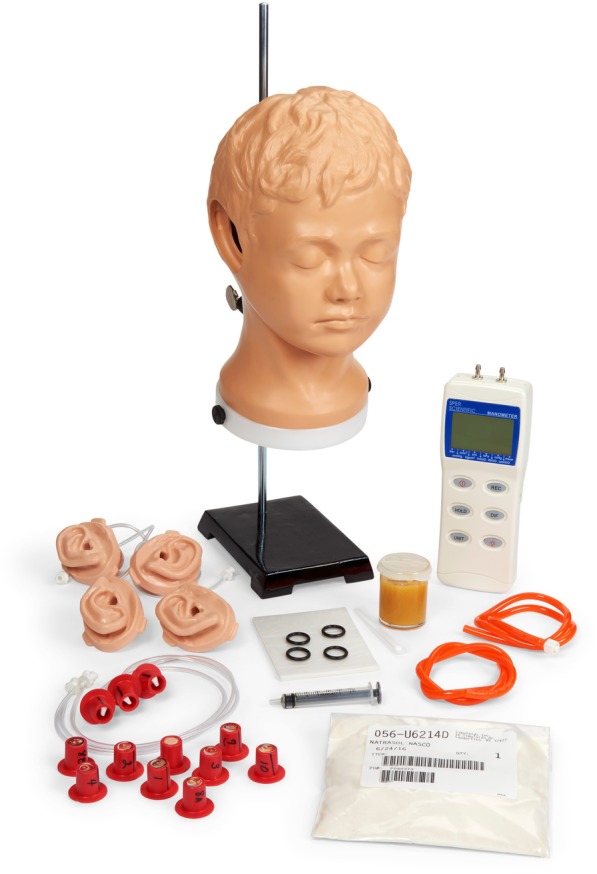
Pediatric clerkship students participated in an ear exam workshop with randomization to one of three educational interventions: task trainer (Life/form®, Fort Atkinson WI), instructional video, or peer practice. Each student received an insufflator bulb and logbook to record otoscopic exams and completed an 18-item anonymous survey at clerkship conclusion.
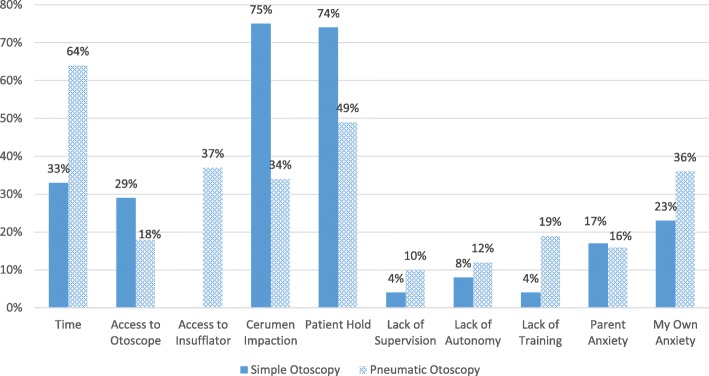
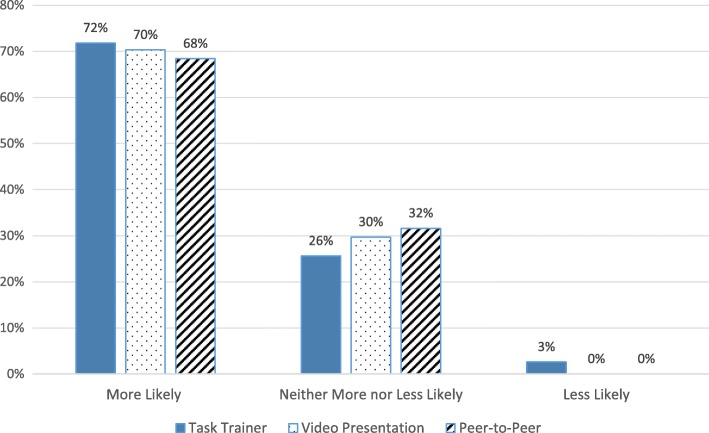
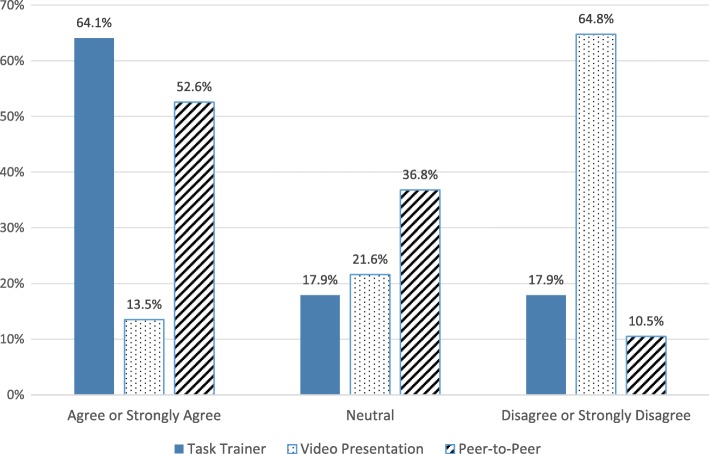
115 of 150 students (77%) completed the survey. There was no significant difference in number of basic or pneumatic otoscopic exams performed based on method of training. Most students (68-72%) felt more likely to perform pneumatic otoscopy after training. Though the majority of students performed basic otoscopy on patients when an ear exam was indicated, they used pneumatic otoscopy less than 10% of the time. Students reported significant barriers to otoscopy: time, access to equipment, cerumen impaction, patient hold, and anxiety. Student comments described a culture where insufflation was neither practiced nor valued by supervising physicians.
Training in pneumatic otoscopy can increase student comfort, but barriers exist to using the skill in clinical practice.
虽然气动耳镜检查可提高耳部疾病诊断的准确性,但受训者对此缺乏熟练度。我们评估了三种不同培训技术对医学生在患者就诊时后续报告使用基本耳镜检查和气动耳镜检查的影响。
儿科学实习学生参加了耳部检查研讨会,随机分为三组教育干预措施之一:任务训练器(Life/form®,威斯康星州福特阿特金森)、教学视频或同伴实践。每位学生都收到了一个吹气球和病历本,以记录耳镜检查,并在实习结束时完成了一项 18 项匿名调查。
150 名学生中有 115 名(77%)完成了调查。根据培训方法,基本或气动耳镜检查的数量没有显著差异。大多数学生(68-72%)在培训后更有可能进行气动耳镜检查。尽管大多数学生在需要耳部检查时会对患者进行基本耳镜检查,但他们使用气动耳镜检查的次数不到 10%。学生报告了耳镜检查的主要障碍:时间、设备的可及性、耳垢堵塞、患者配合和焦虑。学生的评论描述了一种文化,即在这种文化中,吹气既没有被实习医生练习,也没有被重视。
气动耳镜检查的培训可以提高学生的舒适度,但在临床实践中使用该技能存在障碍。