School of Biomolecular and Biomedical Science, Conway Institute, University College Dublin, Belfield, Dublin, Ireland.
School of Biomolecular and Biomedical Science, Conway Institute, University College Dublin, Belfield, Dublin, Ireland
mSphere. 2019 Mar 13;4(2):e00125-19. doi: 10.1128/mSphere.00125-19.
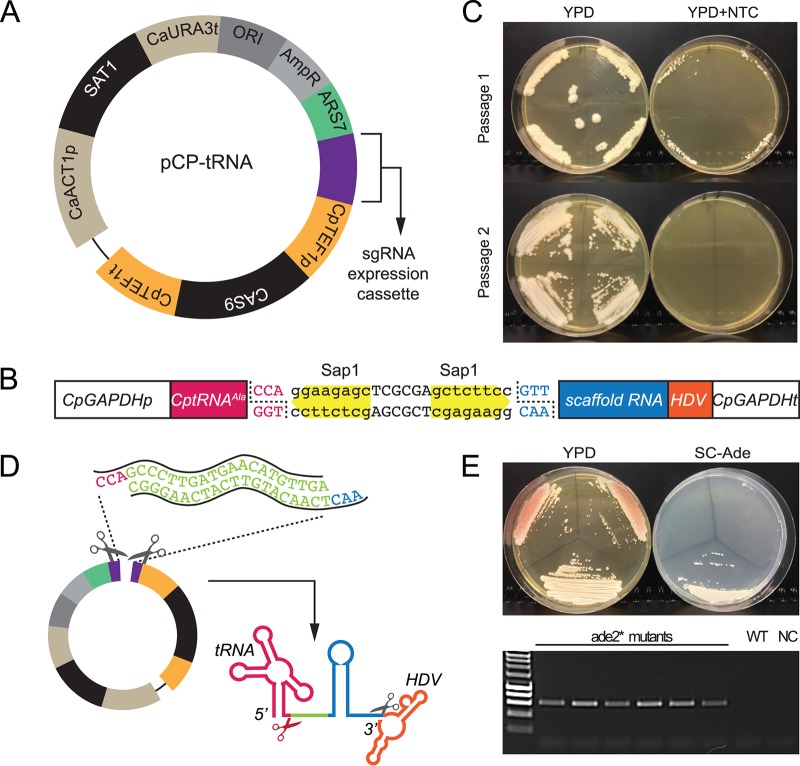
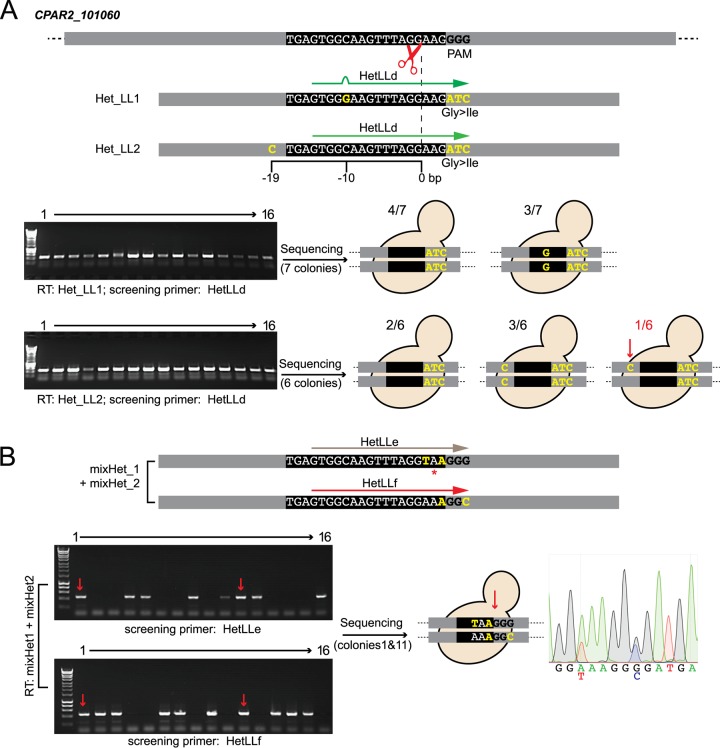
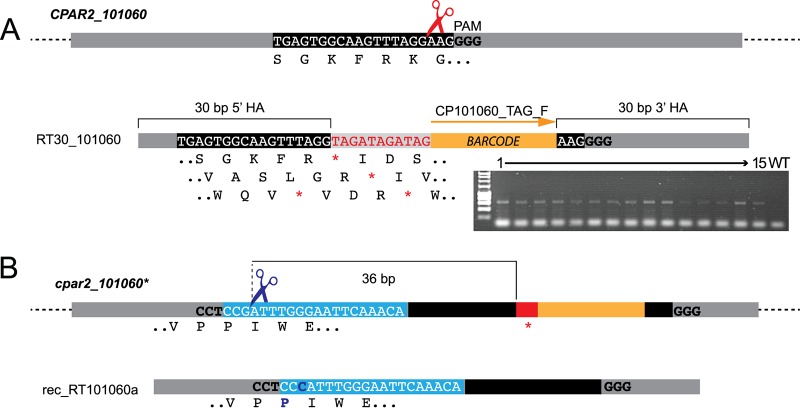
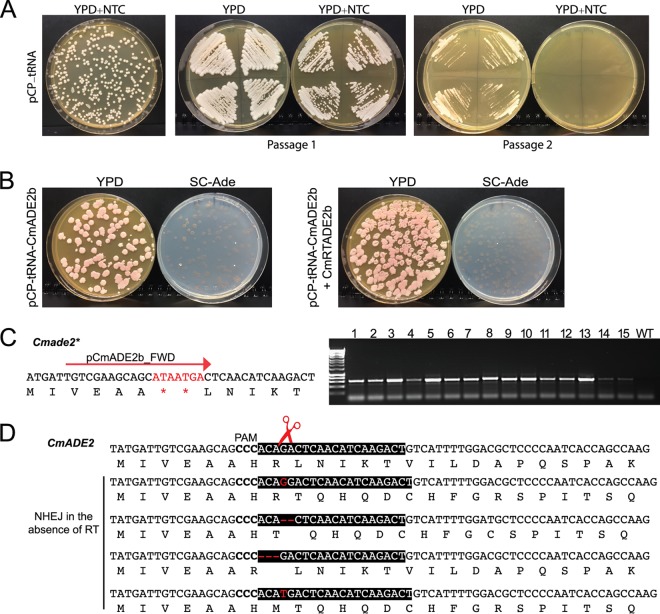
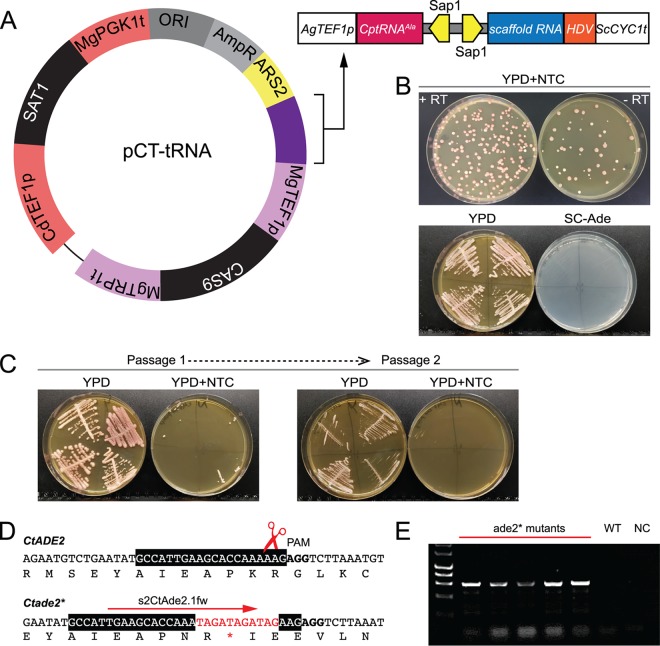
Many species that cause infection have diploid genomes and do not undergo classical meiosis. The application of clustered regularly interspaced short palindromic repeat-Cas9 (CRISPR-Cas9) gene editing systems has therefore greatly facilitated the generation of gene disruptions and the introduction of specific polymorphisms. However, CRISPR methods are not yet available for all species. We describe here an adaption of a previously developed CRISPR system in that uses an autonomously replicating plasmid. Guide RNAs can be introduced in a single cloning step and are released by cleavage between a tRNA and a ribozyme. The plasmid also contains and a selectable nourseothricin marker. It can be used for markerless editing in , , and We also show that CRISPR can easily be used to introduce molecular barcodes and to reintroduce wild-type sequences into edited strains. Heterozygous mutations can be generated, either by careful selection of the distance between the polymorphism and the Cas9 cut site or by providing two different repair templates at the same time. In addition, we have constructed a different autonomously replicating plasmid for CRISPR-Cas9 editing in We show that editing can easily be carried out in multiple isolates. Nonhomologous end joining (NHEJ) repair occurs at a high level in and species are a major cause of infection worldwide. The species associated with infection vary with geographical location and with patient population. Infection with is particularly common in South America and Asia, and infections are more common in the very young. Molecular methods for manipulating the genomes of these species are still lacking. We describe a simple and efficient CRISPR-based gene editing system that can be applied in the species group, including the sister species and We have also constructed a separate system for gene editing in .
许多引起感染的物种具有二倍体基因组,并且不经历经典的减数分裂。因此,聚集规则间隔短回文重复-Cas9(CRISPR-Cas9)基因编辑系统的应用极大地促进了基因敲除和特定多态性的引入。然而,并非所有物种都可应用 CRISPR 方法。我们在此描述了先前开发的 CRISPR 系统的一种适应性,该系统使用自主复制的质粒。向导 RNA 可以在单个克隆步骤中引入,并通过 tRNA 和核酶之间的切割释放。该质粒还包含一个 和一个可选择的潮霉素 N 标记物。它可用于 、 和 中的无标记编辑。我们还表明,CRISPR 可以轻松地用于引入分子条码,并将野生型序列重新引入编辑菌株。杂合突变可以通过仔细选择多态性和 Cas9 切割位点之间的距离或同时提供两个不同的修复模板来产生。此外,我们为 中的 CRISPR-Cas9 编辑构建了另一种自主复制的质粒。我们表明,编辑可以在多个 分离株中轻松进行。非同源末端连接(NHEJ)修复在 和 物种中以高频率发生,这些物种是全球感染的主要原因。与感染相关的物种因地理位置和患者人群而异。感染 在南美洲和亚洲尤为常见,而 感染在非常年幼的人群中更为常见。这些物种的基因组操作分子方法仍然缺乏。我们描述了一种简单有效的基于 CRISPR 的基因编辑系统,可应用于 物种组,包括姐妹种 和 。我们还为 中的基因编辑构建了一个单独的系统。