Jiang Di, Rusling James F
Department of Chemistry University of Connecticut Storrs CT 06269 United States.
Department of Surgery Neag Cancer Center, UConn Health Farmington CT 06032 United States.
ChemistryOpen. 2019 Feb 22;8(3):252-265. doi: 10.1002/open.201800292. eCollection 2019 Mar.
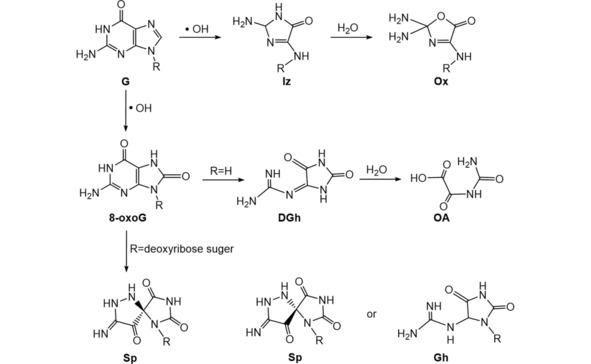
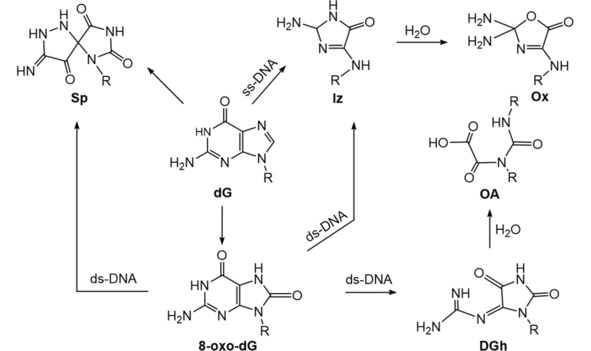
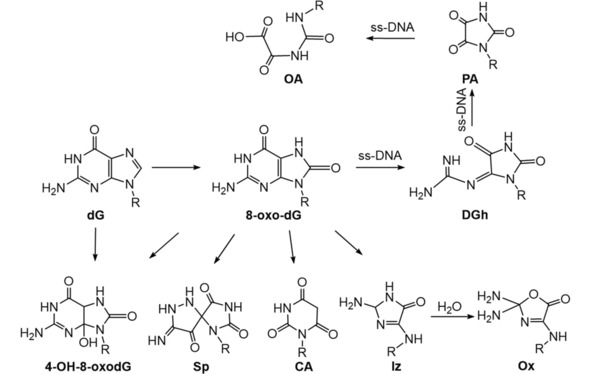
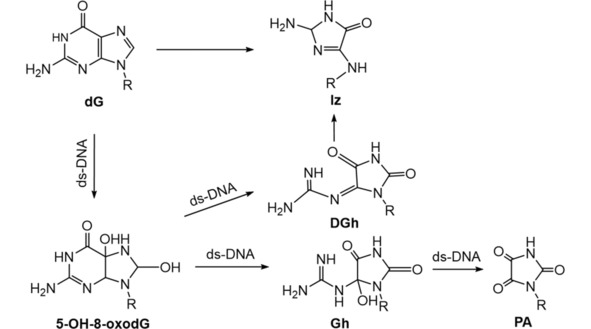
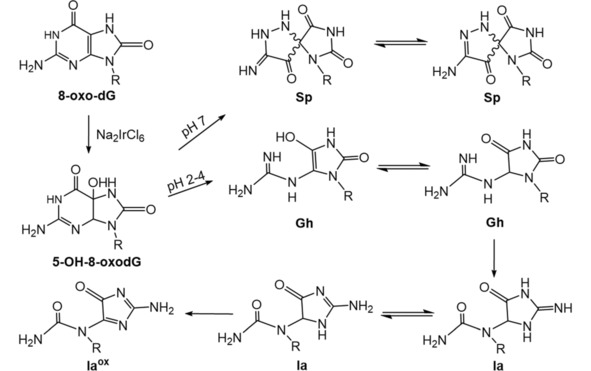
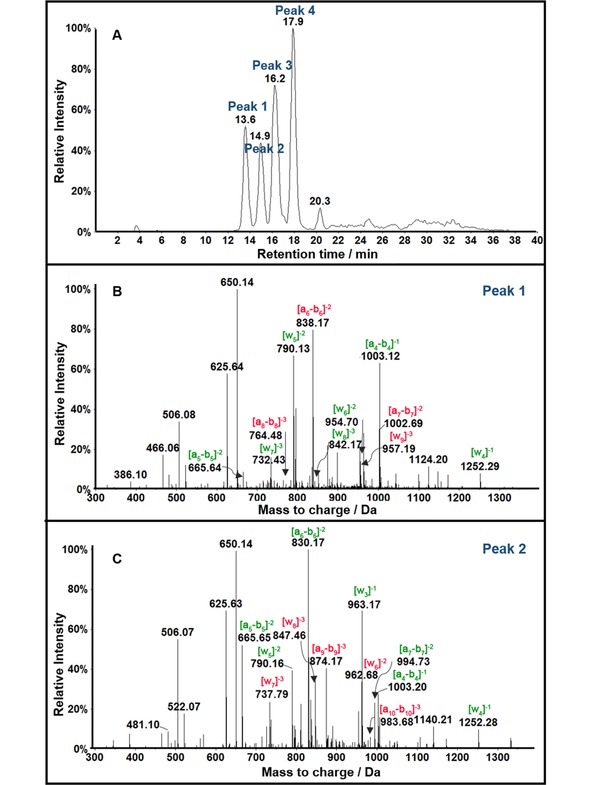
The chemistry of DNA and its repair selectivity control the influence of genomic oxidative stress on the development of serious disorders such as cancer and heart diseases. DNA is oxidized by endogenous reactive oxygen species (ROS) in vivo or in vitro as a result of high energy radiation, non-radiative metabolic processes, and other consequences of oxidative stress. Some oxidations of DNA and tumor suppressor gene p53 are thought to be mutagenic when not repaired. For example, site-specific oxidations of p53 tumor suppressor gene may lead to cancer-related mutations at the oxidation site codon. This review summarizes the research on the primary products of the most easily oxidized nucleobase guanine (G) when different oxidation methods are used. Guanine is by far the most oxidized DNA base. The primary initial oxidation product of guanine for most, but not all, pathways is 8-oxoguanine (8-oxoG). With an oxidation potential much lower than G, 8-oxoG is readily susceptible to further oxidation, and the products often depend on the oxidants. Specific products may control the types of subsequent mutations, but mediated by gene repair success. Site-specific oxidations of p53 tumor suppressor gene have been reported at known mutation hot spots, and the codon sites also depend on the type of oxidants. Modern methodologies using LC-MS/MS for codon specific detection and identification of oxidation sites are summarized. Future work aimed at understanding DNA oxidation in nucleosomes and interactions between DNA damage and repair is needed to provide a better picture of how cancer-related mutations arise.
DNA的化学性质及其修复选择性控制着基因组氧化应激对诸如癌症和心脏病等严重疾病发展的影响。由于高能辐射、非辐射代谢过程以及氧化应激的其他后果,DNA在体内或体外会被内源性活性氧(ROS)氧化。DNA和肿瘤抑制基因p53的某些氧化若不修复,被认为具有致突变性。例如,p53肿瘤抑制基因的位点特异性氧化可能会在氧化位点密码子处导致与癌症相关的突变。本综述总结了在使用不同氧化方法时,最易氧化的核碱基鸟嘌呤(G)的主要产物的研究。鸟嘌呤是迄今为止DNA中被氧化最多的碱基。对于大多数(但不是全部)途径而言,鸟嘌呤的主要初始氧化产物是8-氧代鸟嘌呤(8-oxoG)。由于氧化电位远低于G,8-oxoG很容易受到进一步氧化,其产物通常取决于氧化剂。特定产物可能控制后续突变的类型,但这是由基因修复的成功与否介导的。已报道在已知的突变热点处存在p53肿瘤抑制基因的位点特异性氧化,密码子位点也取决于氧化剂的类型。总结了使用液相色谱-串联质谱(LC-MS/MS)进行密码子特异性检测和氧化位点鉴定的现代方法。未来需要开展旨在了解核小体中DNA氧化以及DNA损伤与修复之间相互作用的工作,以便更好地了解与癌症相关的突变是如何产生的。