Kaunda Joseph Sakah, Zhang Ying-Jun
State Key Laboratory of Phytochemistry and Plant Resources in West China, Kunming Institute of Botany, Chinese Academy of Sciences, Kunming, 650204, People's Republic of China.
Graduate School of the Chinese Academy of Sciences, Beijing, 100039, People's Republic of China.
Nat Prod Bioprospect. 2019 Apr;9(2):77-137. doi: 10.1007/s13659-019-0201-6. Epub 2019 Mar 12.
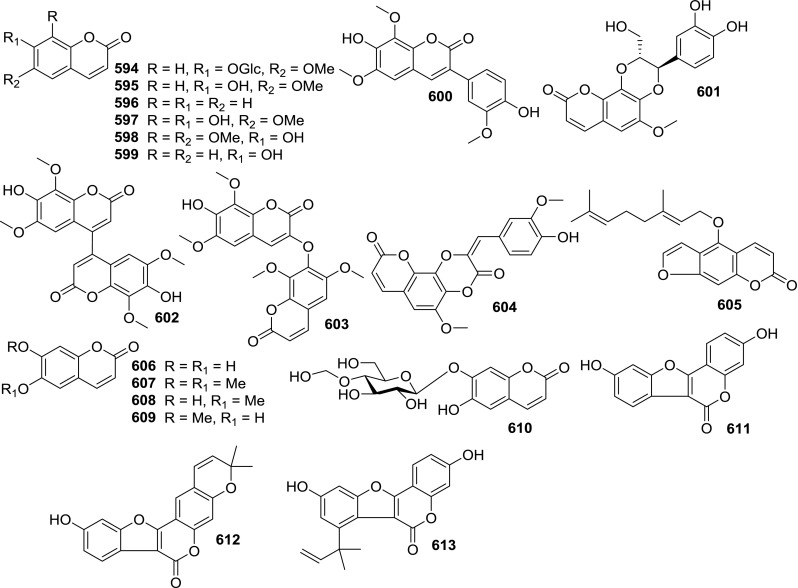
Over the past 30 years, the genus Solanum has received considerable attention in chemical and biological studies. Solanum is the largest genus in the family Solanaceae, comprising of about 2000 species distributed in the subtropical and tropical regions of Africa, Australia, and parts of Asia, e.g., China, India and Japan. Many of them are economically significant species. Previous phytochemical investigations on Solanum species led to the identification of steroidal saponins, steroidal alkaloids, terpenes, flavonoids, lignans, sterols, phenolic comopunds, coumarins, amongst other compounds. Many species belonging to this genus present huge range of pharmacological activities such as cytotoxicity to different tumors as breast cancer (4T1 and EMT), colorectal cancer (HCT116, HT29, and SW480), and prostate cancer (DU145) cell lines. The biological activities have been attributed to a number of steroidal saponins, steroidal alkaloids and phenols. This review features 65 phytochemically studied species of Solanum between 1990 and 2018, fetched from SciFinder, Pubmed, ScienceDirect, Wikipedia and Baidu, using "Solanum" and the species' names as search terms ("all fields").
在过去30年里,茄属植物在化学和生物学研究中受到了广泛关注。茄属是茄科中最大的属,约有2000个物种,分布在非洲、澳大利亚以及亚洲部分地区(如中国、印度和日本)的亚热带和热带地区。其中许多是具有经济重要性的物种。先前对茄属植物的植物化学研究已鉴定出甾体皂苷、甾体生物碱、萜类、黄酮类、木脂素、甾醇、酚类化合物、香豆素等化合物。该属的许多物种具有广泛的药理活性,如对不同肿瘤细胞系(如乳腺癌(4T1和EMT)、结直肠癌(HCT116、HT29和SW480)以及前列腺癌(DU145))具有细胞毒性。这些生物活性归因于多种甾体皂苷、甾体生物碱和酚类。本综述涵盖了1990年至2018年间通过化学研究的65种茄属植物,这些信息从SciFinder、Pubmed、ScienceDirect、维基百科和百度获取,使用“茄属”和物种名称作为搜索词(“所有字段”)。