Department of Microbiology and Immunology, UCSF School of Medicine, San Francisco, CA 94143, USA.
Department of Biological Sciences, Carnegie Mellon University, Pittsburgh, PA 15213, USA.
Cell Host Microbe. 2019 Mar 13;25(3):432-443.e6. doi: 10.1016/j.chom.2019.02.008.
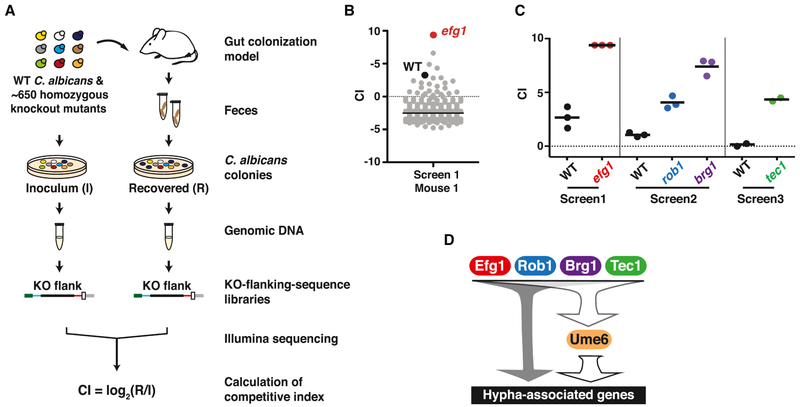
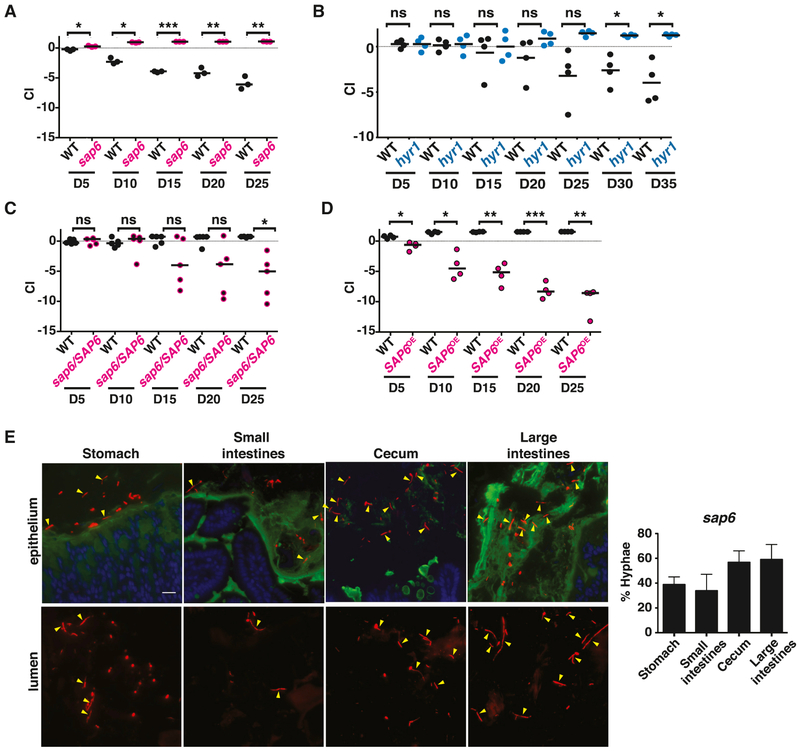
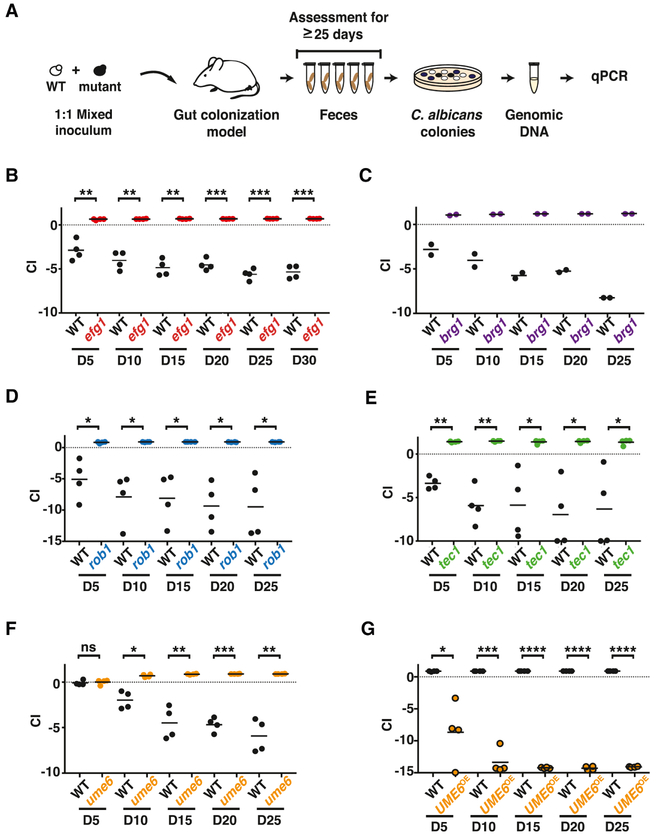
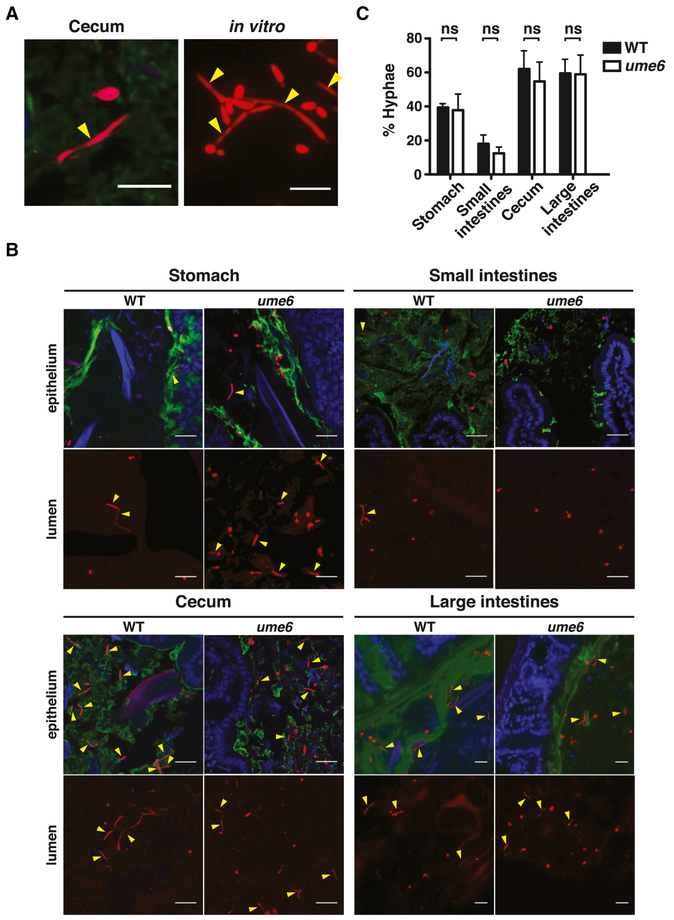
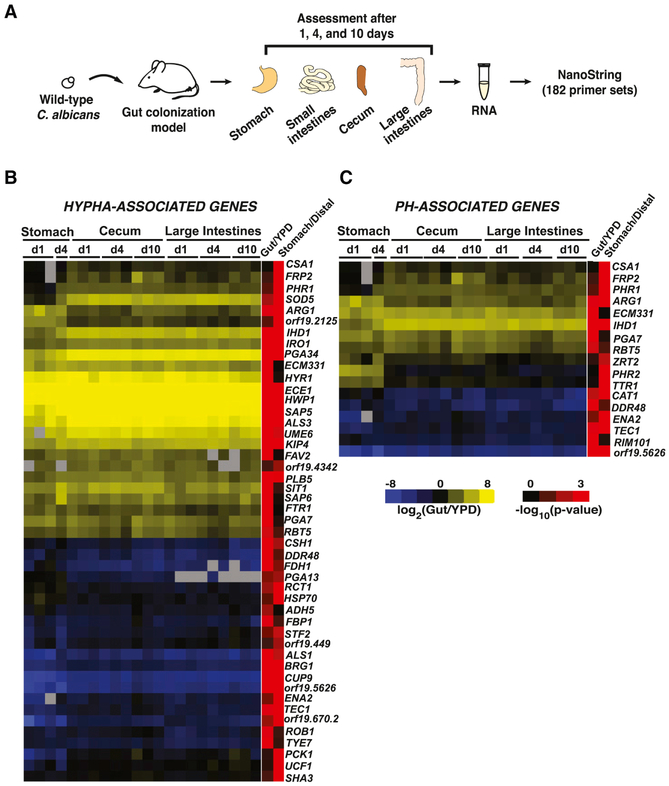
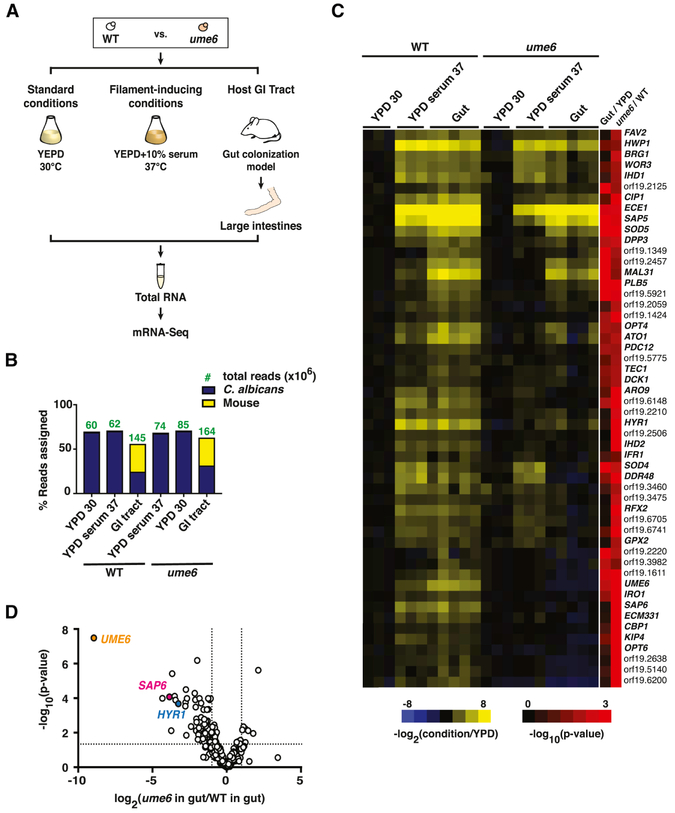
Candida albicans is a gut commensal and opportunistic pathogen. The transition between yeast and invasive hyphae is central to virulence but has unknown functions during commensal growth. In a mouse model of colonization, yeast and hyphae co-occur throughout the gastrointestinal tract. However, competitive infections of C. albicans homozygous gene disruption mutants revealed an unanticipated, inhibitory role for the yeast-to-hypha morphogenesis program on commensalism. We show that the transcription factor Ume6, a master regulator of filamentation, inhibits gut colonization, not by effects on cell shape, but by activating the expression of a hypha-specific pro-inflammatory secreted protease, Sap6, and a hyphal cell surface adhesin, Hyr1. Like a ume6 mutant, strains lacking SAP6 exhibit enhanced colonization fitness, whereas SAP6-overexpression strains are attenuated in the gut. These results reveal a tradeoff between fungal programs supporting commensalism and virulence in which selection against hypha-specific markers limits the disease-causing potential of this ubiquitous commensal-pathogen.
白色念珠菌是一种肠道共生菌和机会致病菌。从酵母相到侵袭性菌丝相的转变是其毒力的关键,但在共生生长过程中其功能未知。在定植的小鼠模型中,酵母相和菌丝相共同存在于整个胃肠道中。然而,对白色念珠菌纯合基因突变体的竞争性感染揭示了菌丝形态发生程序对共生作用的一种意外的抑制作用。我们表明,转录因子 Ume6 是菌丝形成的主要调节剂,它通过激活菌丝特异性促炎分泌蛋白酶 Sap6 和菌丝细胞表面黏附素 Hyr1 的表达来抑制肠道定植,而不是通过对细胞形状的影响。与 ume6 突变体一样,缺乏 SAP6 的菌株表现出增强的定植适应性,而 SAP6 过表达菌株在肠道中则减弱。这些结果揭示了支持共生和毒力的真菌程序之间的权衡,其中对菌丝特异性标记物的选择限制了这种普遍共生病原体的致病潜力。