Perdomo-Celis Federico, Medina-Moreno Sandra, Davis Harry, Bryant Joseph, Zapata Juan C
Institute of Human Virology, School of Medicine, University of Maryland, Baltimore, MD 21201, USA.
Grupo Inmunovirología, Facultad de Medicina, Universidad de Antioquia, UdeA, Medellín 050010, Colombia.
Pathogens. 2019 Mar 12;8(1):33. doi: 10.3390/pathogens8010033.
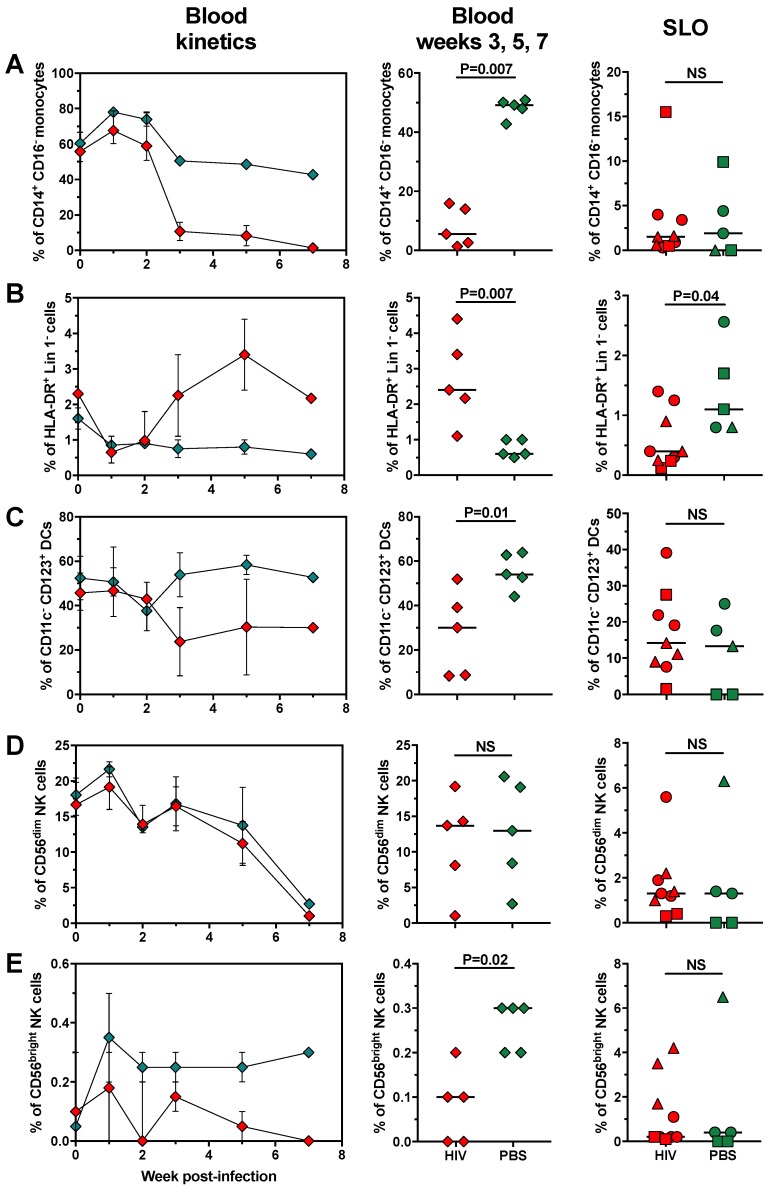
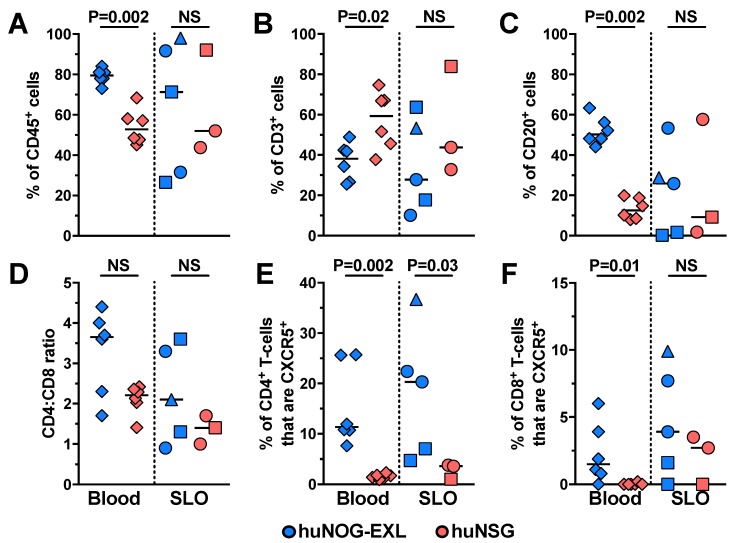
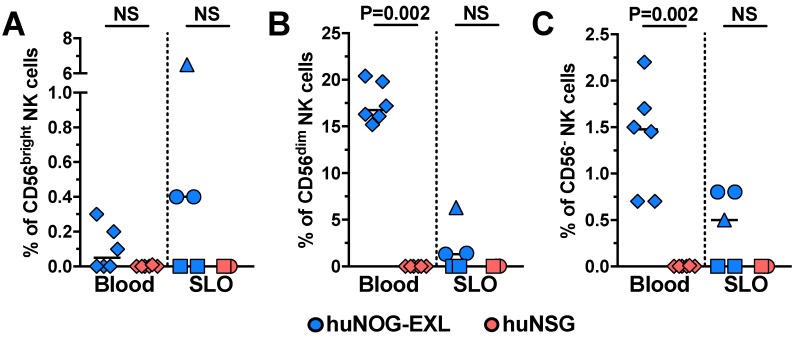
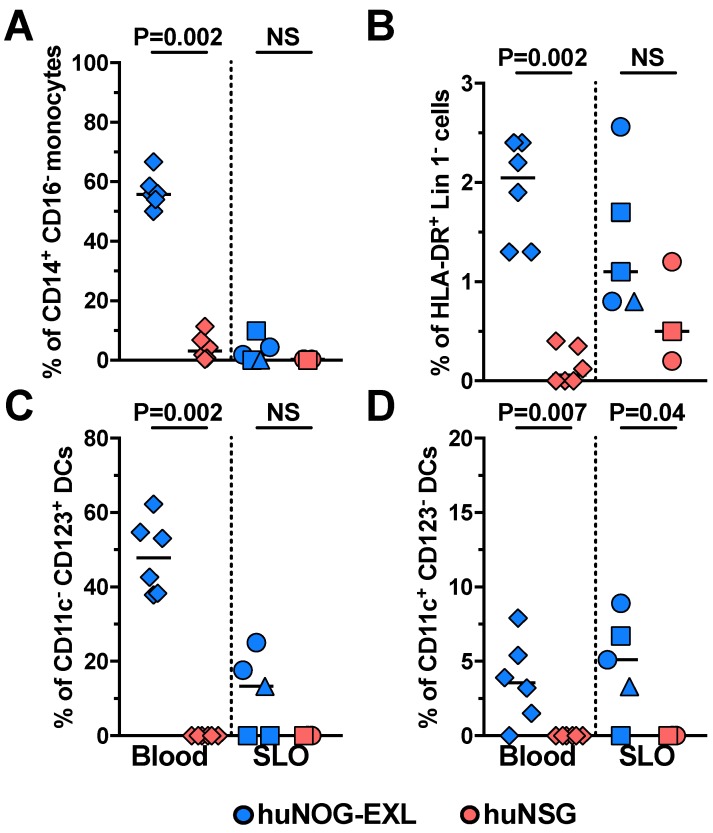
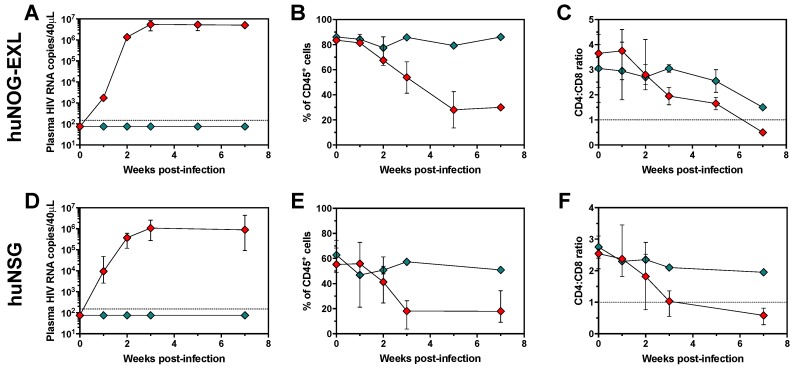
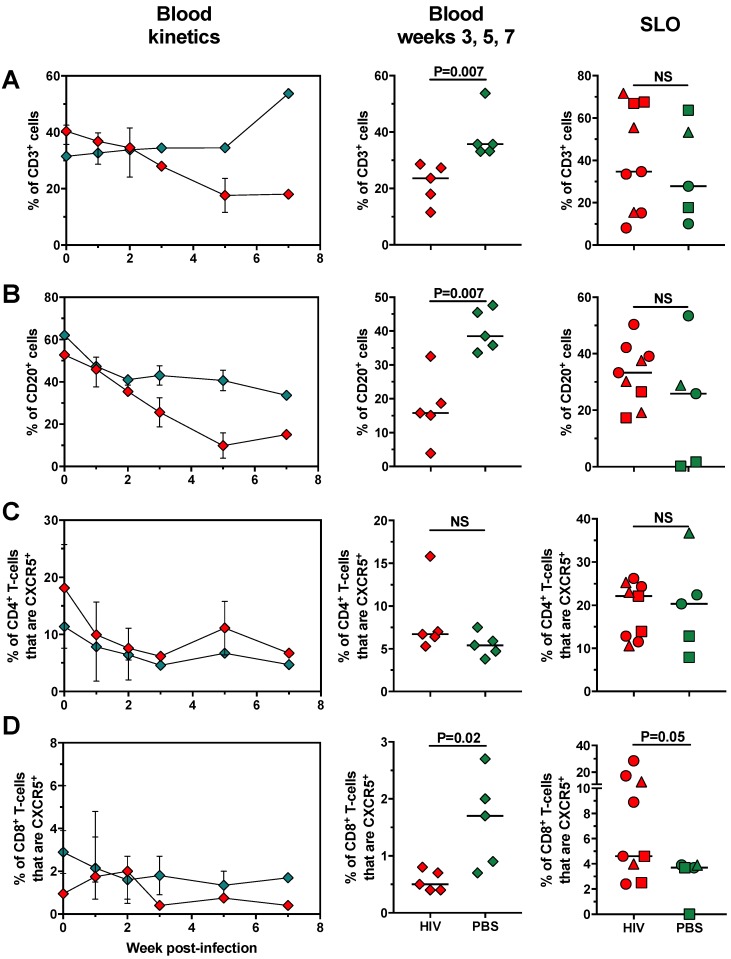
The development of mouse models that mimic the kinetics of Human Immunodeficiency Virus (HIV) infection is critical for the understanding of the pathogenesis of disease and for the design of novel therapeutic strategies. Here, we describe the dynamics of HIV infection in humanized NOD/Shi-scid-IL2rγ (NOG) mice bearing the human genes for interleukin (IL)-3 and granulocyte-macrophage colony-stimulating factor (GM-CSF) (NOG-EXL mice). The kinetics of viral load, as well as the frequencies of T-cells, B-cells, Natural killer cells (NK), monocytes, and dendritic cells in blood and secondary lymphoid organs were evaluated throughout the time of infection. In comparison with a non-transgenic humanized mouse (NSG) strain, lymphoid and myeloid populations were more efficiently engrafted in humanized NOG-EXL mice, both in peripheral blood and lymphoid tissues. In addition, HIV actively replicated in humanized NOG-EXL mice, and infection induced a decrease in the percentage of CD4⁺ T-cells, inversion of the CD4:CD8 ratio, and changes in some cell populations, such as monocytes and dendritic cells, that recapitulated those found in human natural infection. Thus, the humanized IL-3/GM-CSF-transgenic NOG mouse model is suitable for the study of the dynamics of HIV infection and provides a tool for basic and preclinical studies.
构建能够模拟人类免疫缺陷病毒(HIV)感染动力学的小鼠模型,对于理解疾病发病机制以及设计新型治疗策略至关重要。在此,我们描述了携带白细胞介素(IL)-3和粒细胞-巨噬细胞集落刺激因子(GM-CSF)人类基因的人源化NOD/Shi-scid-IL2rγ(NOG)小鼠(NOG-EXL小鼠)中HIV感染的动态变化。在整个感染期间,评估了病毒载量的动力学变化,以及血液和次级淋巴器官中T细胞、B细胞、自然杀伤细胞(NK)、单核细胞和树突状细胞的频率。与非转基因人源化小鼠(NSG)品系相比,人源化NOG-EXL小鼠的外周血和淋巴组织中的淋巴细胞和髓细胞群体植入效率更高。此外,HIV在人源化NOG-EXL小鼠中积极复制,感染导致CD4⁺ T细胞百分比下降、CD4:CD8比值倒置,以及一些细胞群体(如单核细胞和树突状细胞)发生变化,这些变化与人类自然感染中发现的情况相似。因此,人源化IL-3/GM-CSF转基因NOG小鼠模型适用于研究HIV感染的动态变化,并为基础研究和临床前研究提供了一种工具。