Belozersky Institute of Physico-Chemical Biology, Lomonosov Moscow State University, 119234 Moscow, Russia.
Faculty of Bioengineering and Bioinformatics, Lomonosov Moscow State University, 119234 Moscow, Russia.
Int J Mol Sci. 2019 Mar 12;20(5):1252. doi: 10.3390/ijms20051252.
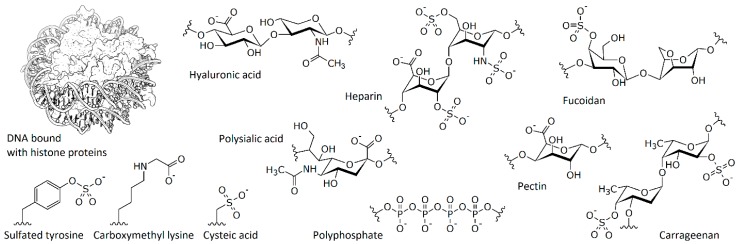
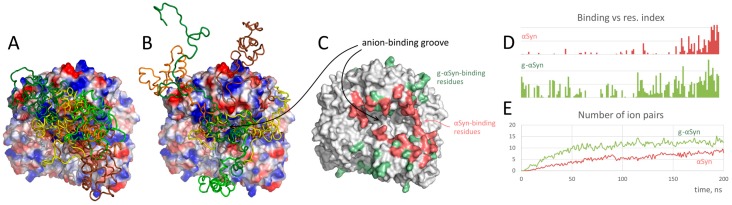
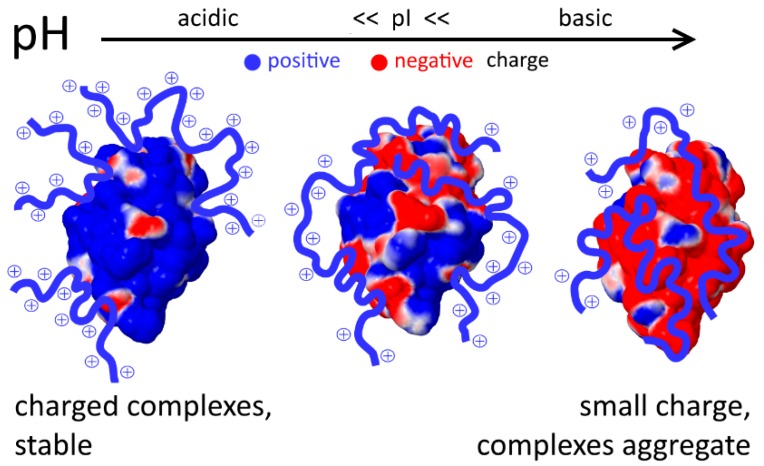
Interaction of proteins with charged macromolecules is involved in many processes in cells. Firstly, there are many naturally occurred charged polymers such as DNA and RNA, polyphosphates, sulfated glycosaminoglycans, etc., as well as pronouncedly charged proteins such as histones or actin. Electrostatic interactions are also important for "generic" proteins, which are not generally considered as polyanions or polycations. Finally, protein behavior can be altered due to post-translational modifications such as phosphorylation, sulfation, and glycation, which change a local charge of the protein region. Herein we review molecular modeling for the investigation of such interactions, from model polyanions and polycations to unfolded proteins. We will show that electrostatic interactions are ubiquitous, and molecular dynamics simulations provide an outstanding opportunity to look inside binding and reveal the contribution of electrostatic interactions. Since a molecular dynamics simulation is only a model, we will comprehensively consider its relationship with the experimental data.
蛋白质与带电大分子的相互作用涉及细胞中的许多过程。首先,有许多天然存在的带电聚合物,如 DNA 和 RNA、多磷酸盐、硫酸化糖胺聚糖等,以及明显带电的蛋白质,如组蛋白或肌动蛋白。静电相互作用对于“通用”蛋白质也很重要,这些蛋白质通常不被认为是聚阴离子或聚阳离子。最后,由于翻译后修饰,如磷酸化、硫酸化和糖化,蛋白质的行为可以改变,这会改变蛋白质区域的局部电荷。本文综述了用于研究这些相互作用的分子建模,从模型聚阴离子和聚阳离子到无规卷曲的蛋白质。我们将表明静电相互作用是普遍存在的,分子动力学模拟为研究结合提供了一个极好的机会,并揭示了静电相互作用的贡献。由于分子动力学模拟只是一种模型,我们将全面考虑它与实验数据的关系。