Department of Hematology and Laboratory of Translational Immunology, University Medical Center Utrecht, Utrecht, The Netherlands.
Faculdade de Medicina, Instituto de Medicina Molecular, Universidade de Lisboa, Lisbon, Portugal.
J Immunother Cancer. 2019 Mar 12;7(1):69. doi: 10.1186/s40425-019-0558-4.
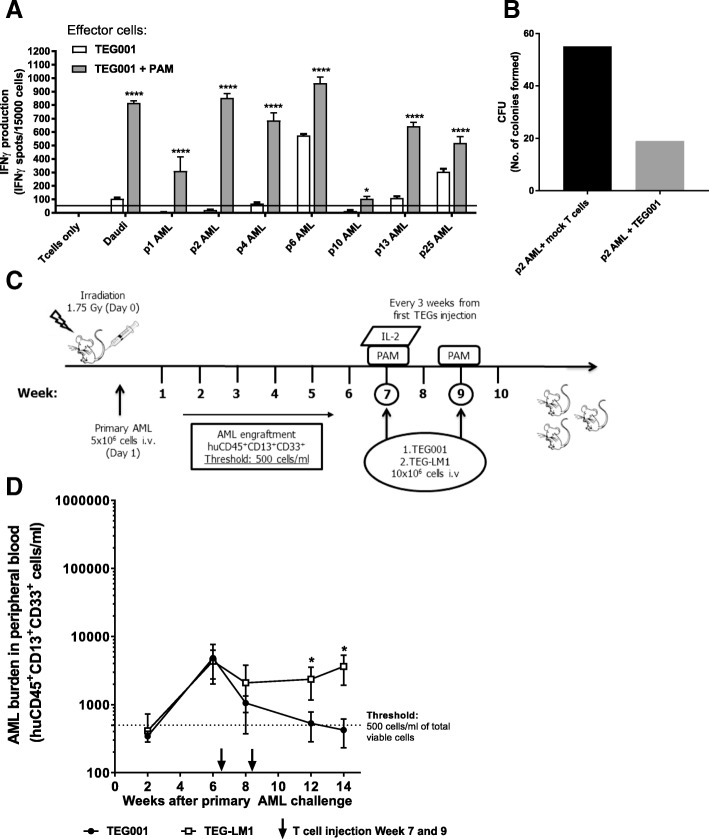
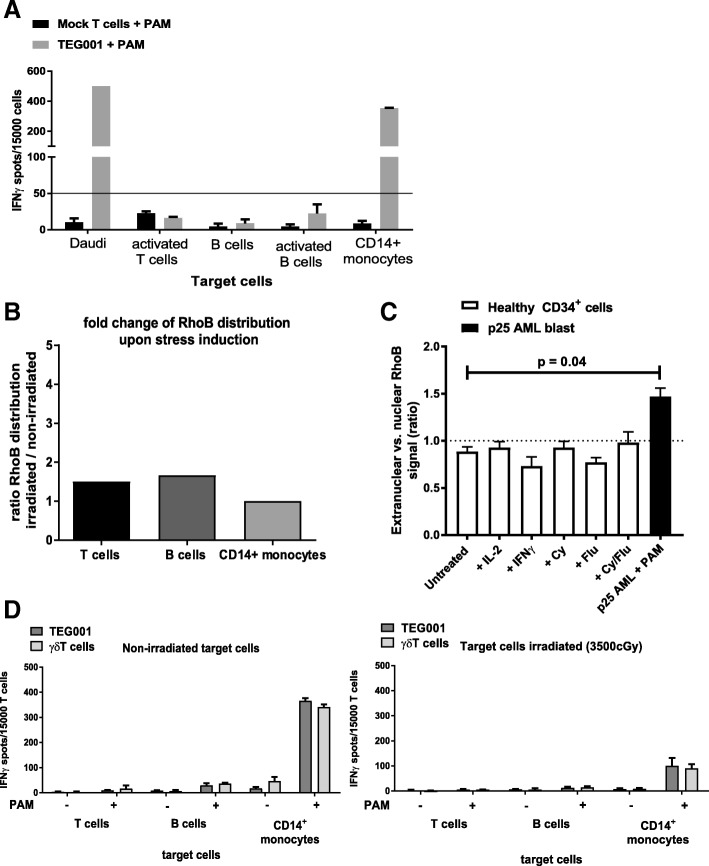
γ9δ2T cells, which express Vγ9 and Vδ2 chains of the T cell receptor (TCR), mediate cancer immune surveillance by sensing early metabolic changes in malignant leukemic blast and not their healthy hematopoietic stem counterparts via the γ9δ2TCR targeting joined conformational and spatial changes of CD277 at the cell membrane (CD277J). This concept led to the development of next generation CAR-T cells, so-called TEGs: αβT cells Engineered to express a defined γδTCR. The high affinity γ9δ2TCR clone 5 has recently been selected within the TEG format as a clinical candidate (TEG001). However, exploring safety and efficacy against a target, which reflects an early metabolic change in tumor cells, remains challenging given the lack of appropriate tools. Therefore, we tested whether TEG001 is able to eliminate established leukemia in a primary disease model, without harming other parts of the healthy hematopoiesis in vivo.
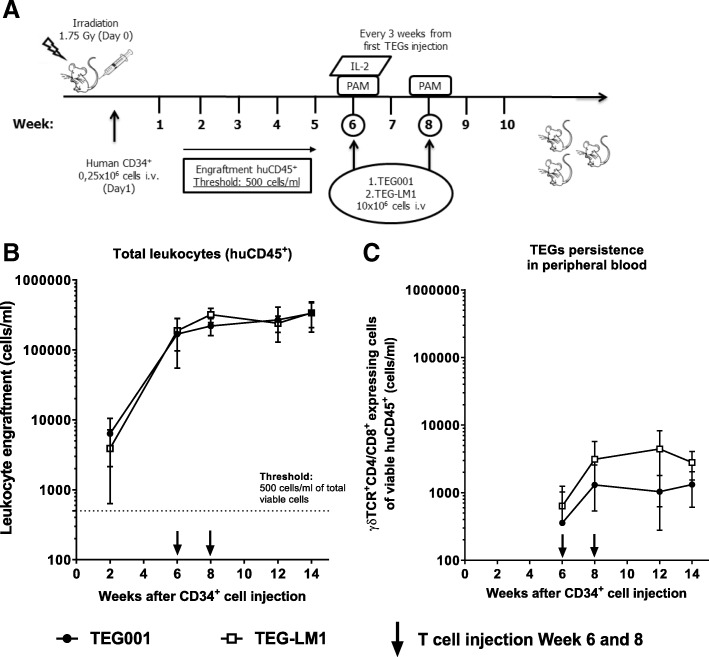
Separate sets of NSG mice were respectively injected with primary human acute myeloid leukemia (AML) blasts and cord blood-derived human progenitor cells from healthy donors. These mice were then treated with TEG001 and mock cells. Tumor burden and human cells engraftment were measured in peripheral blood and followed up over time by quantifying for absolute cell number by flow cytometry. Statistical analysis was performed using non-parametric 2-tailed Mann-Whitney t-test.
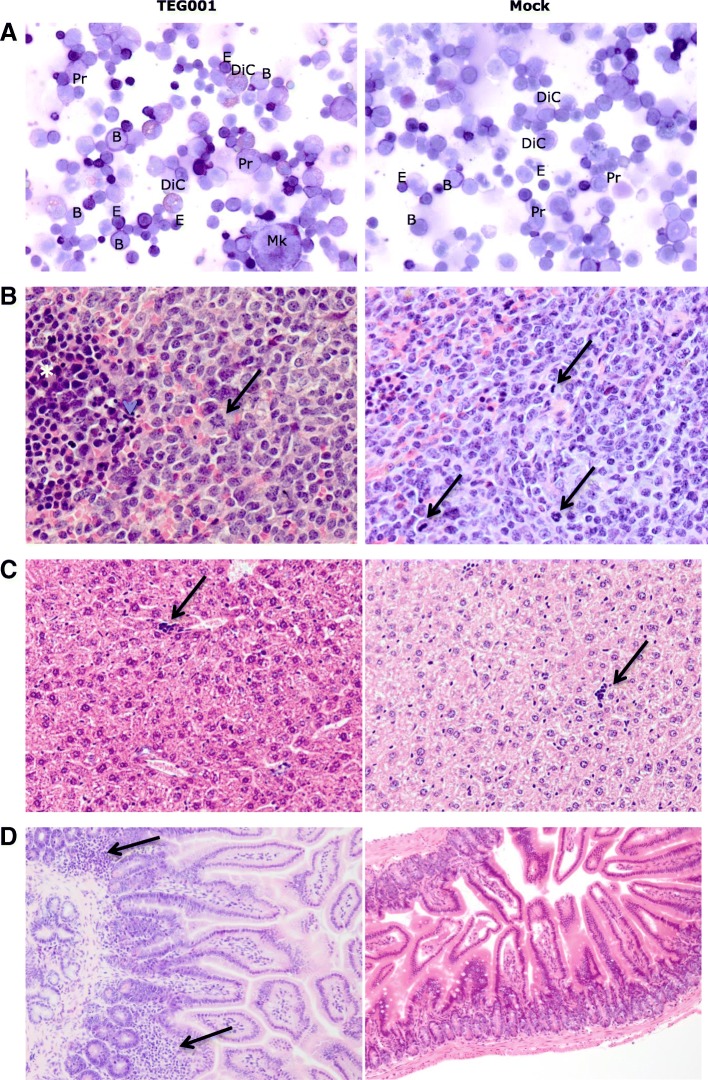
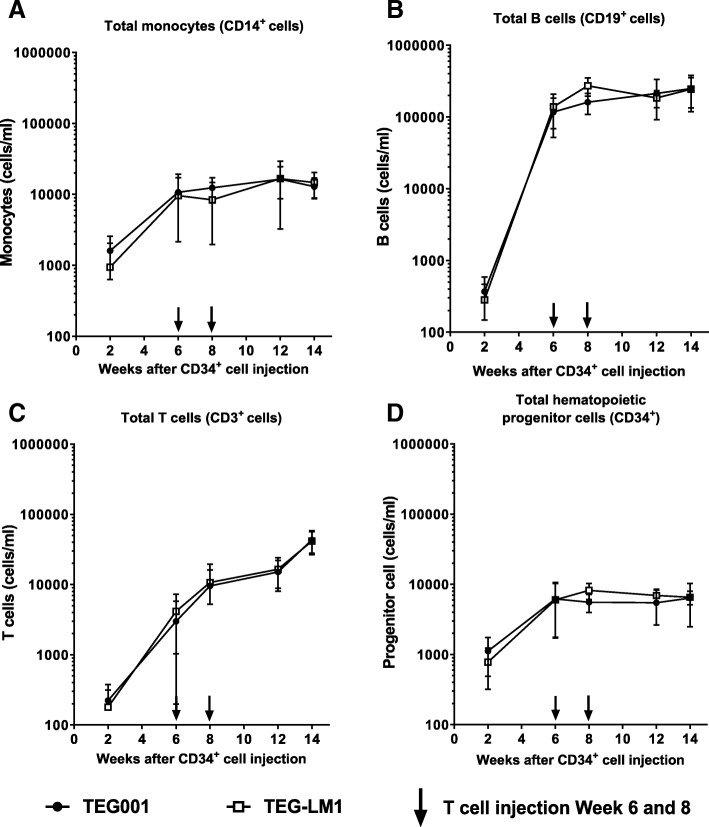
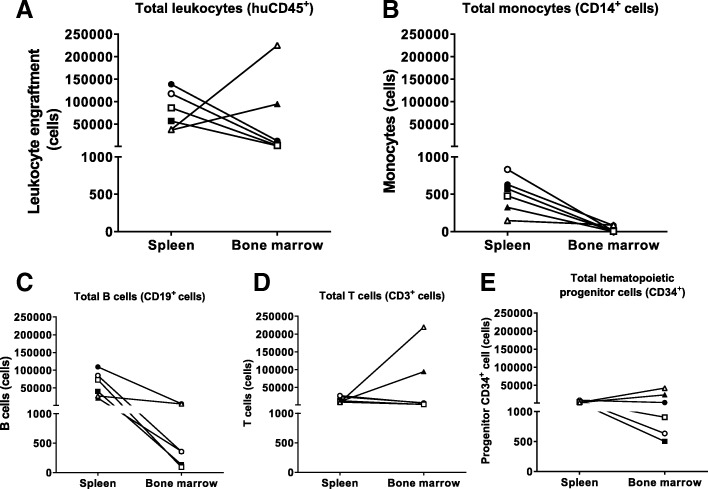
We successfully engrafted primary AML blasts and healthy hematopoietic cells after 6-8 weeks. Here we report that metabolic cancer targeting through TEG001 eradicated established primary leukemic blasts in vivo, while healthy hematopoietic compartments derived from human cord-blood remained unharmed in spite of TEGs persistence up to 50 days after infusion. No additional signs of off-target toxicity were observed in any other tissues.
Within the limitations of humanized PD-X models, targeting CD277J by TEG001 is safe and efficient. Therefore, we have initiated clinical testing of TEG001 in a phase I first-in-human clinical trial (NTR6541; date of registration 25 July 2017).
γ9δ2T 细胞表达 T 细胞受体(TCR)的 Vγ9 和 Vδ2 链,通过 γ9δ2TCR 靶向细胞膜上 CD277 的联合构象和空间变化(CD277J),感知恶性白血病 blast 中的早期代谢变化,而不是其健康造血干细胞对应物,从而介导癌症免疫监视。这一概念导致了下一代嵌合抗原受体 T 细胞(CAR-T 细胞)的发展,即所谓的 TEGs:αβT 细胞被设计表达特定的 γδTCR。高亲和力 γ9δ2TCR 克隆 5 最近已在 TEG 格式中被选为临床候选物(TEG001)。然而,鉴于缺乏适当的工具,探索针对反映肿瘤细胞早期代谢变化的靶标的安全性和疗效仍然具有挑战性。因此,我们测试了 TEG001 是否能够在原发性疾病模型中消除已建立的白血病,而不会对体内其他健康造血部分造成伤害。
分别将 NSG 小鼠一组注射原发性人急性髓系白血病(AML)blast 和来自健康供体的脐带血衍生的人祖细胞。然后,用 TEG001 和 mock 细胞处理这些小鼠。通过流式细胞术定量绝对细胞数,在时间上测量外周血中的肿瘤负担和人细胞植入,并进行后续检测。统计分析采用非参数双尾 Mann-Whitney t 检验。
我们成功地在 6-8 周后植入原发性 AML blast 和健康造血细胞。在这里,我们报告说,通过 TEG001 进行代谢性癌症靶向根除了体内已建立的原发性白血病 blast,而来自人类脐带血的健康造血细胞在 TEG 持续输注后长达 50 天仍未受到伤害。在任何其他组织中都没有观察到其他脱靶毒性的迹象。
在人源化 PD-X 模型的限制内,通过 TEG001 靶向 CD277J 是安全有效的。因此,我们已经启动了 TEG001 的 I 期首次人体临床试验(NTR6541;注册日期 2017 年 7 月 25 日)的临床测试。