Department of Physiology, School of Medicine, College of Medicine, Taipei Medical University, Taipei, Taiwan.
National Taiwan University Hospital; Department of Urology, College of Medicine, National Taiwan University; and National Taiwan University Hospital, Taipei, Taiwan.
Sci Rep. 2019 Mar 14;9(1):4606. doi: 10.1038/s41598-019-40757-6.
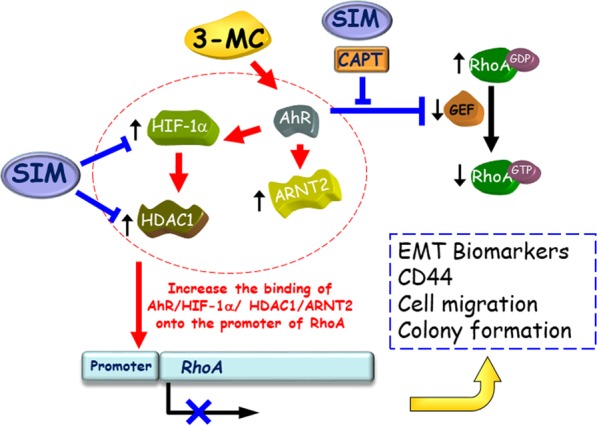
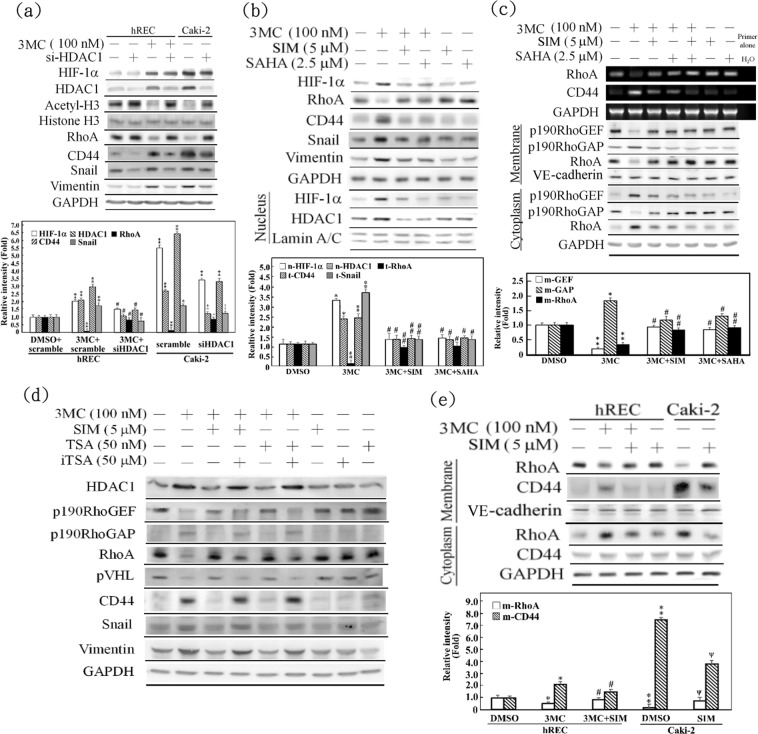
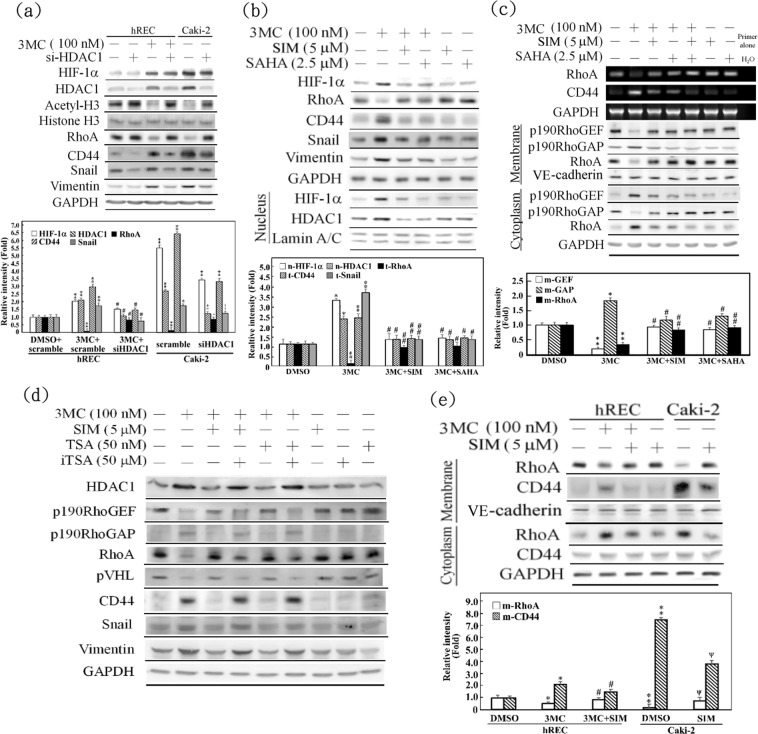
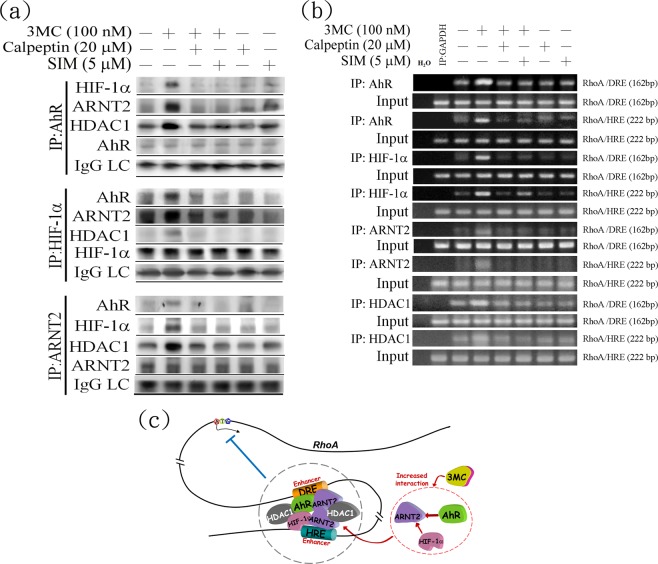
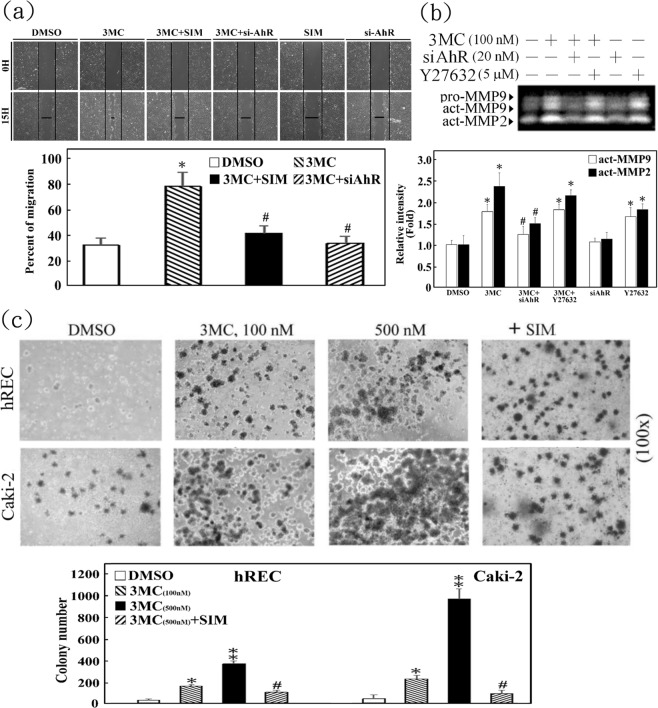
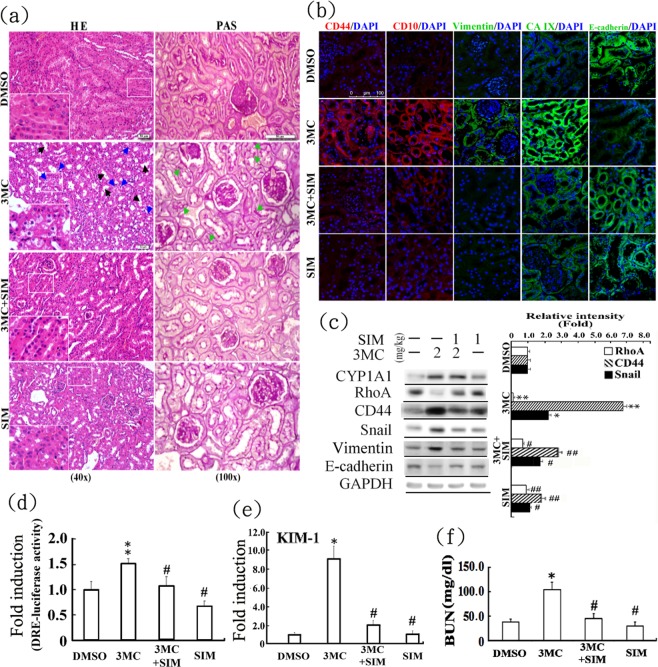
The therapeutic effects of simvastatin for renal cell carcinoma (RCC) are controversial. In this study, the effects of simvastatin on the carcinogenic properties of 3-methylcholanthrene (3MC; an aryl-hydrocarbon receptor [AhR] agonist) in human renal epithelial cells (hRECs) were investigated. We exposed in vitro and in vivo models to 3MC to induce RCC onset. 3MC upregulated the epithelial-mesenchymal transition (EMT) and tumor biomarkers; the models exhibited the reciprocal expression of histone deacetylase 1 (HDAC1) and RhoA, namely increased HDAC1 and decreased RhoA expression, through hypoxia-inducible-factor (HIF)- and AhR-dependent mechanisms. In addition to inducing EMT biomarkers, 3MC decreased von Hippel-Lindau protein levels (a risk factor for RCC) and increased CD44 expression in hRECs, which were reversed by digoxin (a HIF inhibitor) and HDAC inhibitors (suberoylanilide hydroxamic acid and trichostatin A [TSA]). Simvastatin abolished the detrimental effects of 3MC by reducing HDAC1 expression, with resulting RhoA upregulation, and reactivating RhoA in vitro and in vivo. Notably, the protective effects of simvastatin were negated by an HDAC activator (ITSA) through TSA suppression. The crucial role of RhoA in RCC carcinogenesis was verified by the overexpression of constitutively active RhoA. Collectively, these results demonstrate that simvastatin restores RhoA function through HDAC1 inhibition; therefore, simvastatin might serve as adjunct therapy for RCC induced by 3MC.
辛伐他汀对肾细胞癌(RCC)的治疗效果存在争议。在这项研究中,研究人员研究了辛伐他汀对 3-甲基胆蒽(3MC;芳烃受体[AhR]激动剂)在人肾上皮细胞(hRECs)致癌特性的影响。通过体外和体内模型暴露于 3MC 以诱导 RCC 发生。3MC 上调上皮-间充质转化(EMT)和肿瘤生物标志物;通过缺氧诱导因子(HIF)和 AhR 依赖性机制,模型表现出组蛋白去乙酰化酶 1(HDAC1)和 RhoA 的反向表达,即增加 HDAC1 和减少 RhoA 表达。除了诱导 EMT 生物标志物外,3MC 还降低了 von Hippel-Lindau 蛋白水平(RCC 的危险因素)并增加了 hRECs 中的 CD44 表达,这可被地高辛(HIF 抑制剂)和 HDAC 抑制剂(丁酸钠和曲古抑菌素 A[TSA])逆转。辛伐他汀通过降低 HDAC1 表达、上调 RhoA 并在体外和体内重新激活 RhoA,从而消除了 3MC 的有害影响。值得注意的是,HDAC 激活剂(ITSA)通过 TSA 抑制否定了辛伐他汀的保护作用。通过过表达组成型激活的 RhoA 验证了 RhoA 在 RCC 发生中的关键作用。综上所述,这些结果表明辛伐他汀通过抑制 HDAC1 恢复 RhoA 功能;因此,辛伐他汀可能作为 3MC 诱导的 RCC 的辅助治疗方法。