Department of Gynecologic Oncology, Affiliated Tumor Hospital of Guangxi Medical University, No.71 Hedi Road, Nanning, 530021, China.
Key laboratory of High-Incidence-Tumor Prevention &Treatment (Guangxi Medical University), Ministry of Education, No.22 Shuanyong Road, Nanning, 530021, China.
BMC Cancer. 2019 Mar 15;19(1):237. doi: 10.1186/s12885-019-5417-7.
Patients with ovarian cancer commonly have a poor prognosis, owing to its invasiveness and distant metastasis. Studies have found TM4SF1 participates in regulating tumor cell invasion and migration. Therefore, it is expected to become a target for anti-invasion and metastasis in ovarian cancer.
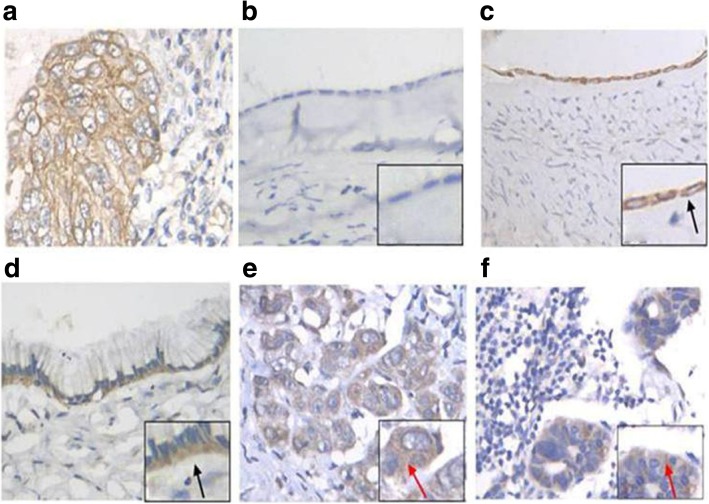
The expression of TM4SF1 in normal ovarian epithelial tissues, benign ovarian tumor tissues, primary foci of epithelial ovarian cancer and the matched lymph mode metastatic foci was detected using immunohistochemistry to analyze its association with prognosis. The expression of TM4SF1 in HO8910PM, SKOV3 was inhibited using RNAi, and the growth, proliferation, migration, invasion abilities of HO8910PM and SKOV3 cells and the growth of xenograft tumors in nude mice were examined.
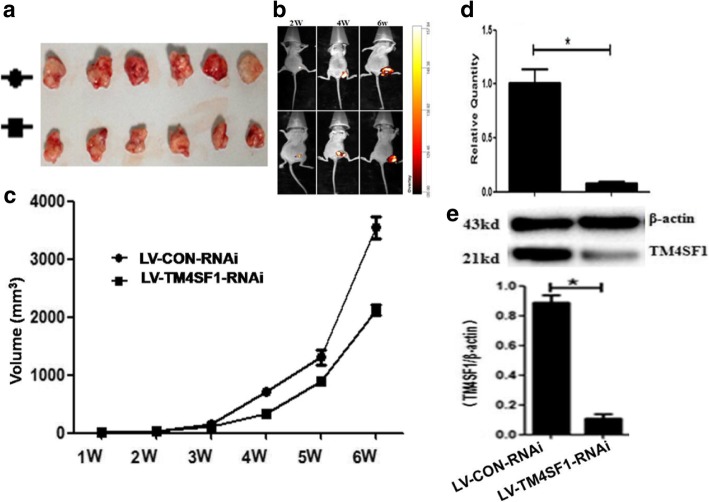
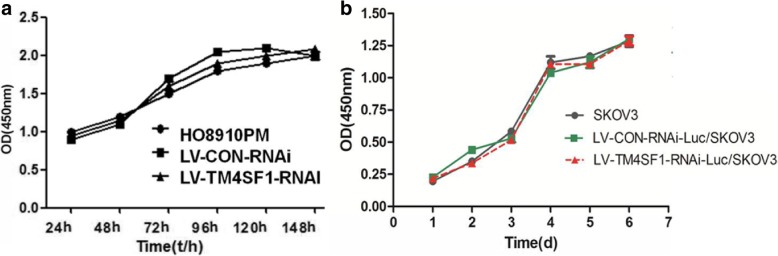
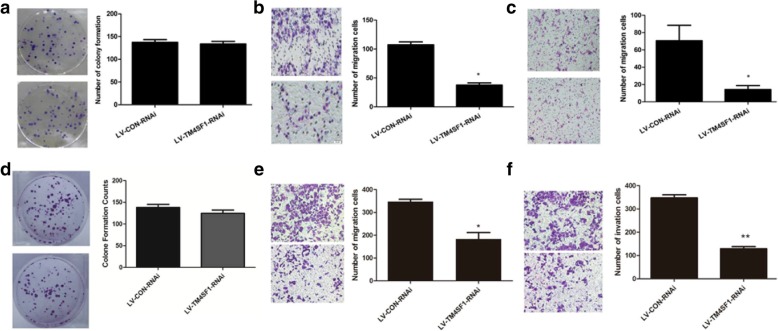
(1) The positive expression rate of TM4SF1 protein in epithelial ovarian cancer tissues (90.90%) was higher than that in benign ovarian tumor tissues (65.22%) and normal ovarian epithelial tissues (31.25%), and both differences were significant (P < 0.05). The expression of TM4SF1 protein was positive in all metastatic lymph node foci and matched primary foci (100%). (2) The level of TM4SF1 protein expression was positively correlated with the International Federation of Gynecology and Obstetrics (FIGO) stage and histological grade. However, The positive TM4SF1 protein expression was not an independent factor of prognosis (P > 0.05). (3) Silencing TM4SF1 expression did not affect growth, proliferation, or cell cycle distribution but inhibited the migration and invasion abilities of HO8910PM and SKOV3 cells. Silencing TM4SF1 expression inhibited the growth of xenograft tumors in nude mice.
TM4SF1 is a potential target for anti-invasion and metastasis in ovarian cancer.
卵巢癌患者预后较差,主要与其侵袭性和远处转移有关。研究发现 TM4SF1 参与调节肿瘤细胞侵袭和迁移。因此,它有望成为卵巢癌抗侵袭转移的靶点。
采用免疫组化法检测正常卵巢上皮组织、良性卵巢肿瘤组织、卵巢上皮性癌原发病灶及相应淋巴结转移灶中 TM4SF1 的表达,分析其与预后的关系。用 RNAi 抑制 HO8910PM、SKOV3 细胞中 TM4SF1 的表达,观察 HO8910PM、SKOV3 细胞的生长、增殖、迁移、侵袭能力及裸鼠移植瘤的生长。
(1)上皮性卵巢癌组织中 TM4SF1 蛋白的阳性表达率(90.90%)高于良性卵巢肿瘤组织(65.22%)和正常卵巢上皮组织(31.25%),差异均有统计学意义(P<0.05)。所有淋巴结转移灶和相应原发病灶中 TM4SF1 蛋白均表达阳性(100%)。(2)TM4SF1 蛋白表达水平与国际妇产科联盟(FIGO)分期和组织学分级呈正相关。但 TM4SF1 蛋白阳性表达不是预后的独立因素(P>0.05)。(3)沉默 TM4SF1 表达不影响 HO8910PM、SKOV3 细胞的生长、增殖或细胞周期分布,但抑制了 HO8910PM、SKOV3 细胞的迁移和侵袭能力。沉默 TM4SF1 表达抑制了裸鼠移植瘤的生长。
TM4SF1 是卵巢癌抗侵袭转移的潜在靶点。