Department of Bone and Soft Tissue Tumors, Tianjin Medical University Cancer Institute and Hospital, National Clinical Research Center for Cancer, Key Laboratory of Cancer Prevention and Therapy, Tianjin's Clinical Research Center for Cancer, Tiyuan Bei Road, Hexi District, Tianjin, China.
Department of Pathology and Southwest Cancer Center, Southwest Hospital, Third Military Medical University, Chongqing, China.
BMC Cancer. 2019 Mar 15;19(1):238. doi: 10.1186/s12885-019-5445-3.
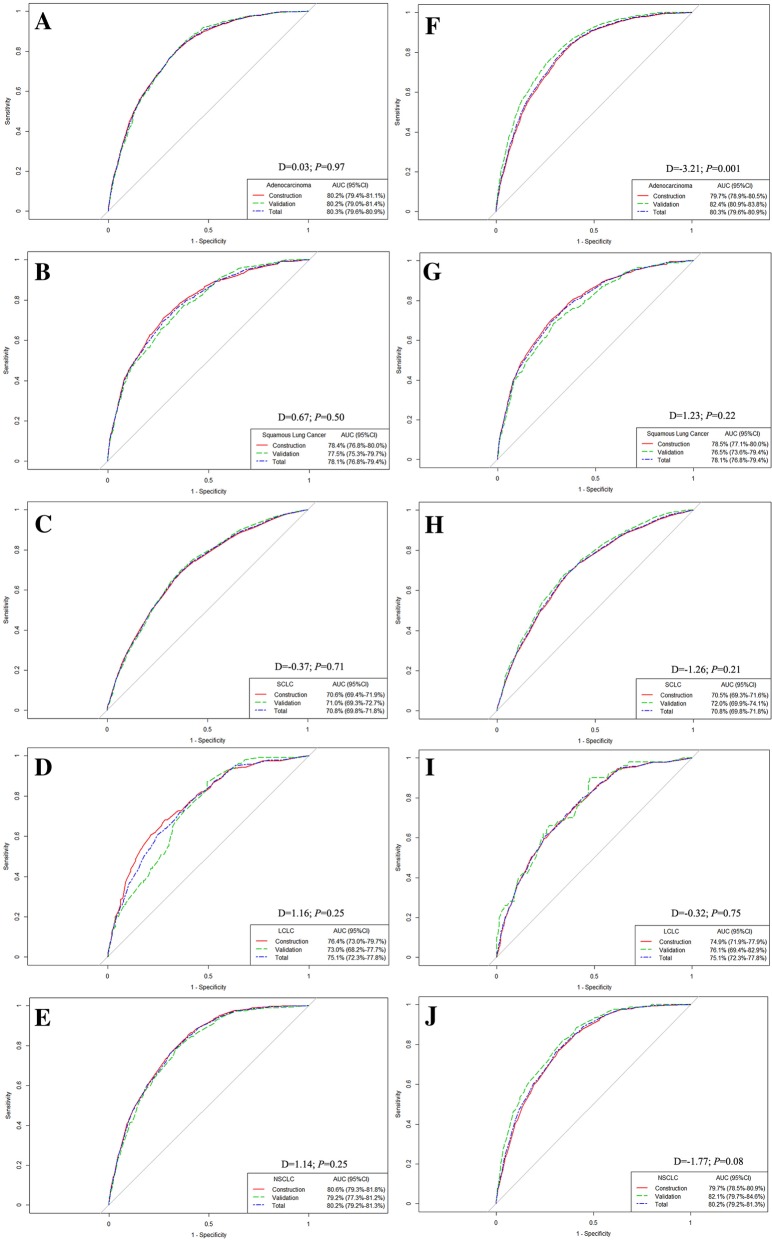
The purpose of the present study was to characterize the prevalence, associated factors, and to construct a nomogram for predicting bone metastasis (BM) with different histological types of lung cancer.
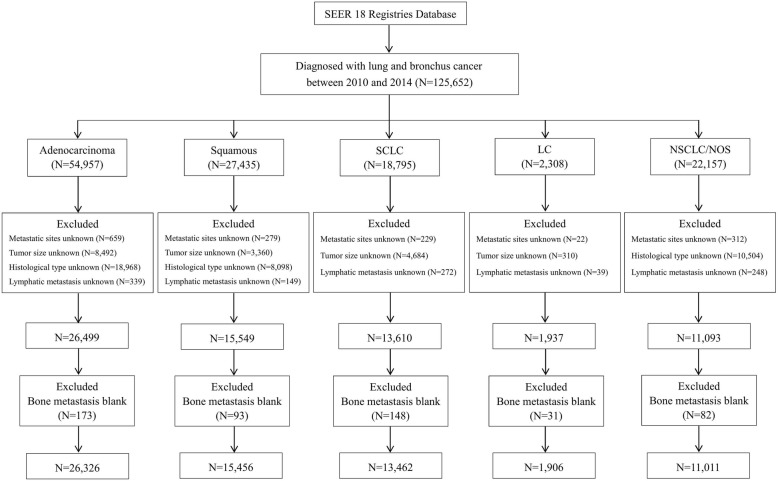
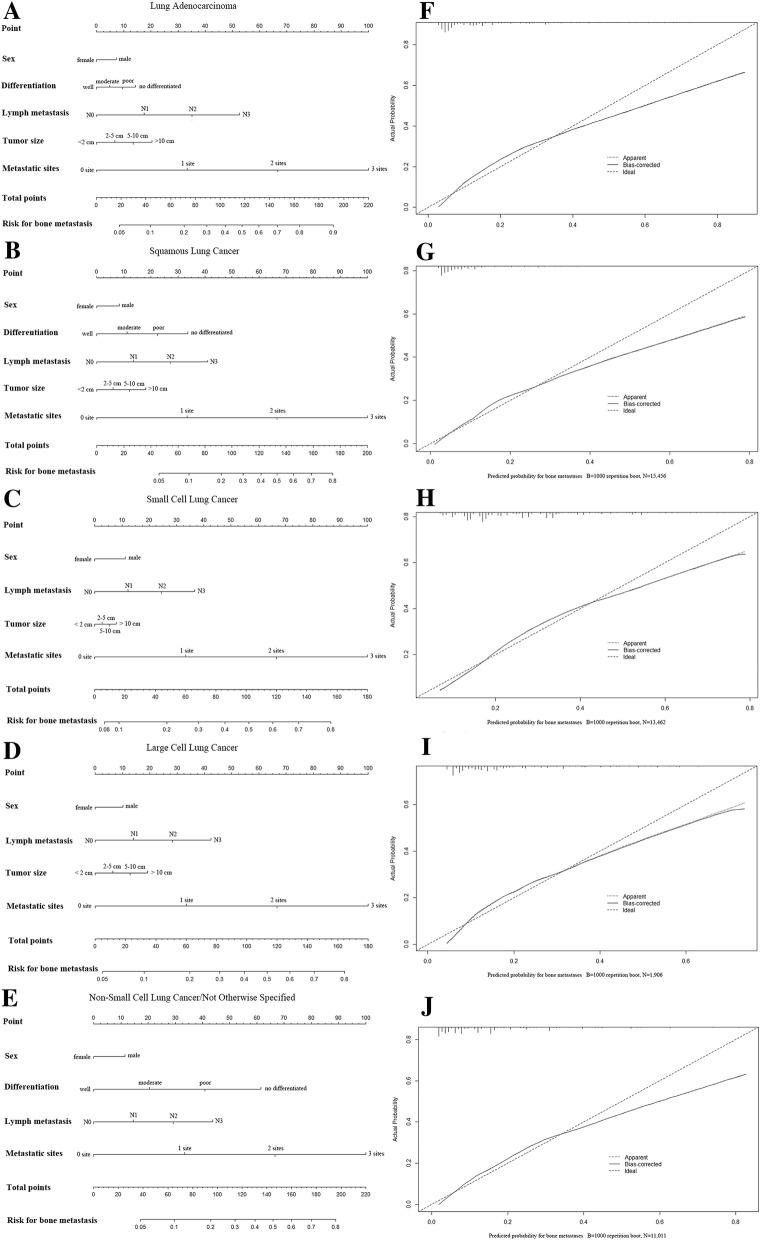
This study was a descriptive study that basing on the invasive lung cancer patients diagnosed between 2010 and 2014 in Surveillance, Epidemiology, and End Results program. A total of 125,652 adult patients were retrieved. Logistic regression analysis was conducted to investigate homogeneous and heterogeneous factors for BM occurrence. Nomogram was constructed to predict the risk for developing BM and the performance was evaluated by the receiver operating characteristics curve (ROC) and the calibration curve. The overall survival of the patients with BM was analyzed using the Kaplan-Meier method and the survival differences were tested by the log-rank test.
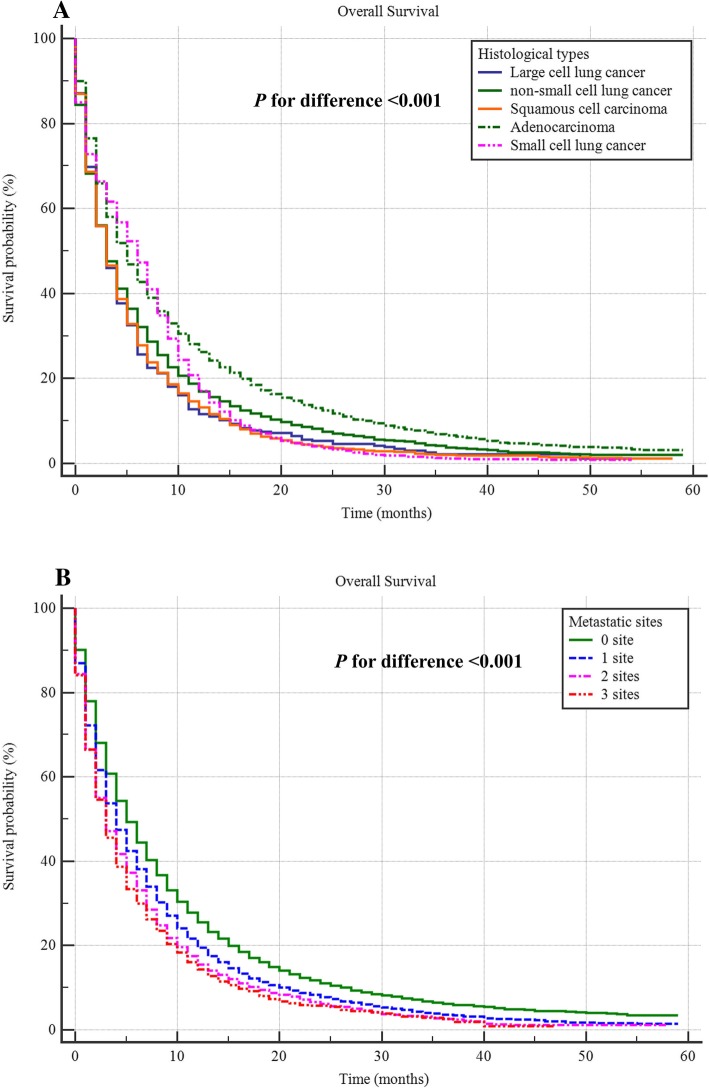
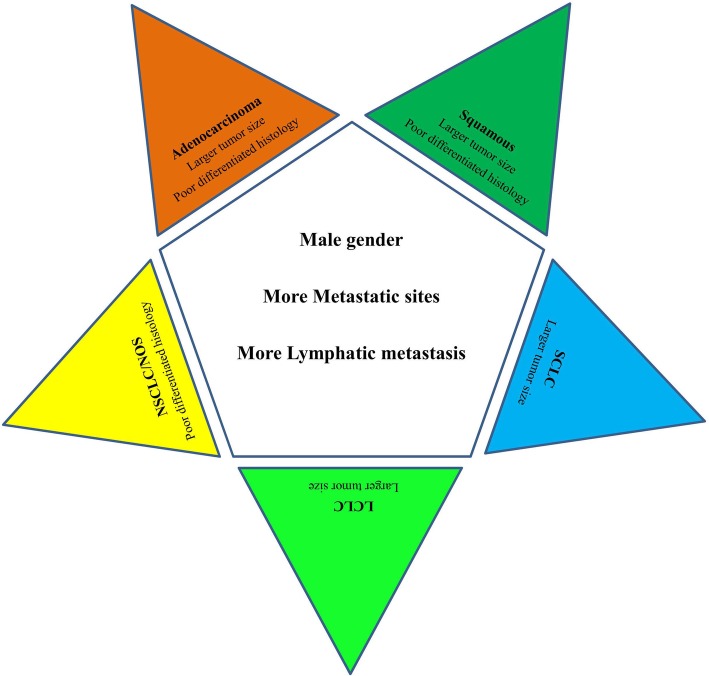
A total of 25,645 (20.9%) were reported to have BM, and the prevalence in adenocarcinoma, squamous cell carcinoma, small cell lung cancer (SCLC), large cell lung cancer (LCLC), and non-small cell lung cancer/not otherwise specified lung cancer (NSCLC/NOS) were 24.4, 12.5, 24.7, 19.5 and 19.4%, respectively, with significant difference (P < 0.001). Male gender, more metastatic sites and lymphatic metastasis were positively associated with BM in all lung cancer subtypes. Larger tumor size was positively associated with BM in all the lung cancer subtypes except for NSCLC/NOS. Poorly differentiated histology was positively associated with adenocarcinoma, squamous cell carcinoma and NSCLC/NOS. The calibration curve and ROC curve exhibited good performance for predicting BM. The median survival of the bone metastatic lung cancer patients was 4.00 (95%CI: 3.89-4.11) months. With the increased number of the other metastatic sites (brain, lung and liver metastasis), the survival significantly decreased (p < 0.001).
Different lung cancer histological subtypes exhibited distinct prevalence and homogeneity and heterogeneity associated factors for BM. The nomogram has good calibration and discrimination for predicting BM of lung cancer.
本研究旨在描述不同组织学类型肺癌患者的骨转移(BM)发生率、相关因素,并构建预测 BM 的列线图。
本研究是一项基于 2010 年至 2014 年监测、流行病学和最终结果(SEER)计划中诊断的浸润性肺癌患者的描述性研究。共检索到 125652 例成年患者。采用 logistic 回归分析探讨 BM 发生的同质和异质因素。构建列线图预测发生 BM 的风险,并通过接受者操作特征曲线(ROC)和校准曲线评估其性能。采用 Kaplan-Meier 法分析 BM 患者的总生存率,并采用对数秩检验比较生存差异。
共报告 25645 例(20.9%)患者发生 BM,腺癌、鳞状细胞癌、小细胞肺癌(SCLC)、大细胞肺癌(LCLC)和非小细胞肺癌/非特指型肺癌(NSCLC/NOS)的发生率分别为 24.4%、12.5%、24.7%、19.5%和 19.4%,差异有统计学意义(P<0.001)。男性、转移部位较多和淋巴转移与所有肺癌亚型的 BM 均呈正相关。除 NSCLC/NOS 外,较大的肿瘤大小与所有肺癌亚型的 BM 呈正相关。低分化组织学与腺癌、鳞状细胞癌和 NSCLC/NOS 呈正相关。校准曲线和 ROC 曲线显示预测 BM 的性能良好。骨转移肺癌患者的中位生存时间为 4.00(95%CI:3.89-4.11)个月。随着其他转移部位(脑、肺和肝转移)数量的增加,生存时间显著下降(p<0.001)。
不同肺癌组织学亚型的 BM 发生率、同质和异质相关因素存在差异。该列线图对预测肺癌 BM 具有良好的校准和区分度。