Stem Cell Institute at James Graham Brown Cancer Center, University of Louisville, Louisville, KY, USA.
Department of Hematology, Medical University of Bialystok, Bialystok, Poland.
Clin Epigenetics. 2019 Mar 15;11(1):50. doi: 10.1186/s13148-019-0643-z.
The delta-like non-canonical Notch ligand 1 (DLK1)-maternally expressed 3(MEG3) locus (DLK1-MEG3 locus) plays a critical role in the maintenance and differentiation of hematopoietic stem cells. Accumulating evidence implicates the imprinted genes from this locus, DLK1 and MEG3, in the development and progression of acute myeloid leukemia (AML). However, the contribution of this locus to the treatment response of patients and their survival is unknown.
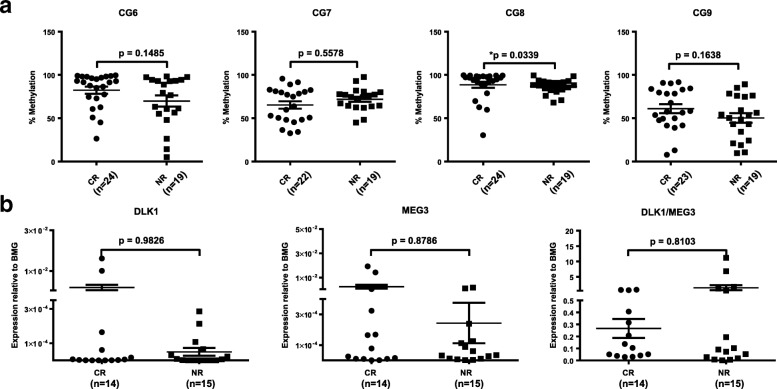
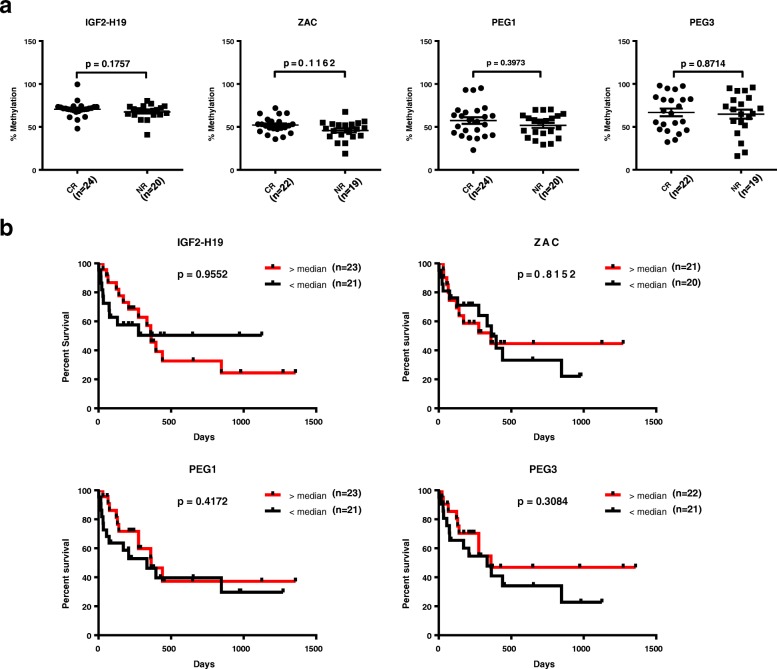
DNA methylation of select CG dinucleotide-containing amplicons (CpG sites) within the DLK1-MEG3 locus and within differentially methylated regions of other imprinted loci was assessed in the mononuclear cells of 45 AML patients by combined bisulfite restriction analysis. Methylation results were compared with patient response to first-round induction therapy and overall survival. Multivariable analysis was employed to identify independent prognostic factors for patient overall survival in AML.
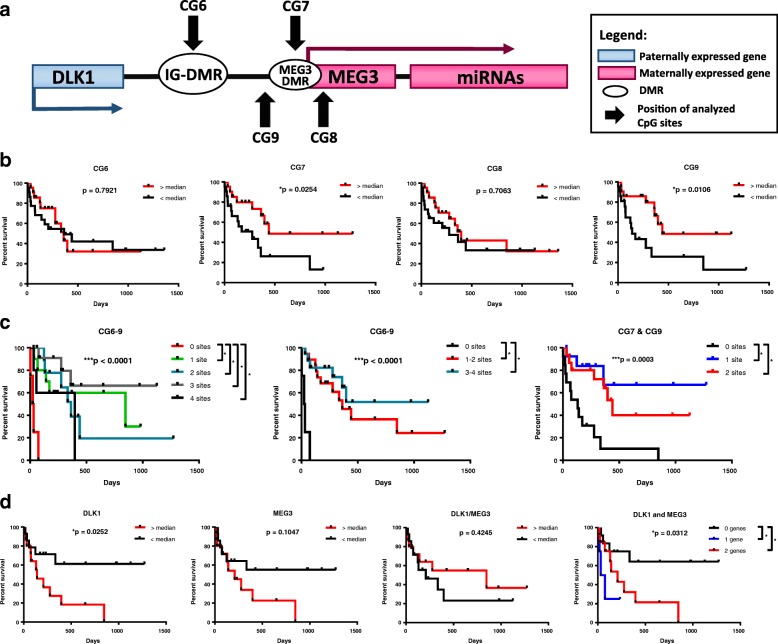
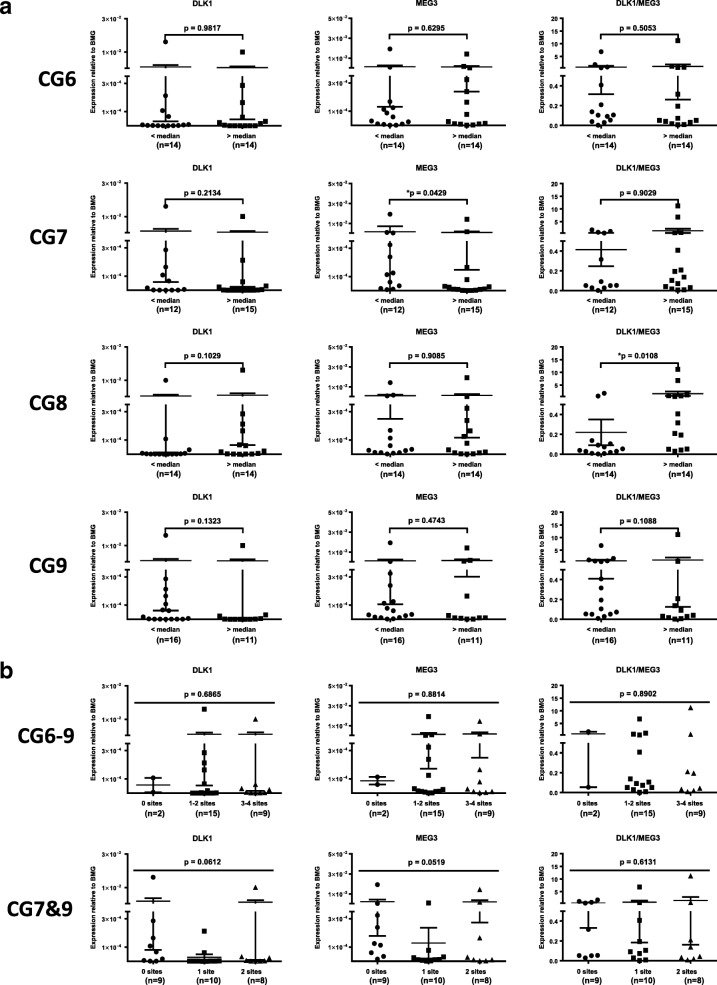
Increased methylation at CpG sites within the MEG3 promotor region was observed in AML patients having longer overall survival. In addition, patients with shorter overall survival had increased expression of DLK1 and MEG3, and methylation at the MEG3-DMR CpG site inversely correlated with MEG3 expression. Multivariable analysis revealed that methylation at CG9, a non-imprinted CpG site within the MEG3 promotor region which contains a CCCTC-binding factor (CTCF)-binding DNA sequence, is an independent prognostic factor for the overall survival of AML patients.
The results of our pilot study underscore the importance of the DLK1-MEG3 locus in AML development and progression. We identify CG9 methylation as an independent prognostic factor for AML patient survival, which suggests that distinct miRNA signatures from the DLK1-MEG3 locus could reflect varying degrees of cell stemness and present novel opportunities for personalized therapies in the future. These data provide a foundation for future studies into the role of higher-order chromatin structure at DLK1-MEG3 in AML.
Delta-like 非经典 Notch 配体 1(DLK1)-母系表达 3(MEG3)基因座(DLK1-MEG3 基因座)在维持和分化造血干细胞中发挥着关键作用。越来越多的证据表明,来自该基因座的印记基因 DLK1 和 MEG3 参与了急性髓系白血病(AML)的发展和进展。然而,该基因座对患者治疗反应和生存的贡献尚不清楚。
通过联合亚硫酸氢盐限制性分析,在 45 例 AML 患者的单核细胞中评估了 DLK1-MEG3 基因座内和其他印记基因座内的特定 CG 二核苷酸富含扩增子(CpG 位点)的 DNA 甲基化。将甲基化结果与患者对第一轮诱导治疗的反应和总生存率进行比较。采用多变量分析确定 AML 患者总生存率的独立预后因素。
在总生存时间较长的 AML 患者中,观察到 MEG3 启动子区域内 CpG 位点的甲基化增加。此外,总生存时间较短的患者表现出 DLK1 和 MEG3 的表达增加,而 MEG3-DMR CpG 位点的甲基化与 MEG3 表达呈负相关。多变量分析显示,MEG3 启动子区域内非印记 CpG 位点 CG9 的甲基化是 AML 患者总生存率的独立预后因素,该位点含有 CCCTC 结合因子(CTCF)结合 DNA 序列。
我们的初步研究结果强调了 DLK1-MEG3 基因座在 AML 发生和发展中的重要性。我们确定 CG9 甲基化为 AML 患者生存的独立预后因素,这表明来自 DLK1-MEG3 基因座的不同 miRNA 特征可能反映了不同程度的细胞干性,并为未来的个性化治疗提供了新的机会。这些数据为进一步研究 DLK1-MEG3 上的高级染色质结构在 AML 中的作用提供了基础。