Centre for Organismal Studies (COS) Heidelberg, Heidelberg University, Heidelberg, Germany.
European Laboratory of Molecular Biology (EMBL), Structural & Computational Biology and Developmental Biology Units, Meyerhofstraße 1, D-69117 Heidelberg, Germany.
Biochem J. 2019 Apr 15;476(7):1191-1203. doi: 10.1042/BCJ20190072.
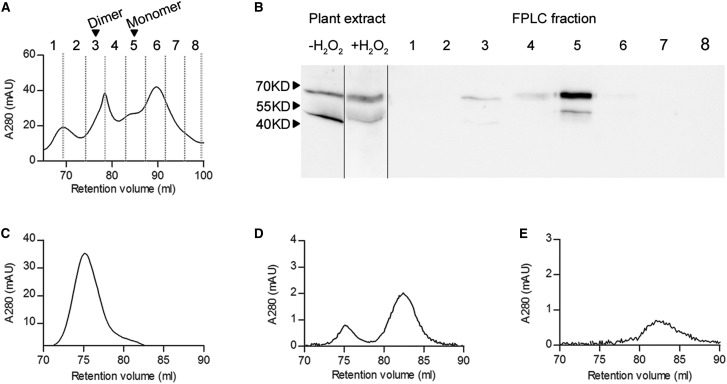
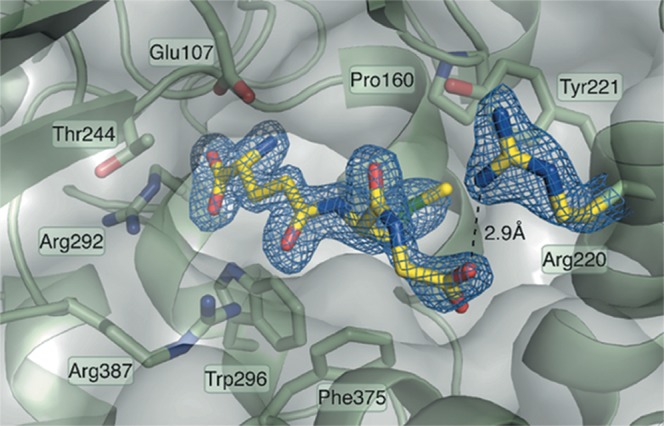
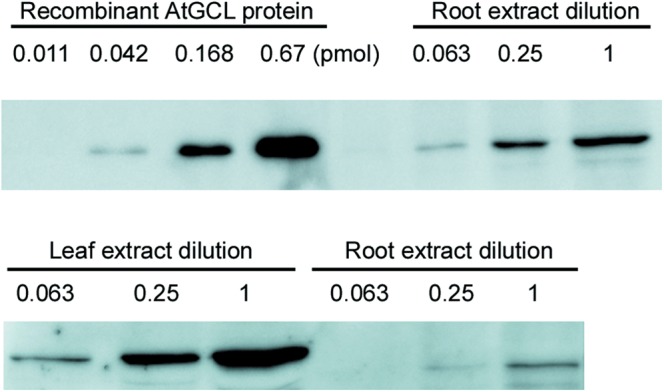
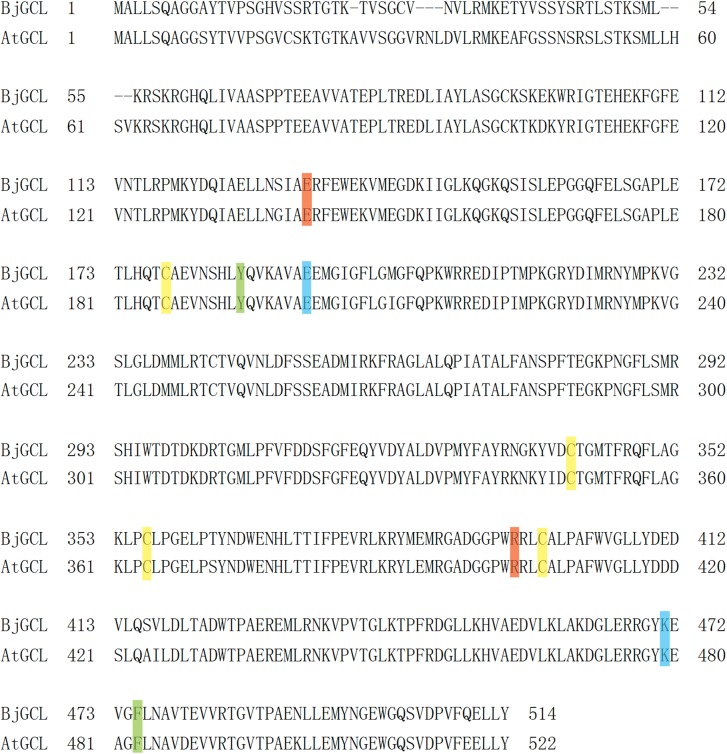
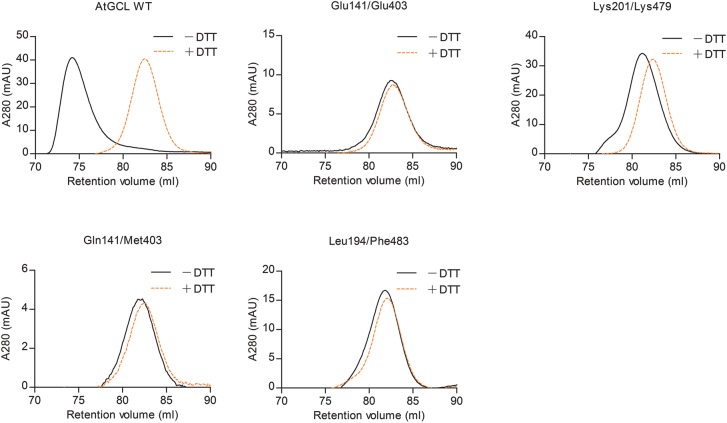
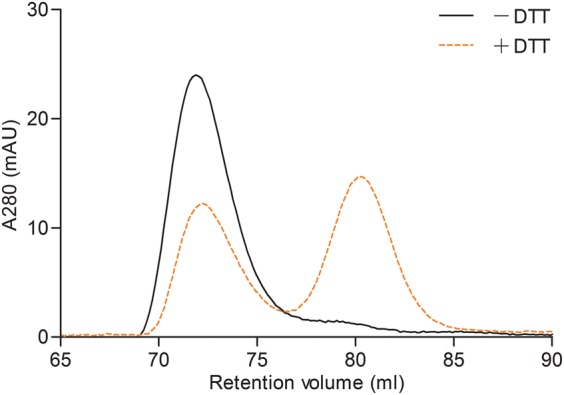
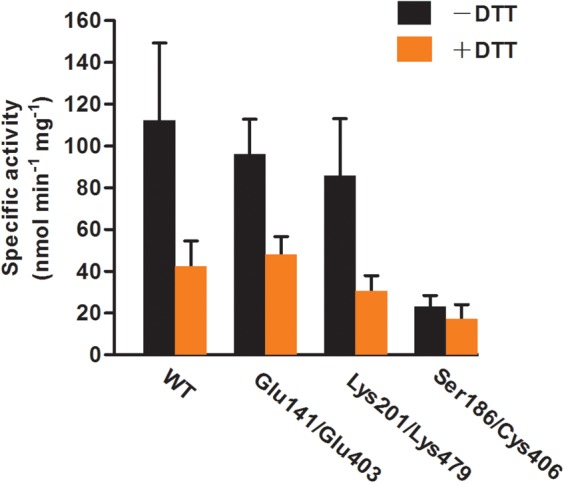
Plant γ-glutamylcysteine ligase (GCL), catalyzing the first and tightly regulated step of glutathione (GSH) biosynthesis, is redox-activated via formation of an intramolecular disulfide bond. , redox-activation of recombinant GCL protein causes formation of homo-dimers. Here, we have investigated whether dimerization occurs and if so whether it contributes to redox-activation. FPLC analysis indicated that recombinant redox-activated WT (wild type) AtGCL dissociates into monomers at concentrations below 10 M, i.e. below the endogenous AtGCL concentration in plastids, which was estimated to be in the micromolar range. Thus, dimerization of redox-activated GCL is expected to occur To determine the possible impact of dimerization on redox-activation, AtGCL mutants were generated in which salt bridges or hydrophobic interactions at the dimer interface were interrupted. WT AtGCL and mutant proteins were analyzed by non-reducing SDS-PAGE to address their redox state and probed by FPLC for dimerization status. Furthermore, their substrate kinetics (, ) were compared. The results indicate that dimer formation is not required for redox-mediated enzyme activation. Also, crystal structure analysis confirmed that dimer formation does not affect binding of GSH as competitive inhibitor. Whether dimerization affects other enzyme properties, e.g. GCL stability , remains to be investigated.
植物γ-谷氨酰半胱氨酸连接酶(GCL),催化谷胱甘肽(GSH)生物合成的第一步和最严格的调节步骤,通过形成分子内二硫键而被氧化还原激活。, 重组 GCL 蛋白的氧化还原激活导致同二聚体的形成。在这里,我们研究了二聚化是否发生,如果发生,它是否有助于氧化还原激活。FPLC 分析表明,重组氧化还原激活的 WT(野生型)AtGCL 在浓度低于 10μM 时解离成单体,即低于质体中内源性 AtGCL 的浓度,估计在微摩尔范围内。因此,氧化还原激活的 GCL 二聚化预计会发生 为了确定二聚化对氧化还原激活的可能影响,生成了 AtGCL 突变体,其中二聚体界面的盐桥或疏水相互作用被打断。通过非还原 SDS-PAGE 分析 WT AtGCL 和突变蛋白的氧化还原状态,并通过 FPLC 探测其二聚化状态。此外,还比较了它们的底物动力学(,)。结果表明,二聚体形成不是氧化还原介导的酶激活所必需的。此外,晶体结构分析证实二聚体形成不影响 GSH 作为竞争性抑制剂的结合。二聚化是否影响其他酶特性,例如 GCL 稳定性 ,仍有待研究。