Department of Obstetrics and Gynecology, University of Texas Medical Branch, 301 University Blvd, Galveston, Texas, USA.
J Immunol Res. 2019 Feb 7;2019:7375217. doi: 10.1155/2019/7375217. eCollection 2019.
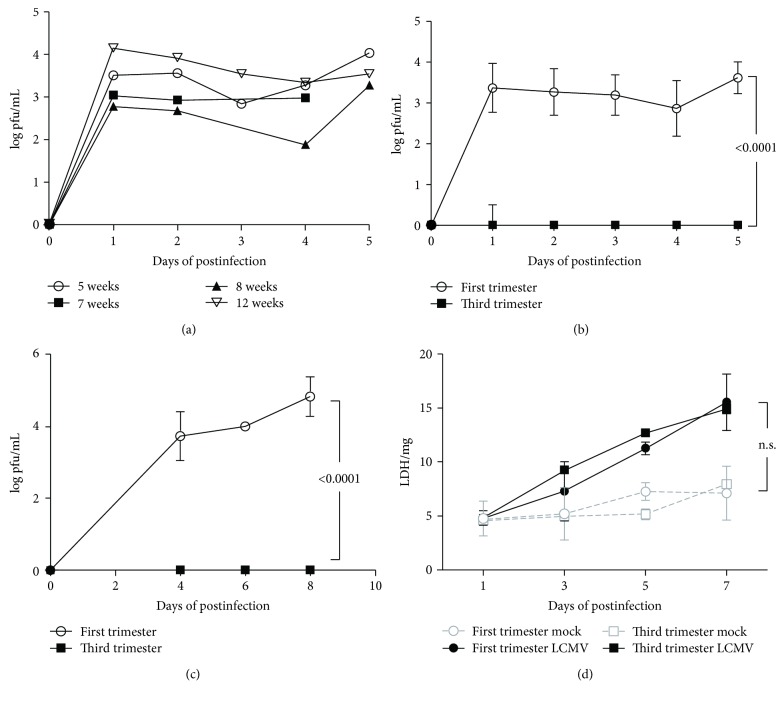
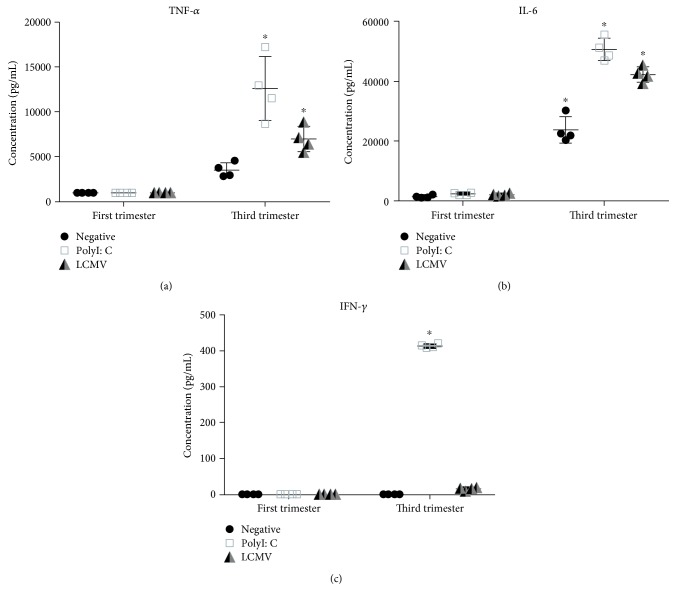
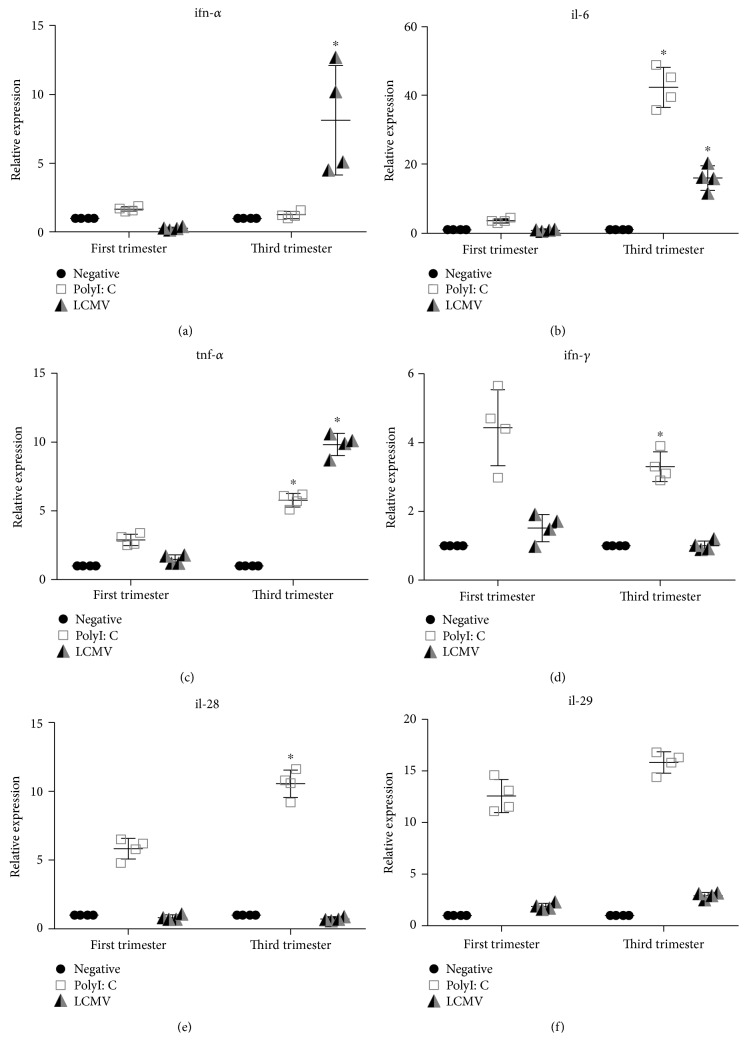
Lymphocytic choriomeningitis virus (LCMV) is a rodent disease that can be transmitted to humans. A majority of persons infected with LCMV have only minor symptoms; however, it can cross the placental barrier during pregnancy and cause congenital defects in the fetus. Some viral infections early in gestation are hypothesized to lead to worse outcomes compared to those acquired during late gestation; however, LCMV has not been studied in this context. In the present study, differences in immunomodulation between the first- and third-trimester placental explants infected with LCMV were measured. LCMV replication was observed in the first-trimester chorionic villi, but not in term. The term placenta exhibited a robust innate immune response to infection by LCMV, marked by induction of -, -, and - gene expression which was not seen in the first-trimester explants. Cytokine secretion was also only seen in term explants. The results indicate that the first-trimester and term placentas differ in their permissiveness for LCMV infection, inversely correlating with the innate antiviral responses. This has implications for developing effective mechanisms that protect the fetus from infection based on stage of development.
淋巴细胞性脉络丛脑膜炎病毒(LCMV)是一种啮齿动物疾病,可传播给人类。大多数感染 LCMV 的人只有轻微的症状;然而,它可以在怀孕期间穿过胎盘屏障,并导致胎儿先天缺陷。一些假设在妊娠早期发生的病毒感染比在妊娠晚期获得的感染导致更糟糕的结果;然而,尚未在这种情况下研究 LCMV。在本研究中,测量了感染 LCMV 的第一和第三孕期胎盘外植体之间的免疫调节差异。在第一孕期绒毛膜绒毛中观察到 LCMV 复制,但在足月时没有。足月胎盘对 LCMV 感染表现出强烈的先天免疫反应,表现为基因表达的诱导,而第一孕期外植体中未见这种反应。细胞因子分泌也仅见于足月外植体。结果表明,第一孕期和足月胎盘在 LCMV 感染的易感性上存在差异,与先天抗病毒反应呈负相关。这对根据发育阶段开发保护胎儿免受感染的有效机制具有重要意义。