Parmentier Julie M, Voss Jeff, Graff Candace, Schwartz Annette, Argiriadi Maria, Friedman Michael, Camp Heidi S, Padley Robert J, George Jonathan S, Hyland Deborah, Rosebraugh Matthew, Wishart Neil, Olson Lisa, Long Andrew J
1Immunology Discovery Research, AbbVie Bioresearch Center, 100 Research Dr, Worcester, MA 01605 USA.
2Immunology Clinical Development, AbbVie, 1 North Waukegan Rd, North Chicago, IL 60064 USA.
BMC Rheumatol. 2018 Aug 28;2:23. doi: 10.1186/s41927-018-0031-x. eCollection 2018.
Anti-cytokine therapies such as adalimumab, tocilizumab, and the small molecule JAK inhibitor tofacitinib have proven that cytokines and their subsequent downstream signaling processes are important in the pathogenesis of rheumatoid arthritis. Tofacitinib, a pan-JAK inhibitor, is the first approved JAK inhibitor for the treatment of RA and has been shown to be effective in managing disease. However, in phase 2 dose-ranging studies tofacitinib was associated with dose-limiting tolerability and safety issues such as anemia. Upadacitinib (ABT-494) is a selective JAK1 inhibitor that was engineered to address the hypothesis that greater JAK1 selectivity over other JAK family members will translate into a more favorable benefit:risk profile. Upadacitinib selectively targets JAK1 dependent disease drivers such as IL-6 and IFNγ, while reducing effects on reticulocytes and natural killer (NK) cells, which potentially contributed to the tolerability issues of tofacitinib.
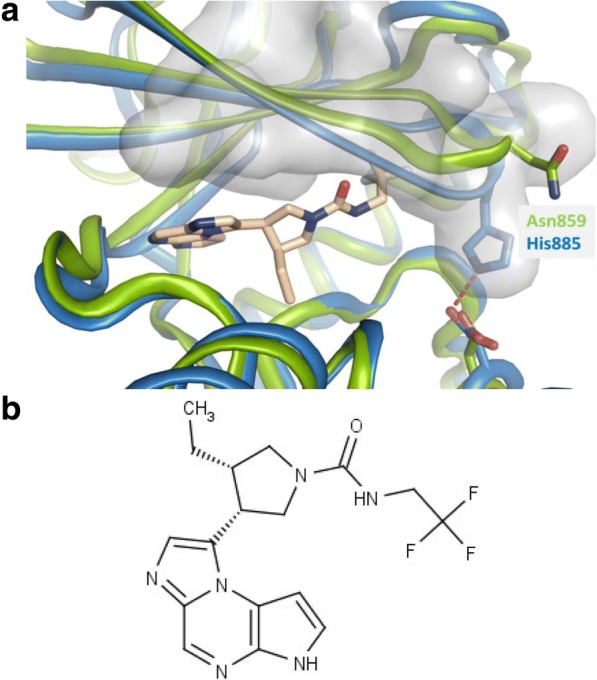
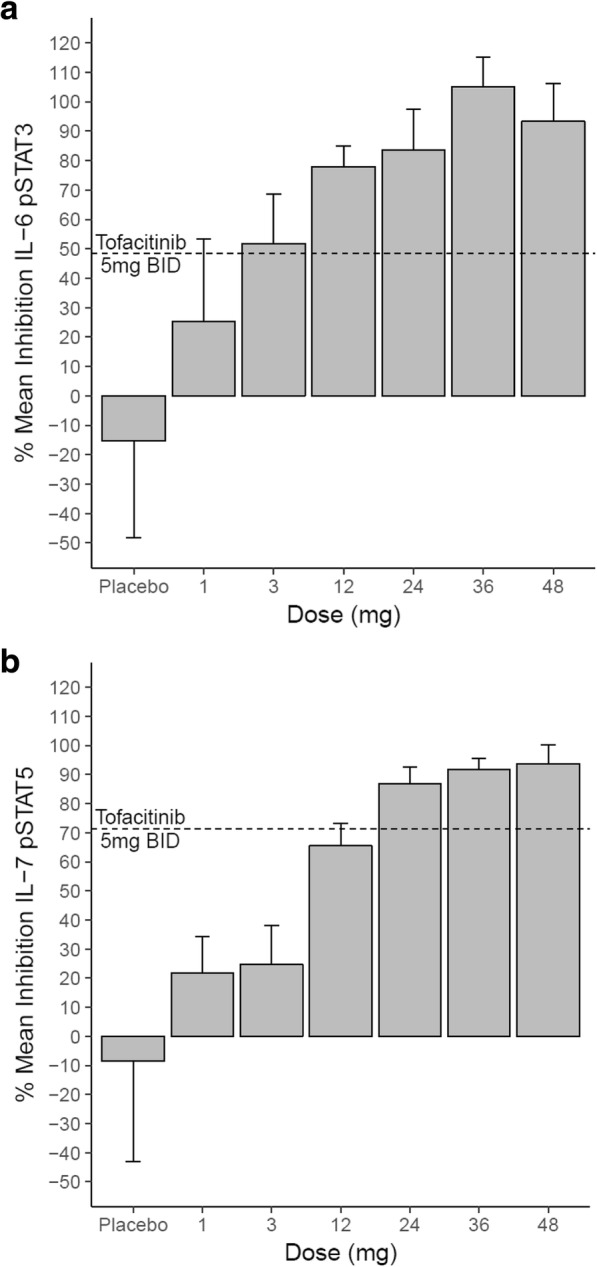
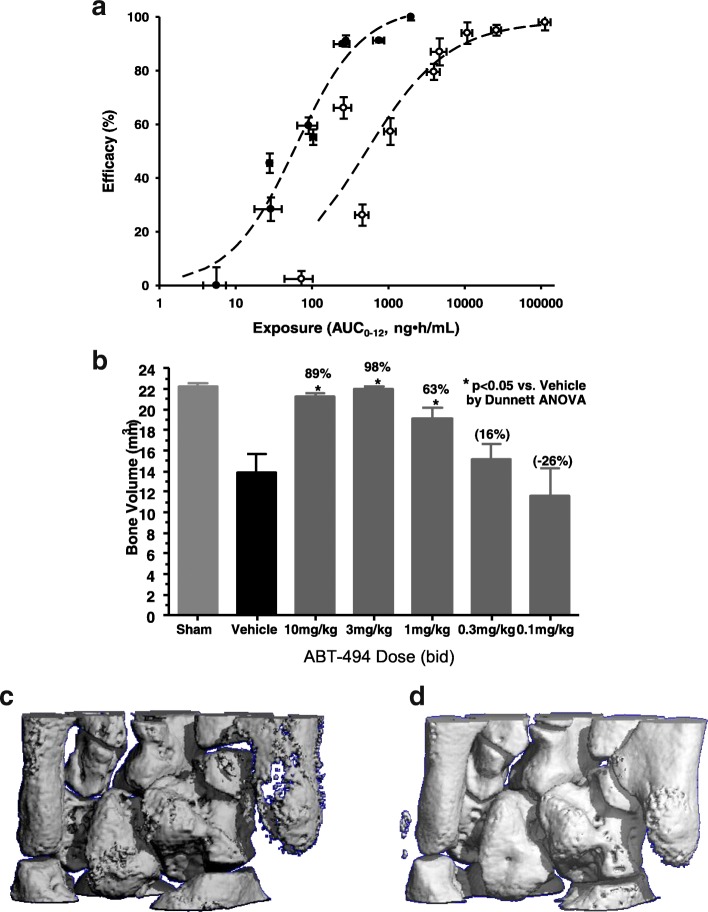
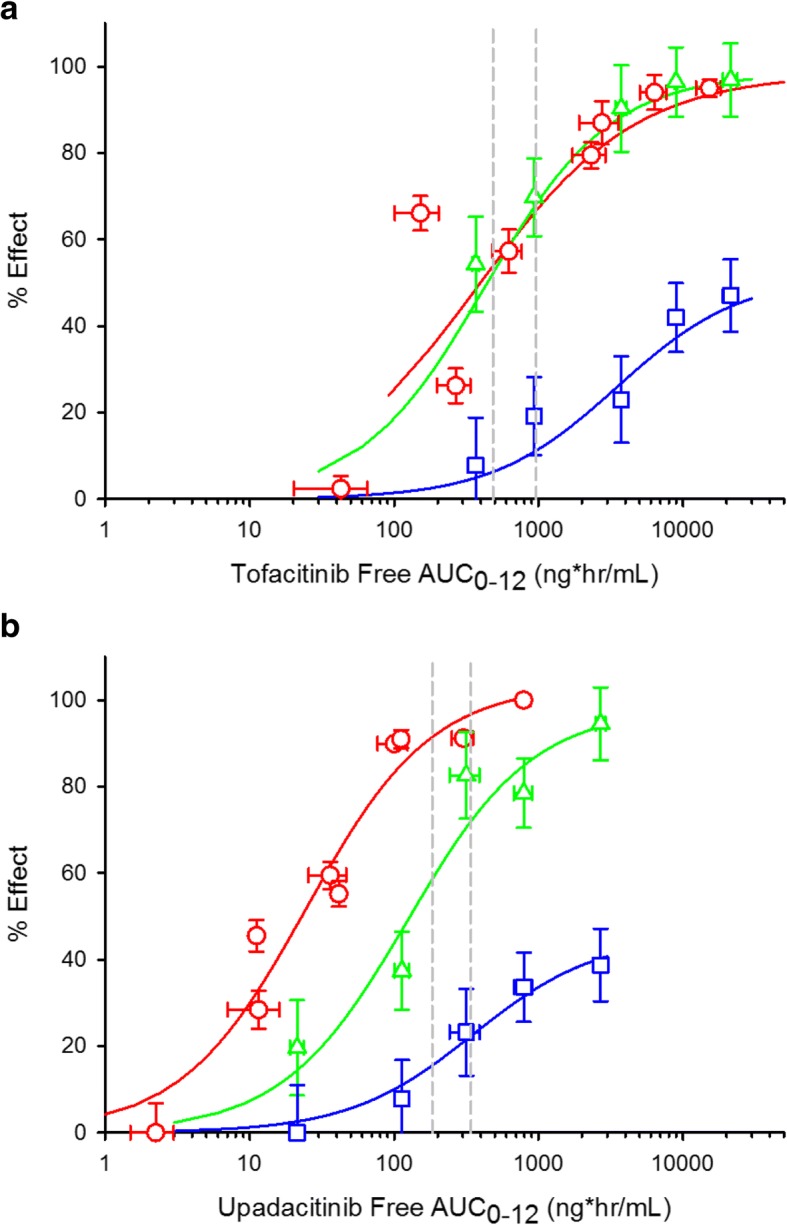
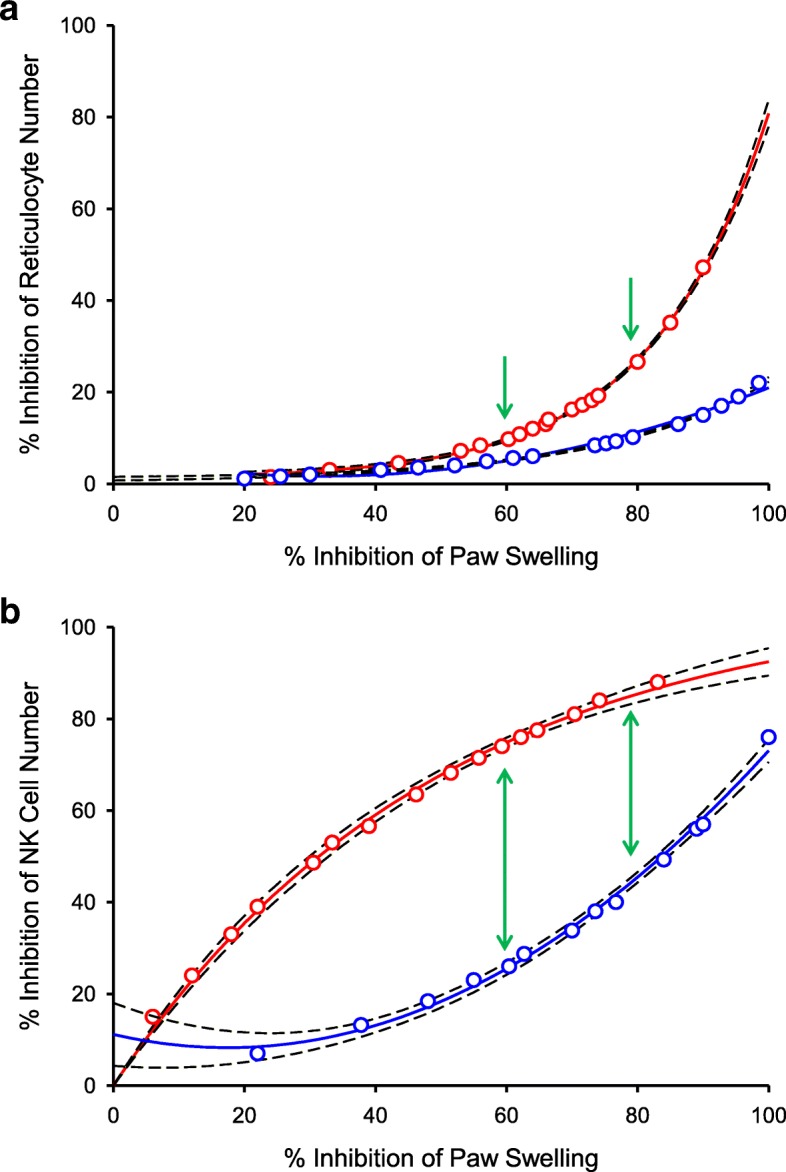
Structure-based hypotheses were used to design the JAK1 selective inhibitor upadacitinib. JAK family selectivity was defined with in vitro assays including biochemical assessments, engineered cell lines, and cytokine stimulation. In vivo selectivity was defined by the efficacy of upadacitinib and tofacitinib in a rat adjuvant induced arthritis model, activity on reticulocyte deployment, and effect on circulating NK cells. The translation of the preclinical JAK1 selectivity was assessed in healthy volunteers using ex vivo stimulation with JAK-dependent cytokines.
Here, we show the structural basis for the JAK1 selectivity of upadacitinib, along with the in vitro JAK family selectivity profile and subsequent in vivo physiological consequences. Upadacitinib is ~ 60 fold selective for JAK1 over JAK2, and > 100 fold selective over JAK3 in cellular assays. While both upadacitinib and tofacitinib demonstrated efficacy in a rat model of arthritis, the increased selectivity of upadacitinib for JAK1 resulted in a reduced effect on reticulocyte deployment and NK cell depletion relative to efficacy. Ex vivo pharmacodynamic data obtained from Phase I healthy volunteers confirmed the JAK1 selectivity of upadactinib in a clinical setting.
The data presented here highlight the JAK1 selectivity of upadacinitinib and supports its use as an effective therapy for the treatment of RA with the potential for an improved benefit:risk profile.
诸如阿达木单抗、托珠单抗以及小分子JAK抑制剂托法替布等抗细胞因子疗法已证实,细胞因子及其后续的下游信号传导过程在类风湿关节炎的发病机制中至关重要。托法替布作为一种泛JAK抑制剂,是首个获批用于治疗类风湿关节炎的JAK抑制剂,且已显示出对疾病的有效控制作用。然而,在2期剂量范围研究中,托法替布存在剂量限制性耐受性和安全性问题,如贫血。乌帕替尼(ABT - 494)是一种选择性JAK1抑制剂,其设计基于这样一种假设:相较于其他JAK家族成员,对JAK1具有更高的选择性将转化为更有利的效益风险比。乌帕替尼选择性靶向依赖JAK1的疾病驱动因子,如白细胞介素 - 6和干扰素γ,同时减少对网织红细胞和自然杀伤(NK)细胞的影响,而这些影响可能是导致托法替布耐受性问题的原因。
基于结构的假设被用于设计JAK1选择性抑制剂乌帕替尼。通过包括生化评估、工程细胞系和细胞因子刺激在内的体外试验来定义JAK家族选择性。通过乌帕替尼和托法替布在大鼠佐剂诱导性关节炎模型中的疗效、对网织红细胞生成的作用以及对循环NK细胞的影响来定义体内选择性。在健康志愿者中,使用依赖JAK的细胞因子进行体外刺激,评估临床前JAK1选择性的转化情况。
在此,我们展示了乌帕替尼JAK1选择性的结构基础,以及体外JAK家族选择性概况和随后的体内生理结果。在细胞试验中,乌帕替尼对JAK1的选择性比对JAK2高约60倍,对JAK3的选择性超过100倍。虽然乌帕替尼和托法替布在大鼠关节炎模型中均显示出疗效,但相对于疗效而言,乌帕替尼对JAK1更高的选择性导致其对网织红细胞生成和NK细胞耗竭的影响较小。从I期健康志愿者获得的体外药效学数据证实了乌帕替尼在临床环境中的JAK1选择性。
本文所呈现的数据突出了乌帕替尼的JAK1选择性,并支持其作为一种有效疗法用于治疗类风湿关节炎,且具有改善效益风险比的潜力。