Centro Andaluz de Biología del Desarrollo, Universidad Pablo de Olavide/Consejo Superior de Investigaciones Científicas/Junta de Andalucía, Sevilla, Spain.
Departamento de Biología Molecular e Ingeniería Bioquímica, Universidad Pablo de Olavide, Sevilla, Spain.
PLoS One. 2019 Mar 19;14(3):e0214166. doi: 10.1371/journal.pone.0214166. eCollection 2019.
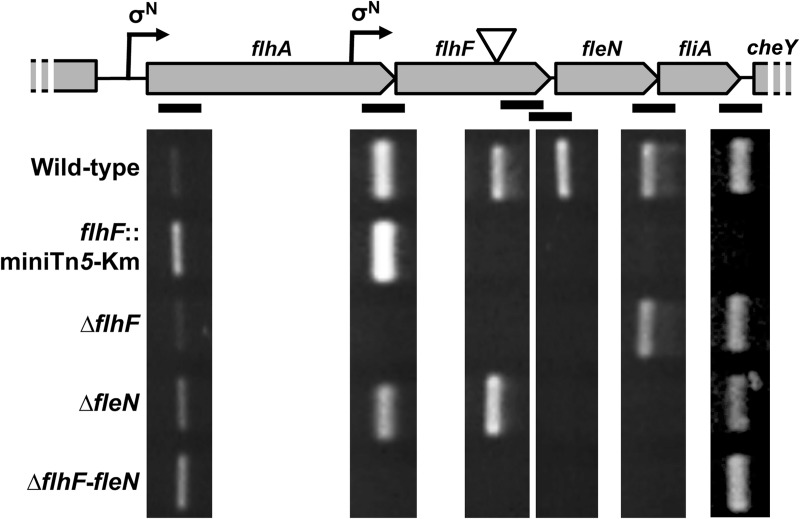
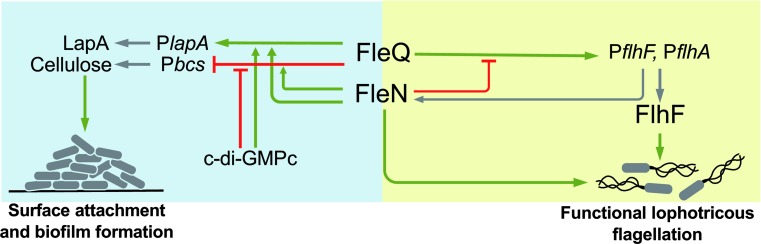
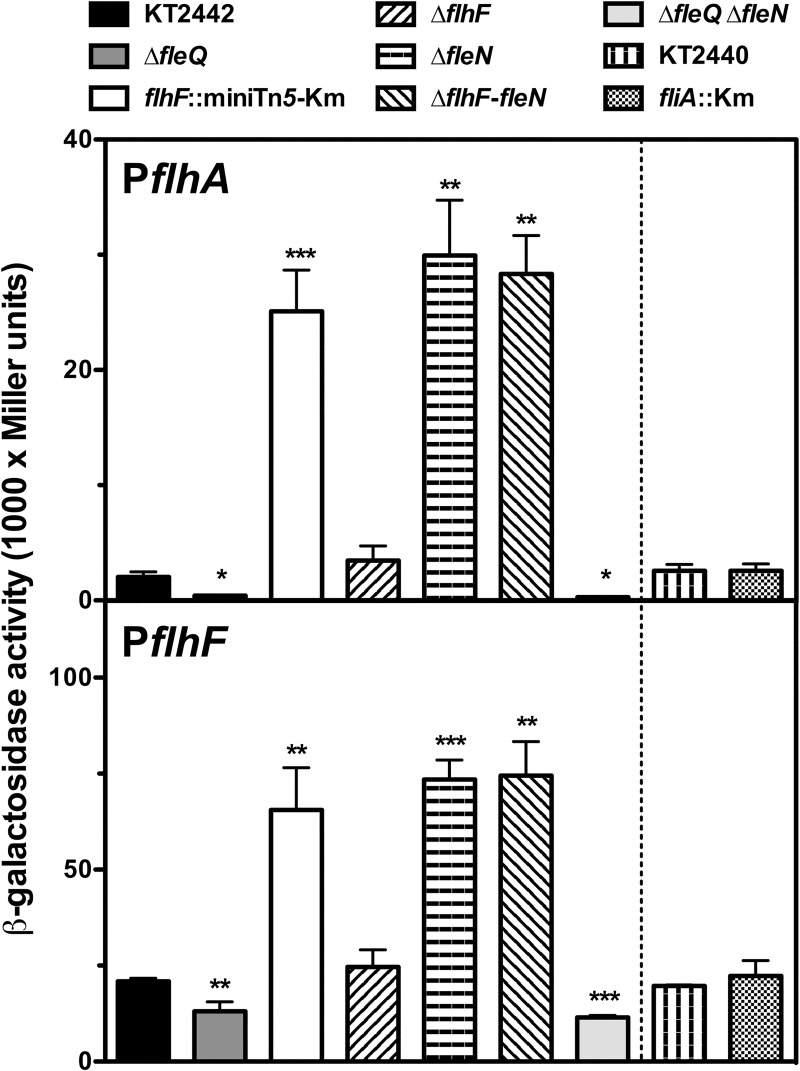
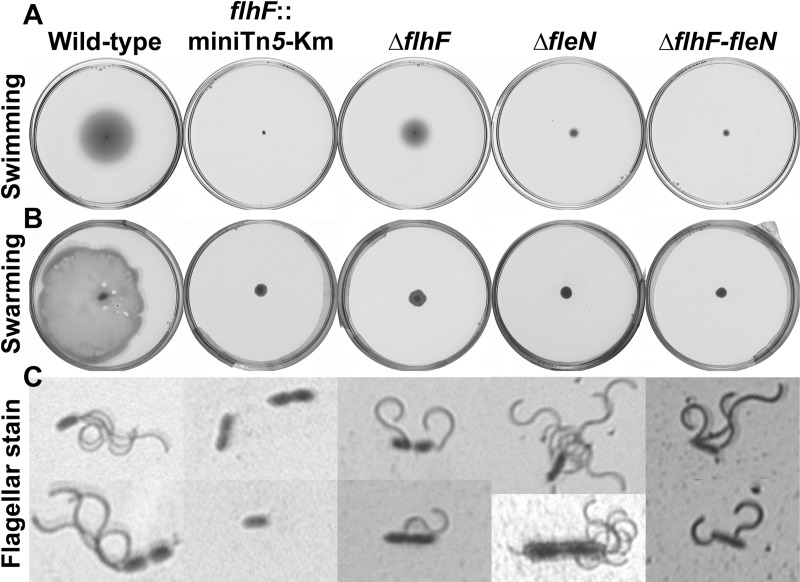
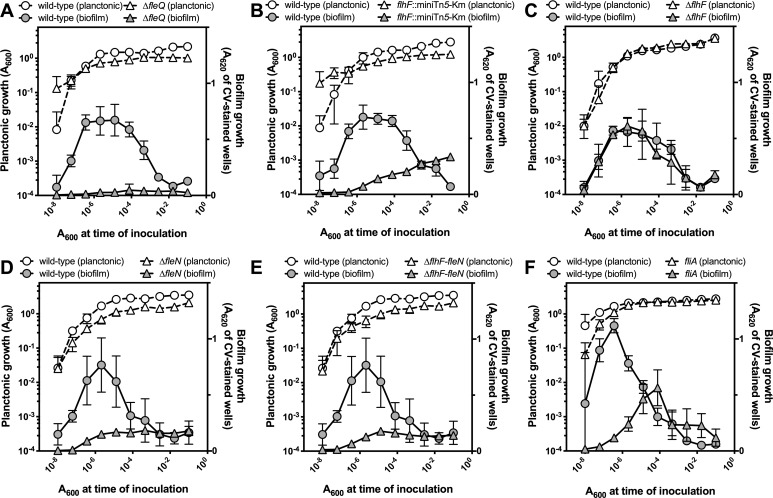
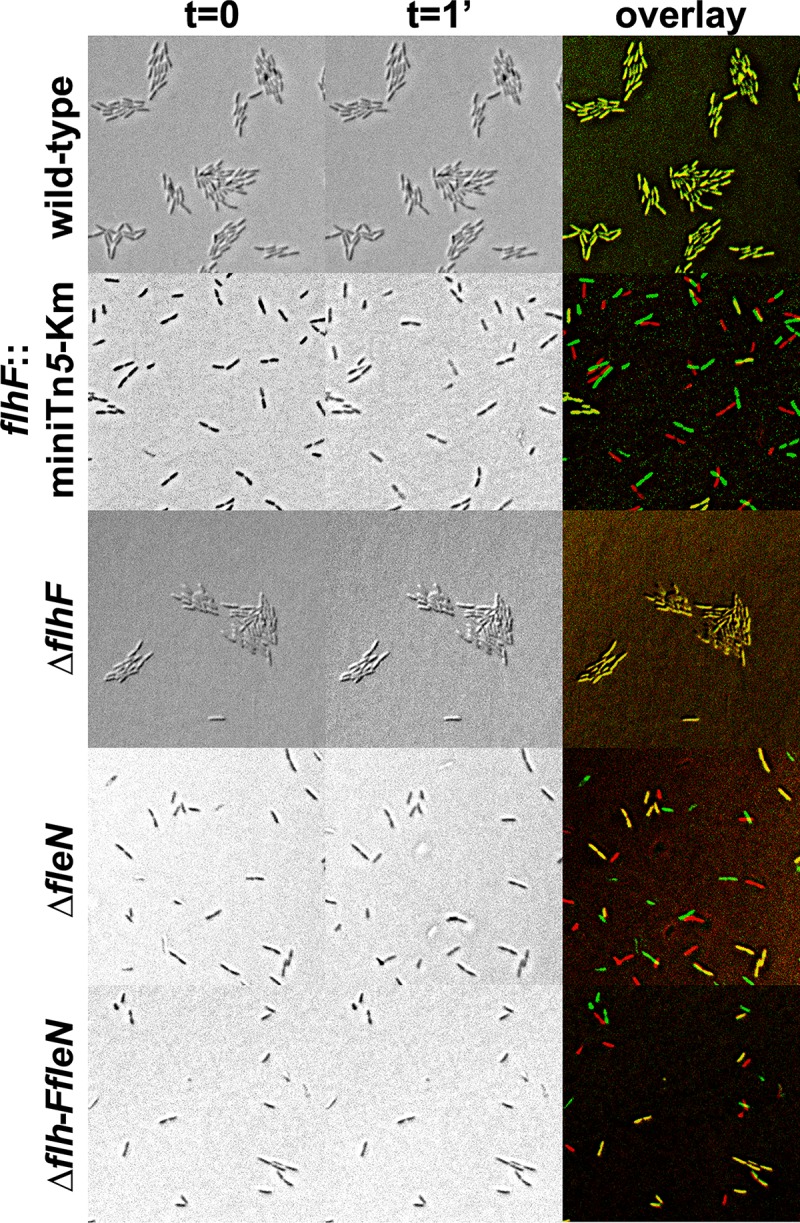
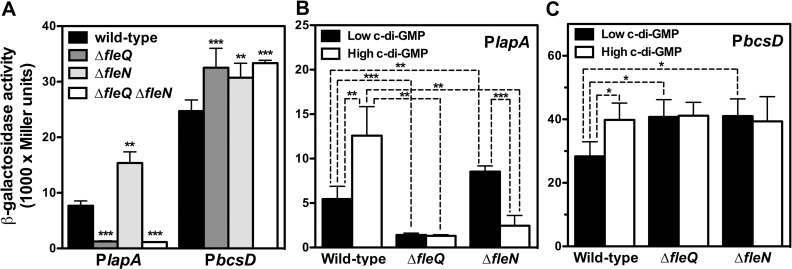
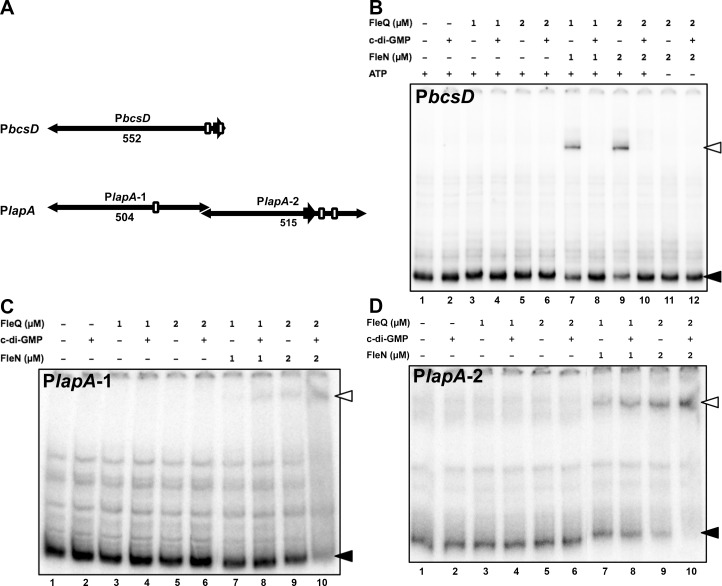
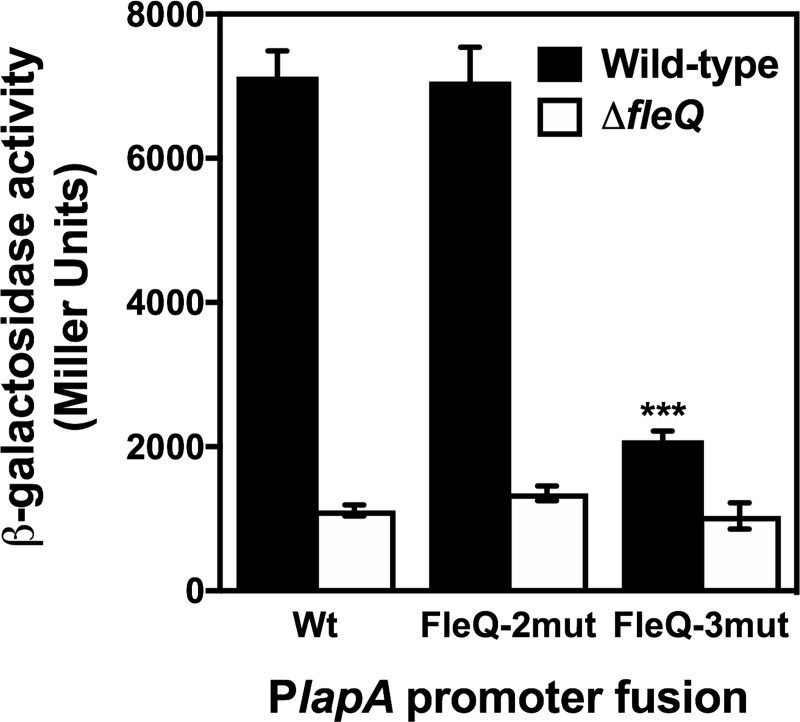
The Pseudomonas putida flhA-flhF-fleN-fliA cluster encodes a component of the flagellar export gate and three regulatory elements potentially involved in flagellar biogenesis and other functions. Here we show that these four genes form an operon, whose transcription is driven from the upstream PflhA promoter. A second promoter, PflhF, provides additional transcription of the three distal genes. PflhA and PflhF are σN-dependent, activated by the flagellar regulator FleQ, and negatively regulated by FleN. Motility, surface adhesion and colonization defects of a transposon insertion mutant in flhF revealed transcriptional polarity on fleN and fliA, as the former was required for strong surface adhesion and biofilm formation, and the latter was required for flagellar synthesis. On the other hand, FlhF and FleN were necessary to attain proper flagellar location and number for a fully functional flagellar complement. FleN, along with FleQ and the second messenger c-di-GMP differentially regulated transcription of lapA and the bcs operon, encoding a large adhesion protein and cellulose synthase. FleQ positively regulated the PlapA promoter and activation was antagonized by FleN and c-di-GMP. PbcsD was negatively regulated by FleQ and FleN, and repression was antagonized by c-di-GMP. FleN promoted FleQ binding to both PlapA and PbcsD in vitro, while c-di-GMP antagonized interaction with PbcsD and stimulated interaction with PlapA. A single FleQ binding site in PlapA was critical to activation in vivo. Our results suggest that FleQ, FleN and c-di-GMP cooperate to coordinate the regulation of flagellar motility and biofilm development.
恶臭假单胞菌 flhA-flhF-fleN-fliA 簇编码了鞭毛输出门的一个组成部分和三个潜在参与鞭毛生物发生和其他功能的调节元件。在这里,我们表明这四个基因形成一个操纵子,其转录由上游 PflhA 启动子驱动。第二个启动子 PflhF 为三个远端基因提供额外的转录。PflhA 和 PflhF 是 σN 依赖性的,由鞭毛调节因子 FleQ 激活,并受 FleN 负调控。在 flhF 转座子插入突变体中,运动性、表面粘附和定植缺陷表明 fleN 和 fliA 的转录极性,因为前者是强表面粘附和生物膜形成所必需的,后者是鞭毛合成所必需的。另一方面,FlhF 和 FleN 对于获得具有完全功能的鞭毛补充的适当鞭毛位置和数量是必需的。FleN 与 FleQ 和第二信使 c-di-GMP 一起,差异调节编码大型粘附蛋白和纤维素合酶的 lapA 和 bcs 操纵子的转录。FleQ 正向调节 PlapA 启动子,激活受到 FleN 和 c-di-GMP 的拮抗。PbcsD 受 FleQ 和 FleN 的负调控,而 c-di-GMP 的抑制作用则拮抗。FleN 在体外促进 FleQ 与 PlapA 和 PbcsD 的结合,而 c-di-GMP 拮抗与 PbcsD 的相互作用并刺激与 PlapA 的相互作用。PlapA 中的单个 FleQ 结合位点对于体内激活至关重要。我们的结果表明,FleQ、FleN 和 c-di-GMP 合作协调鞭毛运动和生物膜发育的调节。