Laboratory of Virology, Wageningen University & Research, Droevendaalsesteeg 1, 6708 PB Wageningen, The Netherlands.
Department of Medical Microbiology, Radboud University Medical Center, Radboud Institute for Molecular Life Sciences, Geert Grooteplein Zuid 28, 6525 GA Nijmegen, The Netherlands.
Viruses. 2019 Mar 18;11(3):271. doi: 10.3390/v11030271.
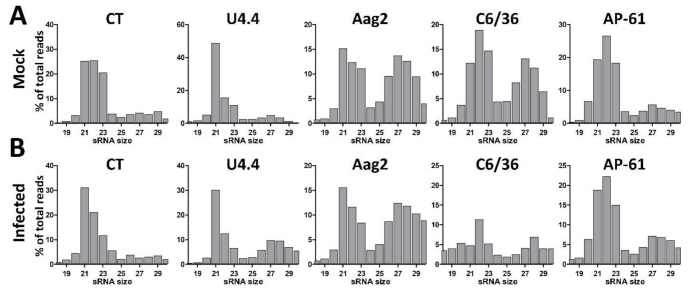
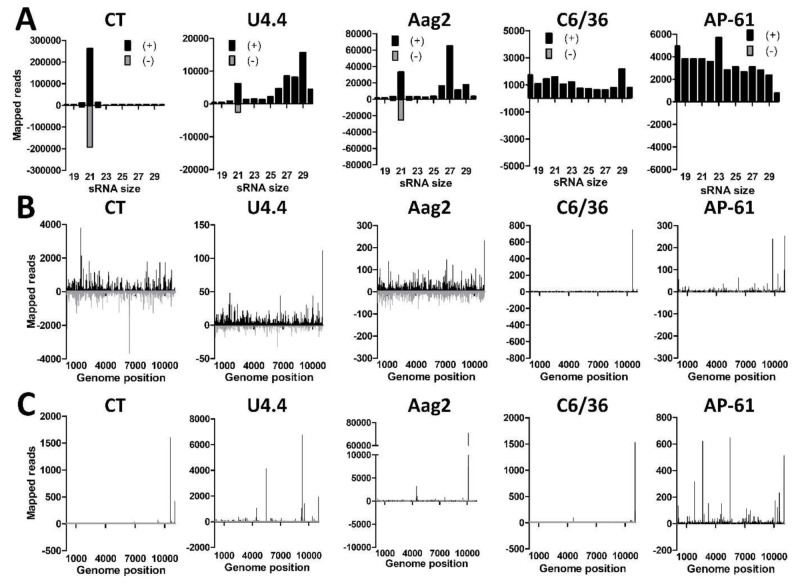
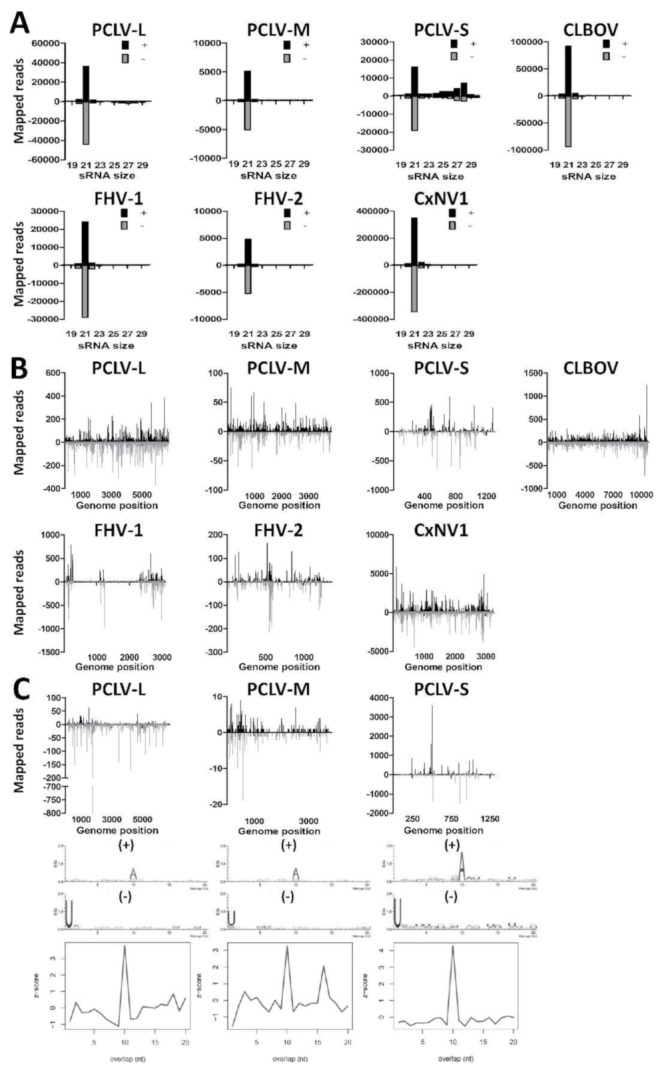
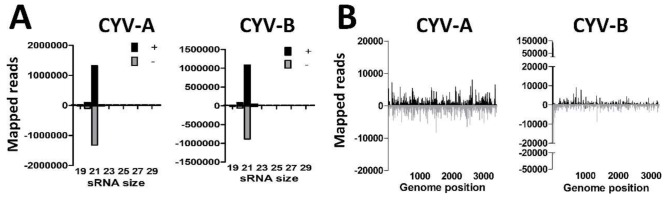
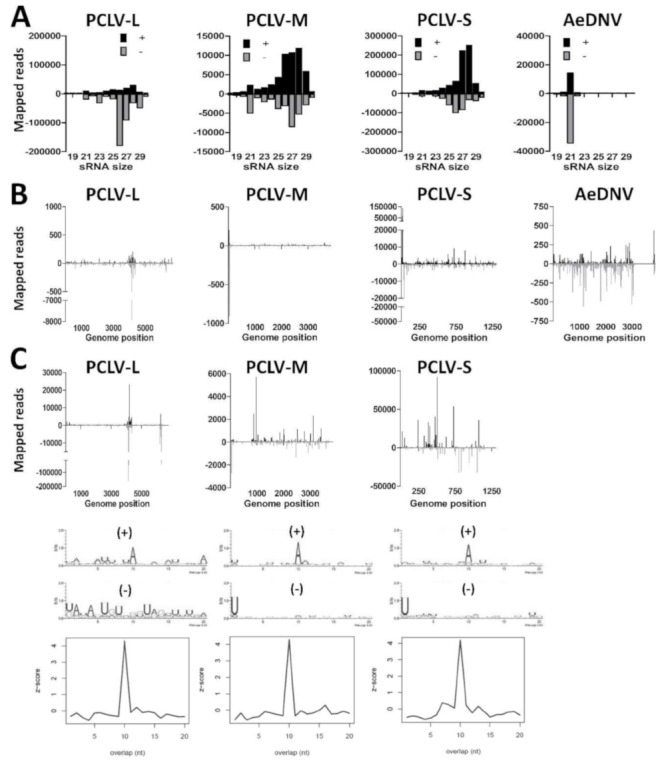
Small RNA mediated responses are essential for antiviral defence in mosquitoes, however, they appear to differ per virus-vector combination. To further investigate the diversity of small RNA responses against viruses in mosquitoes, we applied a small RNA deep sequencing approach on five mosquito cell lines: CT cells, U4.4 and C6/36 cells, Aag2 cells (cleared from cell fusing agent virus and Culex Y virus (CYV) by repetitive dsRNA transfections) and AP-61 cells. assembly of small RNAs revealed the presence of Phasi Charoen-like virus (PCLV), Calbertado virus, Flock House virus and a novel narnavirus in CT cells, CYV in U4.4 cells, and PCLV in Aag2 cells, whereas no insect-specific viruses (ISVs) were detected in C6/36 and AP-61 cells. Next, we investigated the small RNA responses to the identified ISVs and to acute infection with the arthropod-borne West Nile virus (WNV). We demonstrate that AP-61 and C6/36 cells do not produce siRNAs to WNV infection, suggesting that AP-61, like C6/36, are Dicer-2 deficient. CT cells produced a strong siRNA response to the persistent ISVs and acute WNV infection. Interestingly, CT cells also produced viral PIWI-interacting (pi)RNAs to PCLV, but not to WNV or any of the other ISVs. In contrast, in U4.4 and Aag2 cells, WNV siRNAs, and pi-like RNAs without typical ping-pong piRNA signature were observed, while this signature was present in PCLV piRNAs in Aag2 cells. Together, our results demonstrate that mosquito small RNA responses are strongly dependent on both the mosquito cell type and/or the mosquito species and family of the infecting virus.
小 RNA 介导的反应是蚊子抗病毒防御的关键,但它们似乎因病毒-载体组合的不同而有所不同。为了进一步研究蚊子对病毒的小 RNA 反应的多样性,我们应用了一种小 RNA 深度测序方法对五种蚊子细胞系进行了研究:CT 细胞、U4.4 和 C6/36 细胞、Aag2 细胞(通过重复 dsRNA 转染从细胞融合剂病毒和库蚊 Y 病毒(CYV)中清除)和 AP-61 细胞。小 RNA 的组装揭示了 Phasi Charoen-like 病毒(PCLV)、Calbertado 病毒、Flock House 病毒和一种新型 narnavirus 存在于 CT 细胞中,CYV 存在于 U4.4 细胞中,PCLV 存在于 Aag2 细胞中,而 C6/36 和 AP-61 细胞中未检测到昆虫特异性病毒(ISVs)。接下来,我们研究了鉴定出的 ISVs 和急性感染节肢动物传播的西尼罗河病毒(WNV)的小 RNA 反应。我们证明,AP-61 和 C6/36 细胞不会对 WNV 感染产生 siRNA,这表明 AP-61 像 C6/36 一样缺乏 Dicer-2。CT 细胞对持续性 ISVs 和急性 WNV 感染产生强烈的 siRNA 反应。有趣的是,CT 细胞还产生了针对 PCLV 的病毒 PIWI 相互作用(pi)RNA,但对 WNV 或任何其他 ISVs 都没有。相比之下,在 U4.4 和 Aag2 细胞中,观察到了 WNV siRNAs 和没有典型乒乓 piRNA 特征的 pi 样 RNA,而在 Aag2 细胞中的 PCLV piRNAs 中存在该特征。总之,我们的研究结果表明,蚊子的小 RNA 反应强烈依赖于蚊子细胞类型和/或感染病毒的蚊子种和科。