Center for Immunobiology and Vaccine Development, UCSF Benioff Children's Hospital Oakland Research Institute, Oakland, California, USA.
Center for Immunobiology and Vaccine Development, UCSF Benioff Children's Hospital Oakland Research Institute, Oakland, California, USA
mBio. 2019 Mar 19;10(2):e00225-19. doi: 10.1128/mBio.00225-19.
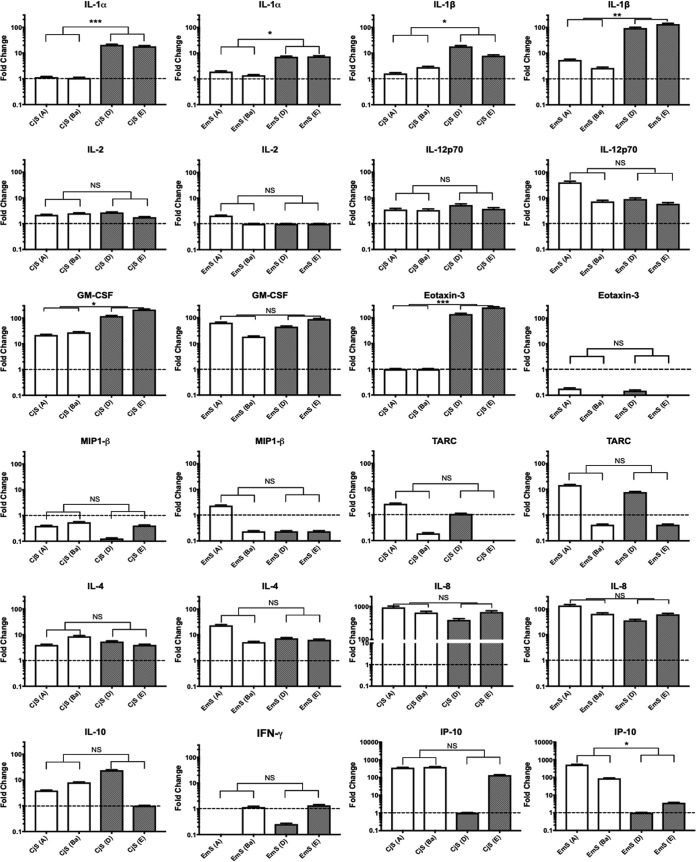
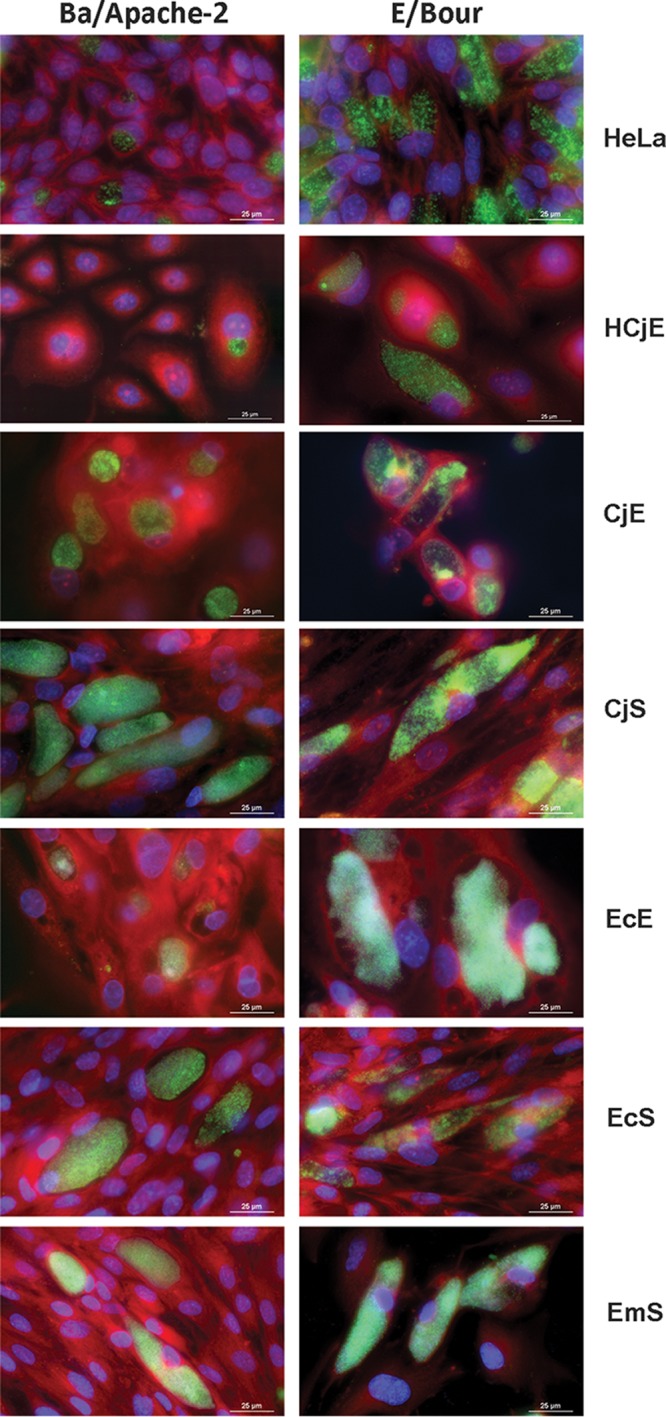
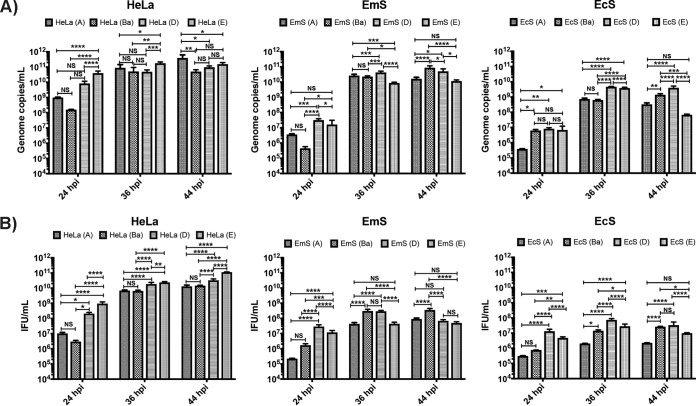
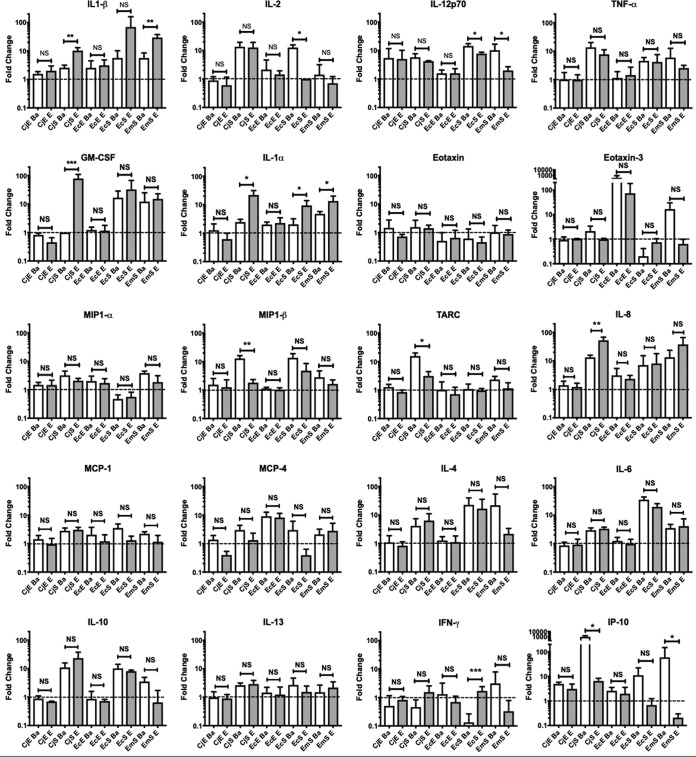
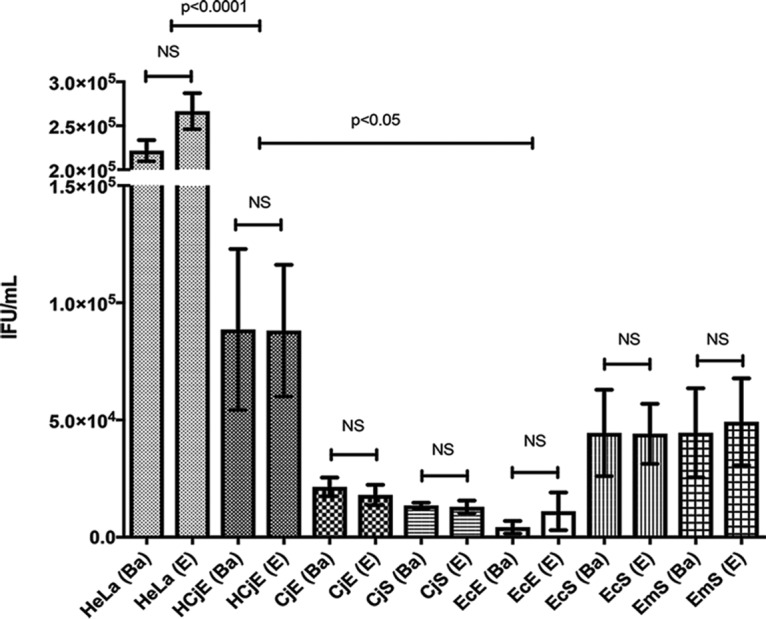
ocular strains cause a blinding disease known as trachoma. These strains rarely cause urogenital infections and are not found in the upper genital tract or rectum. Urogenital strains are responsible for a self-limited conjunctivitis and the sequelae of infertility, ectopic pregnancy, and hemorrhagic proctitis. However, the differential cellular responses that drive these clinically observed disease outcomes are not completely understood. Primary conjunctival, endocervical, and endometrial epithelial and stromal fibroblast cells, HeLa229 cells, and immortalized conjunctival epithelial (HCjE) cells were infected with the ocular A/Har-13 (A) and Ba/Apache-2 (Ba) strains and urogenital D/UW-3 (D) and E/Bour (E) strains. Infection rates, progeny production, and cytokine/chemokine secretion levels were evaluated in comparison with those in uninfected cells. All strain types infected all cell types with similar levels of efficacy and development. However, progeny production levels differed among primary cells: Ba produced significantly more progeny than E in endocervical and endometrial fibroblasts, while A progeny were less abundant than E progeny. infection of primary epithelial cells elicited an increase in pro- and anti-inflammatory mediators compared to levels in uninfected cells, but there were no significant differences by strain type. In contrast, for primary fibroblasts, ocular strains elicited significant increases in the pro- and anti-inflammatory mediators macrophage inflammatory protein (MIP)-1β, thymus- and activation-regulated chemokine (TARC), interleukin (IL)-2, IL-12p70, and interferon gamma-induced protein 10 (IP-10) compared to levels in urogenital strains, while urogenital strains elicited a distinct and significant increase in the proinflammatory mediators IL-1α, IL-1β, IL-8, gamma interferon (IFN-γ), and granulocyte-macrophage colony-stimulating factor (GM-CSF). Our data indicate that primary fibroblasts, not epithelial cells, drive host inflammatory responses that are dependent on strain type and likely influence disease outcomes, establishing their importance as a novel model for studies of disease pathogenesis. is a human pathogen and the leading cause of preventable blindness and sexually transmitted diseases in the world. Certain strains cause ocular disease, while others cause upper genital tract pathology. However, little is known about the cellular or immunologic basis for these differences. Here, we compared the abilities of the strain types to infect, replicate, and initiate an immune response in primary human ocular and urogenital epithelial cells, as well as in fibroblasts from the underlying stroma. While there were no significant differences in infection rates or intracellular growth for any strain in any cell type, proinflammatory responses were driven not by the epithelial cells but by fibroblasts and were distinct between ocular and urogenital strains. Our findings suggest that primary fibroblasts are a novel and more appropriate model for studies of immune responses that will expand our understanding of the differential pathological disease outcomes caused by various strain types.
眼 strain 导致一种称为沙眼的致盲疾病。这些 strain 很少引起泌尿生殖道感染,也不会在上生殖道或直肠中发现。泌尿生殖道 strain 可引起自限性结膜炎和不孕、异位妊娠和出血性直肠炎的后遗症。然而,驱动这些临床观察到的疾病结果的差异细胞反应尚不完全清楚。原代结膜、宫颈和子宫内膜上皮和基质成纤维细胞、HeLa229 细胞和永生化结膜上皮(HCjE)细胞感染了眼 A/Har-13(A)和 Ba/Apache-2(Ba) strain 和泌尿生殖道 D/UW-3(D)和 E/Bour(E) strain。与未感染细胞相比,评估了感染率、后代产生和细胞因子/趋化因子分泌水平。所有 strain 类型均以相似的功效和发育水平感染所有细胞类型。然而,原代细胞的后代产生水平存在差异:Ba 在宫颈和子宫内膜成纤维细胞中产生的后代比 E 多,而 A 的后代比 E 的后代少。原代上皮细胞的 感染引发了促炎和抗炎介质的增加,与未感染细胞相比,但 strain 类型之间没有显著差异。相比之下,对于原代成纤维细胞,眼 strain 引发了促炎和抗炎介质巨噬细胞炎性蛋白(MIP)-1β、胸腺激活调节趋化因子(TARC)、白细胞介素(IL)-2、IL-12p70 和干扰素 γ 诱导蛋白 10(IP-10)的显著增加与泌尿生殖道 strain 相比,而泌尿生殖道 strain 引发了促炎介质白细胞介素(IL)-1α、IL-1β、IL-8、γ干扰素(IFN-γ)和粒细胞-巨噬细胞集落刺激因子(GM-CSF)的明显增加。我们的数据表明,原代成纤维细胞而不是上皮细胞驱动宿主炎症反应,这种反应依赖于 strain 类型,可能影响疾病结果,确立了它们作为研究 疾病发病机制的新型模型的重要性。是一种人类病原体,也是世界上可预防失明和性传播疾病的主要原因。某些 strain 会引起眼部疾病,而其他 strain 则会引起上生殖道病理。然而,对于这些差异的细胞或免疫基础知之甚少。在这里,我们比较了各种 strain 类型在原代人眼和泌尿生殖道上皮细胞以及其下基质成纤维细胞中感染、复制和引发免疫反应的能力。虽然在任何细胞类型中,任何 strain 的感染率或细胞内生长都没有显著差异,但促炎反应不是由上皮细胞驱动的,而是由成纤维细胞驱动的,并且在眼 strain 和泌尿生殖道 strain 之间存在差异。我们的研究结果表明,原代成纤维细胞是研究免疫反应的新型和更合适的模型,这将扩展我们对不同 strain 类型引起的不同病理疾病结果的理解。