Department of Surgery, Graduate School of Medicine, Kyoto University, Kyoto, Japan.
Cell Death Dis. 2019 Mar 19;10(4):264. doi: 10.1038/s41419-019-1508-2.
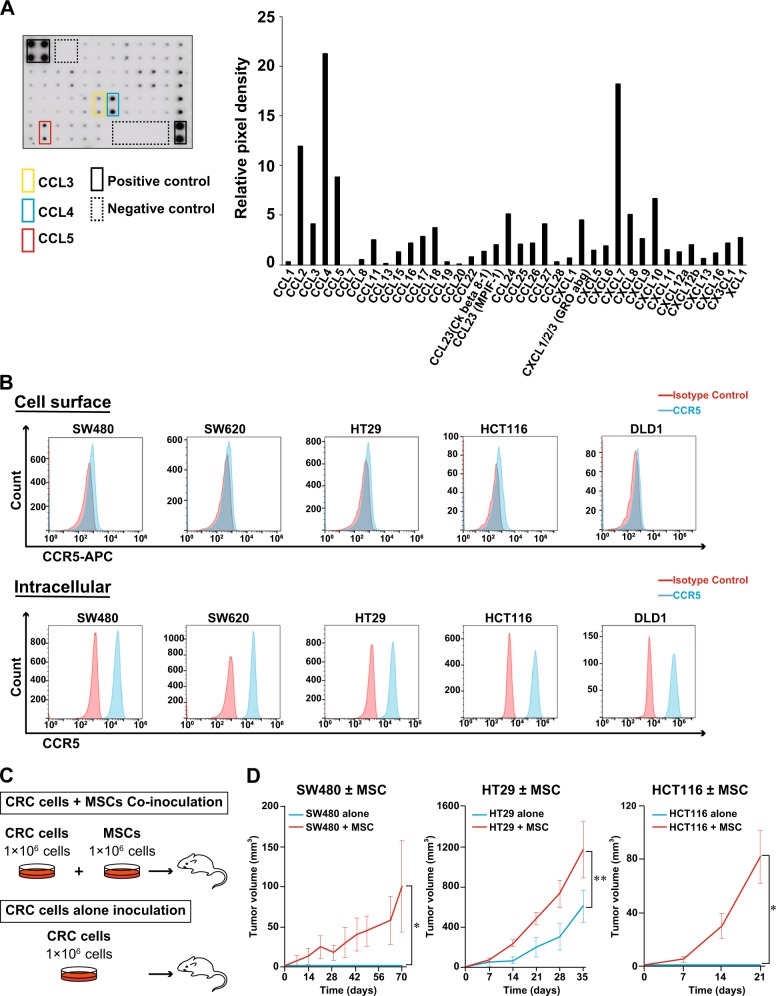
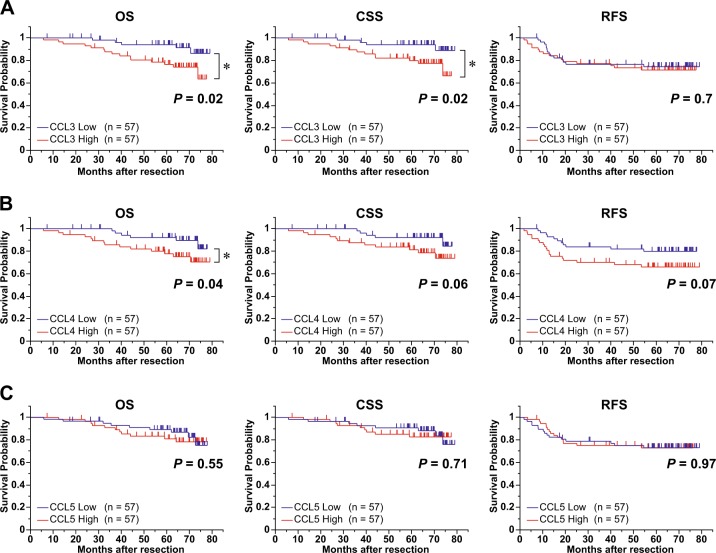
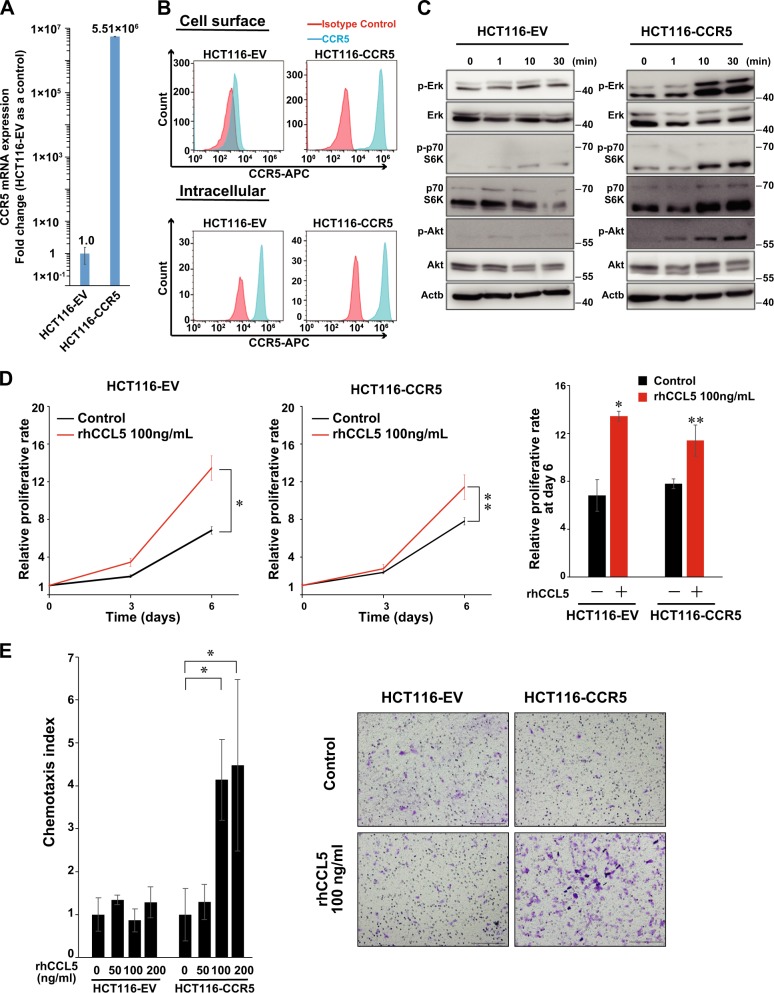
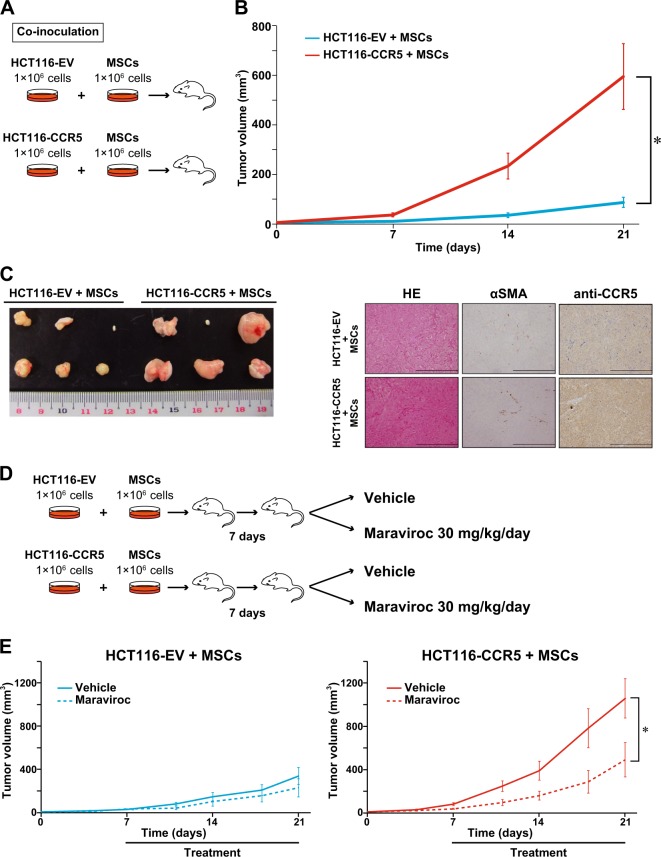
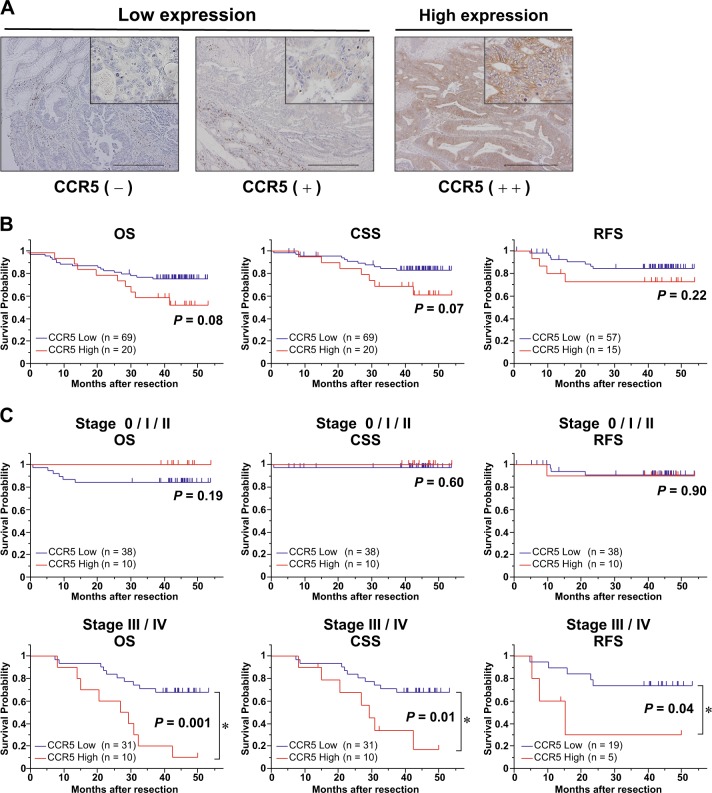
Mesenchymal stem cells (MSCs) are recruited from BM to the stroma of developing tumors, where they serve as critical components of the tumor microenvironment by secreting growth factors, cytokines, and chemokines. The role of MSCs in colorectal cancer (CRC) progression was controversial. In this study, we found that C-C chemokine receptor type 5 (CCR5) ligands (i.e., C-C motif chemokine ligand 3 (CCL3), CCL4, and CCL5) were highly produced from MSCs using a chemokine array screening with conditioned media from the cultured human MSCs. A relatively strong CCR5 expression could be detected within the cytoplasm of several CRC cell lines. Regarding the effect of MSC, we found that the xenografts in which CCR5-overexpressing HCT116 cells were inoculated into immunocompromised mice were highly promoted in vivo by a mixture with MSCs. Notably, the CCR5 inhibitor, maraviroc, significantly abolished the MSC-induced tumor growth in vivo. In human clinical specimens (n = 89), 20 cases (29%) were high for CCR5, whereas 69 cases (71%) were low. Statistical analyses indicated that CCR5 expression in primary CRC was associated with CRC patients' prognosis. Especially, stage III/IV patients with CCR5-high CRCs exhibited a significantly poorer prognosis than those with CCR5-low CRCs. Furthermore, we investigated the effects of preoperative serum CCR5 ligands on patients' prognosis (n = 114), and found that CRC patients with high serum levels of CCL3 and CCL4 exhibited a poorer prognosis compared to those with low levels of CCL3 and CCL4, while there was no association between CCL5 and prognosis. These results suggest that the inhibition of MSC-CRC interaction by a CCR5 inhibitor could provide the possibility of a novel therapeutic strategy for CRC, and that serum levels of CCL3 and CCL4 could be predictive biomarkers for the prognosis of CRC patients.
间充质干细胞(MSCs)从骨髓募集到发育中的肿瘤基质中,在那里通过分泌生长因子、细胞因子和趋化因子,作为肿瘤微环境的重要组成部分。MSCs 在结直肠癌(CRC)进展中的作用存在争议。在这项研究中,我们发现,通过用培养的人 MSC 条件培养基进行趋化因子阵列筛选,CC 趋化因子受体 5(CCR5)配体(即 C 型趋化因子配体 3(CCL3)、CCL4 和 CCL5)高度产生于 MSC 中。在几种 CRC 细胞系的细胞质中可以检测到相对较强的 CCR5 表达。关于 MSC 的作用,我们发现,将过表达 CCR5 的 HCT116 细胞接种到免疫缺陷小鼠中的异种移植物在体内被 MSC 混合物高度促进。值得注意的是,CCR5 抑制剂马拉维若可显著消除 MSC 诱导的体内肿瘤生长。在人类临床标本(n=89)中,有 20 例(29%)CCR5 高,69 例(71%)CCR5 低。统计分析表明,CRC 中 CCR5 的表达与 CRC 患者的预后相关。特别是 CCR5 高的 III/IV 期 CRC 患者预后明显差于 CCR5 低的 CRC 患者。此外,我们研究了术前血清 CCR5 配体对患者预后的影响(n=114),发现与血清 CCL3 和 CCL4 水平低的 CRC 患者相比,血清 CCL3 和 CCL4 水平高的 CRC 患者预后较差,而 CCL5 与预后无关联。这些结果表明,CCR5 抑制剂抑制 MSC-CRC 相互作用可能为 CRC 提供一种新的治疗策略的可能性,而血清 CCL3 和 CCL4 水平可能是 CRC 患者预后的预测生物标志物。