Ray Pradipta R, Khan Jawad, Wangzhou Andi, Tavares-Ferreira Diana, Akopian Armen N, Dussor Gregory, Price Theodore J
School of Behavioral and Brain Sciences, The University of Texas at Dallas, Richardson, TX, United States.
Center for Advanced Pain Studies, The University of Texas at Dallas, Richardson, TX, United States.
Front Mol Neurosci. 2019 Mar 5;12:37. doi: 10.3389/fnmol.2019.00037. eCollection 2019.
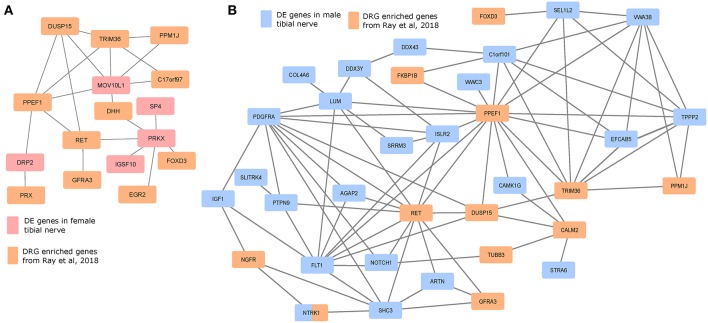
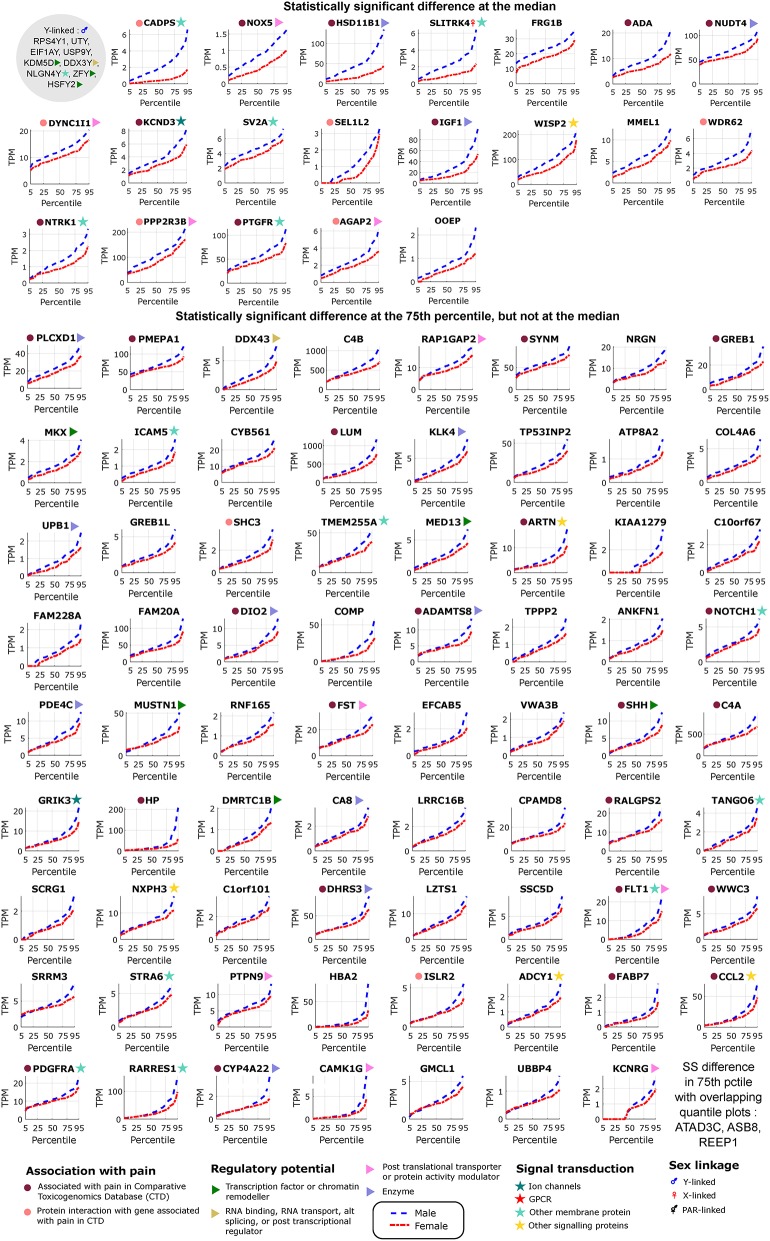
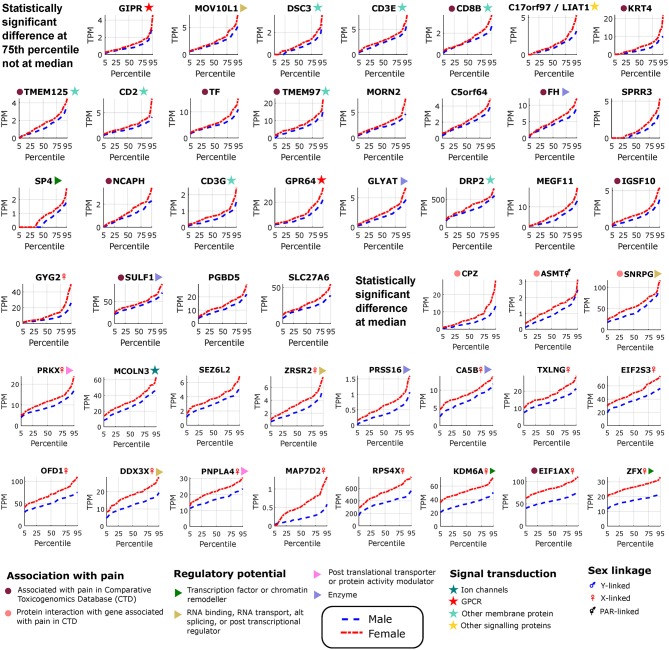
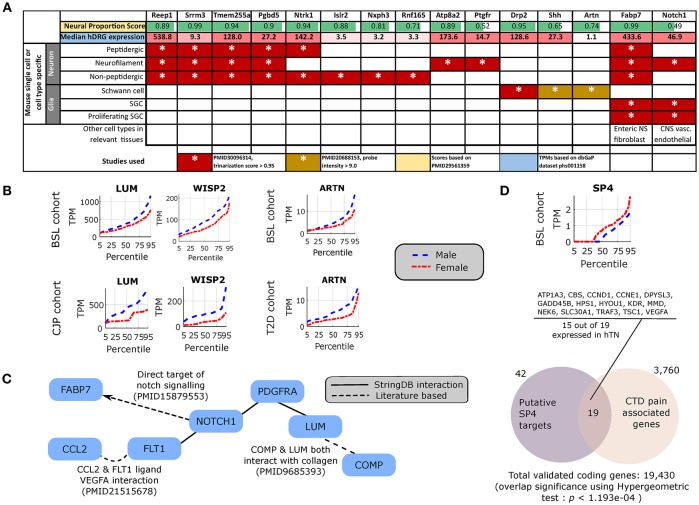
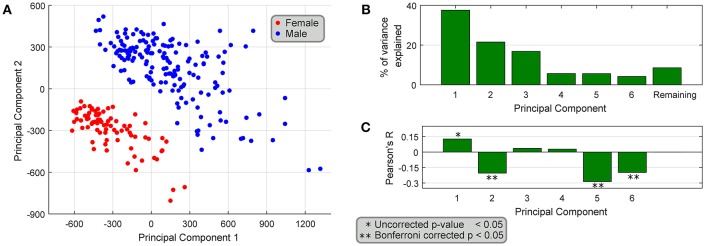
Sex differences in gene expression are important contributors to normal physiology and mechanisms of disease. This is increasingly apparent in understanding and potentially treating chronic pain where molecular mechanisms driving sex differences in neuronal plasticity are giving new insight into why certain chronic pain disorders preferentially affect women vs. men. Large transcriptomic resources are now available and can be used to mine for sex differences to gather insight from molecular profiles using donor cohorts. We performed in-depth analysis of 248 human tibial nerve (hTN) transcriptomes from the GTEx Consortium project to gain insight into sex-dependent gene expression in the peripheral nervous system (PNS). We discover 149 genes with sex differential gene expression. Many of the more abundant genes in men are associated with inflammation and appear to be primarily expressed by glia or immune cells, with some genes downstream of Notch signaling. In women, we find the differentially expressed transcription factor SP4 that is known to drive a regulatory program, and may impact sex differences in PNS physiology. Many of these 149 differentially expressed (DE) genes have some previous association with chronic pain but few of them have been explored thoroughly. Additionally, using clinical data in the GTEx database, we identify a subset of DE, sexually dimorphic genes in diseases associated with chronic pain: arthritis and Type II diabetes. Our work creates a unique resource that identifies sexually dimorphic gene expression in the human PNS with implications for discovery of sex-specific pain mechanisms.
基因表达中的性别差异是正常生理功能和疾病机制的重要促成因素。这一点在理解和潜在治疗慢性疼痛方面日益明显,其中驱动神经元可塑性性别差异的分子机制为某些慢性疼痛疾病为何优先影响女性而非男性提供了新的见解。现在有大量的转录组资源可供使用,可用于挖掘性别差异,以便利用供体队列从分子概况中获取见解。我们对来自GTEx联盟项目的248个人类胫神经(hTN)转录组进行了深入分析,以深入了解外周神经系统(PNS)中性别依赖性基因表达。我们发现了149个具有性别差异基因表达的基因。男性中许多丰度较高的基因与炎症相关,似乎主要由神经胶质细胞或免疫细胞表达,一些基因位于Notch信号通路的下游。在女性中,我们发现了差异表达的转录因子SP4,已知它能驱动一个调控程序,并可能影响PNS生理学中的性别差异。这149个差异表达(DE)基因中有许多以前与慢性疼痛有某种关联,但其中很少有被深入研究过。此外,利用GTEx数据库中的临床数据,我们在与慢性疼痛相关的疾病(关节炎和II型糖尿病)中鉴定出一组DE的、具有性别二态性的基因。我们的工作创建了一个独特的资源,可识别人类PNS中具有性别二态性的基因表达,这对发现性别特异性疼痛机制具有重要意义。