Giampieri Enrico, Ostan Rita, Guidarelli Giulia, Salvioli Stefano, Berendsen Agnes A M, Brzozowska Anna, Pietruszka Barbara, Jennings Amy, Meunier Nathalie, Caumon Elodie, Fairweather-Tait Susan, Sicinska Ewa, Feskens Edith J M, de Groot Lisette C P G M, Franceschi Claudio, Santoro Aurelia
Department of Experimental, Diagnostic and Specialty Medicine, University of Bologna, Bologna, Italy.
Interdepartmental Centre "L. Galvani", University of Bologna, Bologna, Italy.
Front Physiol. 2019 Mar 5;10:149. doi: 10.3389/fphys.2019.00149. eCollection 2019.
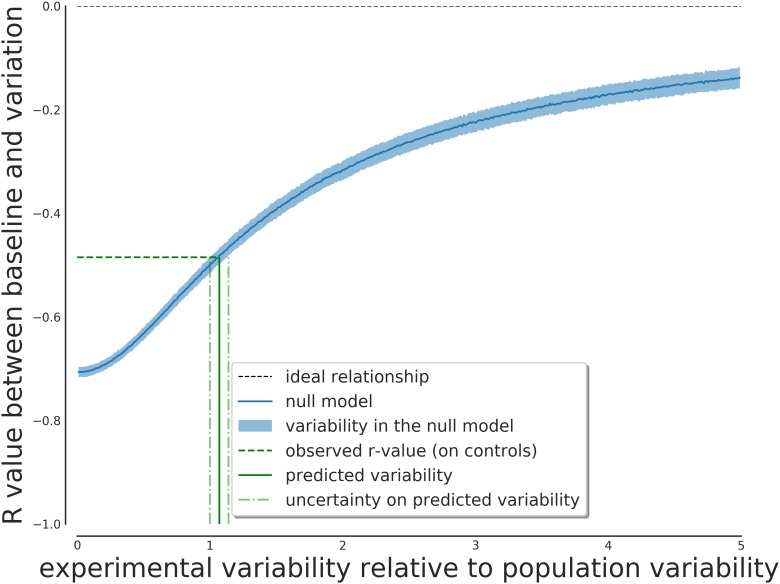
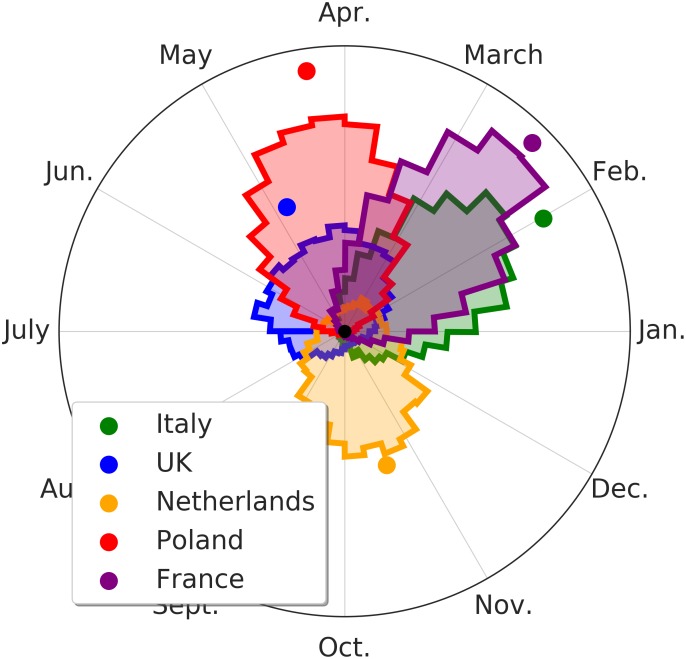
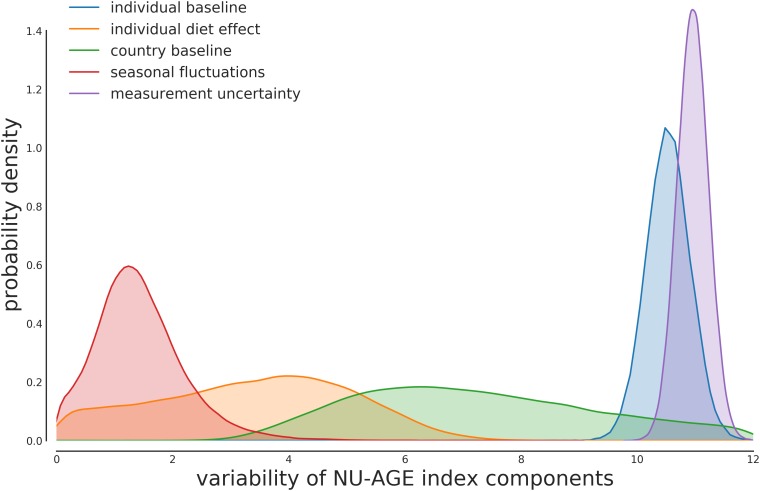
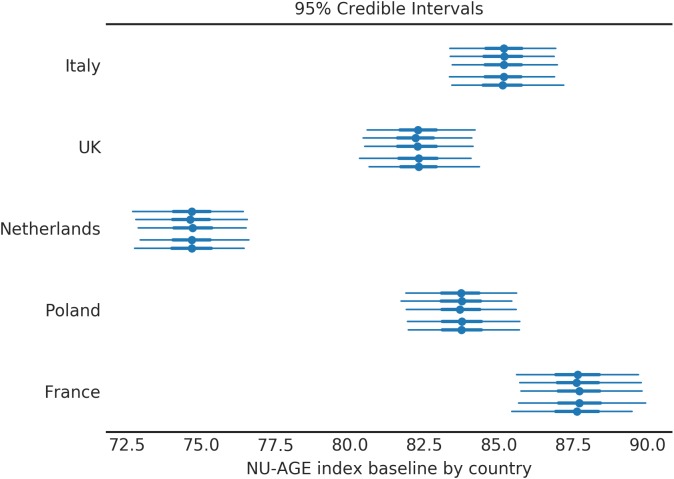
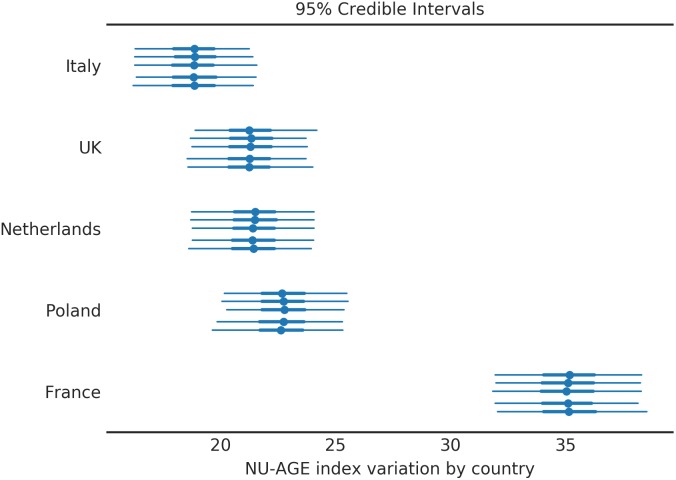
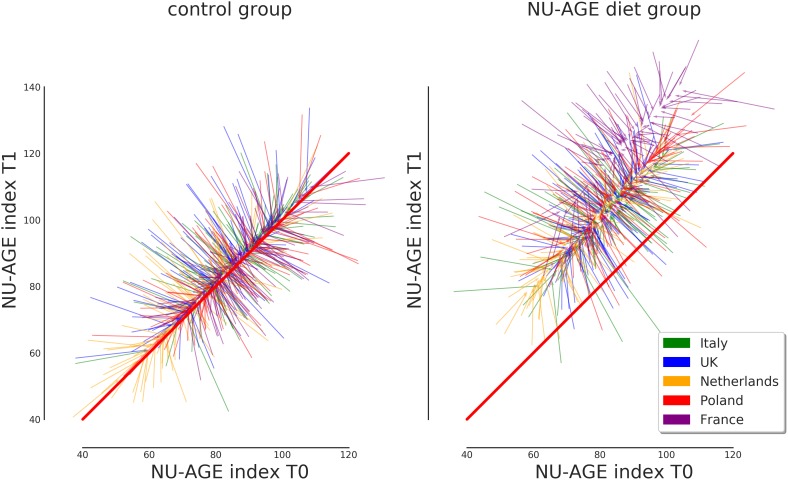
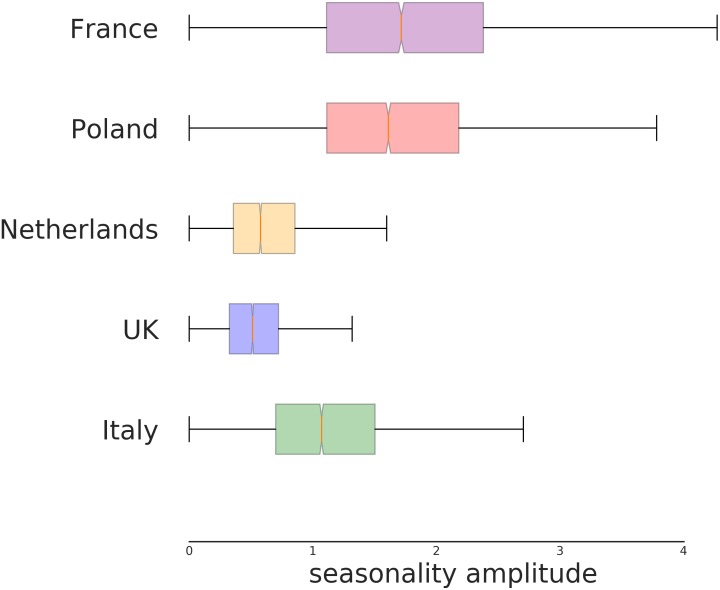
In this work we present a novel statistical approach to improve the assessment of the adherence to a 1-year nutritional intervention within the framework of the NU-AGE project. This was measured with a single adherence score based on 7-days food records, under limitations on the number of observations per subject and time frame of intervention. The results of the NU-AGE dietary intervention were summarized by variations of the NU-AGE index as described in the NU-AGE protocol. Food and nutrient intake of all participants was assessed by means of 7-days food records at recruitment and after 10 to 14 months of intervention (depending on the subject availability). Sixteen food groups and supplementations covering the dietary goals of the NU-AGE diet have been used to estimate the NU-AGE index before and after the intervention. The 7-days food record is a reliable tool to register food intakes, however, as with other tools used to assess lifestyle dietary compliance, it is affected by uncertainty in this estimation due to the possibility that the observed week is not fully representative of the entire intervention period. Also, due to logistic limitations, the effects of seasonality can never be completely removed. These variabilities, if not accounted for in the index estimation, will reduce the statistical power of the analyses. In this work we discuss a method to assess these uncertainties and thus improve the resulting NU-AGE index. The proposed method is based on Hierarchical Bayesian Models. This model explicitly includes country-specific averages of the NU-AGE index, index variation induced by the dietary intervention, and country based seasonality. This information is used to evaluate the NU-AGE index uncertainty and thus to estimate the "real" NU-AGE index for each subject, both before and after the intervention. These corrections reduce the possibility of misinterpreting measurement variability as real information, improving the power of the statistical tests that are performed with the resulting index. The results suggest that this method is able to reduce the short term and seasonal variability of the measured index in the context of multicenter dietary intervention trials. Using this method to estimate seasonality and variability would allow one to obtain better measurements from the subjects of a study, and be able to simplify the scheduling of diet assessments. www.ClinicalTrials.gov, identifier NCT01754012.
在这项研究中,我们提出了一种新颖的统计方法,以改进在NU-AGE项目框架内对为期1年的营养干预依从性的评估。这是通过基于7天食物记录的单一依从性评分来衡量的,存在每个受试者观察次数和干预时间框架的限制。如NU-AGE方案中所述,NU-AGE饮食干预的结果通过NU-AGE指数的变化进行总结。在招募时以及干预10至14个月后(取决于受试者的可用性),通过7天食物记录对所有参与者的食物和营养摄入量进行评估。已使用涵盖NU-AGE饮食膳食目标的16个食物组和补充剂来估计干预前后的NU-AGE指数。7天食物记录是记录食物摄入量的可靠工具,然而,与用于评估生活方式饮食依从性的其他工具一样,由于观察周可能无法完全代表整个干预期,因此在这种估计中会受到不确定性的影响。此外,由于后勤限制,季节性影响永远无法完全消除。如果在指数估计中不考虑这些变异性,将会降低分析的统计效力。在这项研究中,我们讨论了一种评估这些不确定性的方法,从而改进所得的NU-AGE指数。所提出的方法基于分层贝叶斯模型。该模型明确包括NU-AGE指数的特定国家平均值、饮食干预引起的指数变化以及基于国家的季节性。此信息用于评估NU-AGE指数的不确定性,从而估计每个受试者在干预前后的“真实”NU-AGE指数。这些校正减少了将测量变异性误判为真实信息的可能性,提高了使用所得指数进行的统计检验的效力。结果表明,在多中心饮食干预试验的背景下,该方法能够降低所测指数的短期和季节性变异性。使用这种方法来估计季节性和变异性将使人们能够从研究对象中获得更好的测量结果,并能够简化饮食评估的安排。www.ClinicalTrials.gov,标识符NCT01754012。