Nurminen Veijo, Seuter Sabine, Carlberg Carsten
School of Medicine, Institute of Biomedicine, University of Eastern Finland, Kuopio, Finland.
Institute for Cardiovascular Physiology, Medical Faculty, Goethe University Frankfurt, Frankfurt, Germany.
Front Physiol. 2019 Mar 5;10:194. doi: 10.3389/fphys.2019.00194. eCollection 2019.
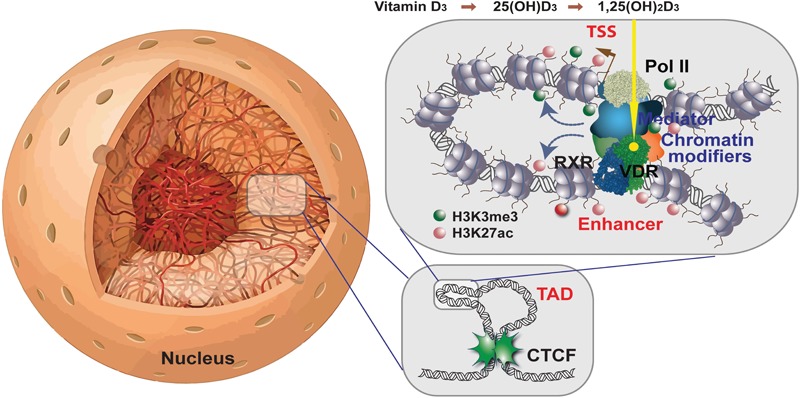
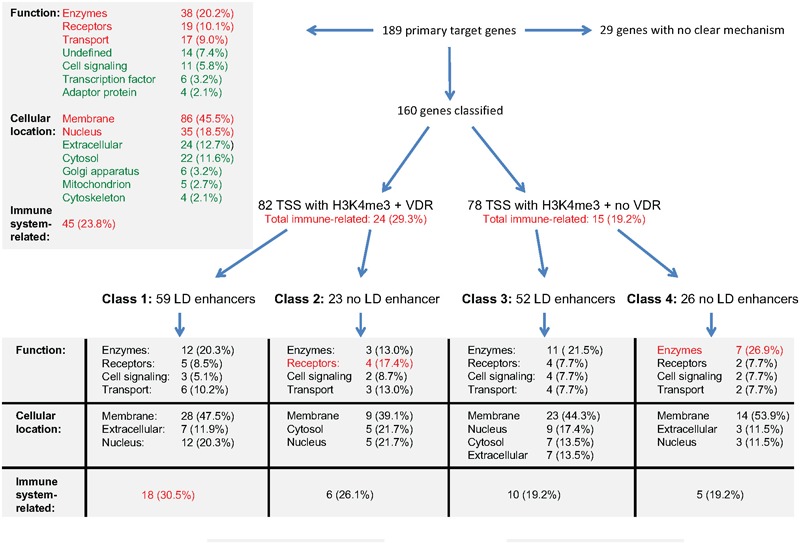
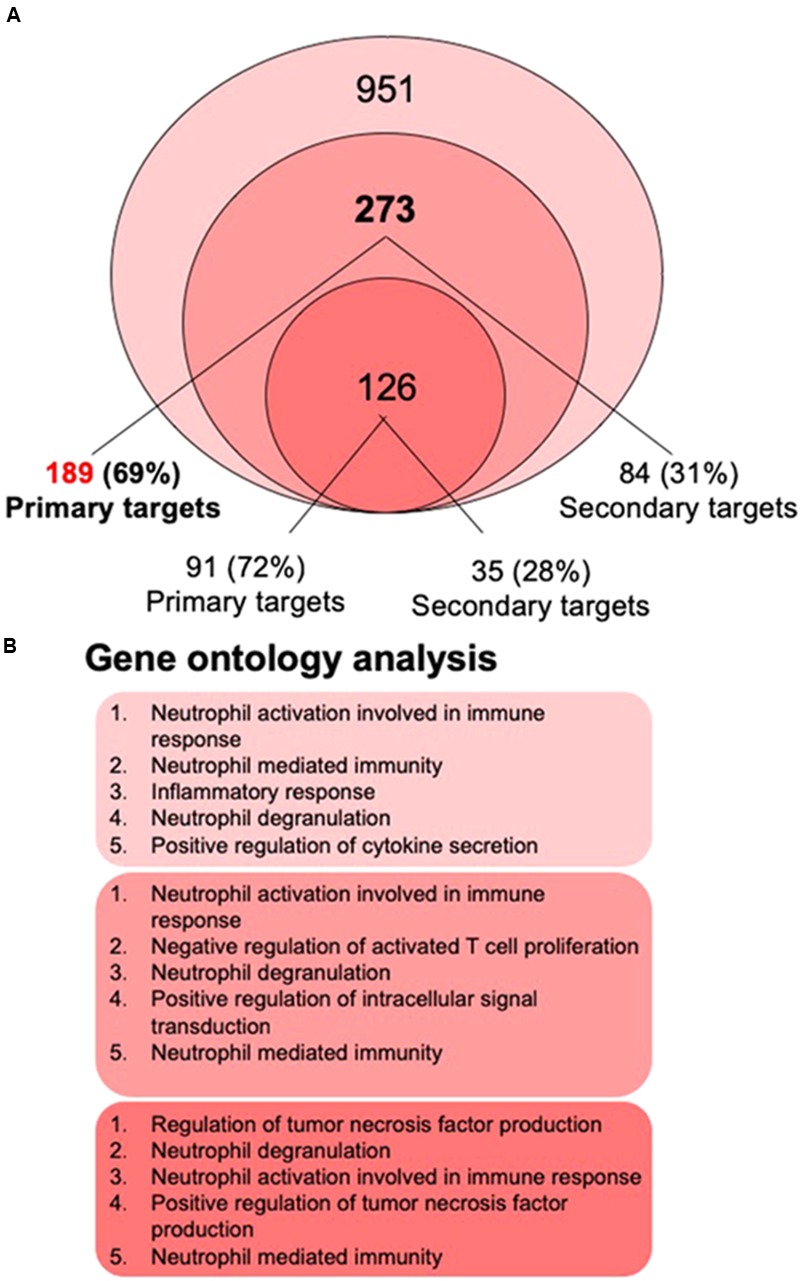
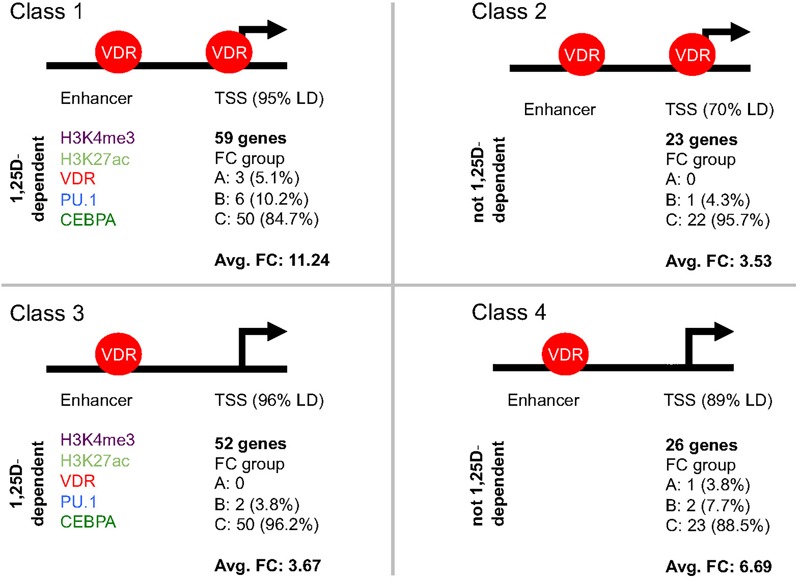
The molecular basis of vitamin D signaling implies that the metabolite 1α,25-dihydroxyvitamin D (1,25(OH)D) of the secosteroid vitamin D activates the transcription factor vitamin D receptor (VDR), which in turn modulates the expression of hundreds of primary vitamin D target genes. Since the evolutionary role of nuclear receptors, such as VDR, was the regulation of cellular metabolism, the control of calcium metabolism became the primary function of vitamin D and its receptor. Moreover, the nearly ubiquitous expression of VDR enabled vitamin D to acquire additional physiological functions, such as the support of the innate immune system in its defense against microbes. Monocytes and their differentiated phenotypes, macrophages and dendritic cells, are key cell types of the innate immune system. Vitamin D signaling was most comprehensively investigated in THP-1 cells, which are an established model of human monocytes. This includes the 1,25(OH)D-modulated cistromes of VDR, the pioneer transcription factors PU.1 and CEBPA and the chromatin modifier CTCF as well as of the histone markers of promoter and enhancer regions, H3K4me3 and H3K27ac, respectively. These epigenome-wide datasets led to the development of our chromatin model of vitamin D signaling. This review discusses the mechanistic basis of 189 primary vitamin D target genes identified by transcriptome-wide analysis of 1,25(OH)D-stimulated THP-1 cells and relates the epigenomic basis of four different regulatory scenarios to the physiological functions of the respective genes.
维生素D信号传导的分子基础表明,类固醇维生素D的代谢产物1α,25-二羟基维生素D(1,25(OH)D)激活转录因子维生素D受体(VDR),进而调节数百个主要维生素D靶基因的表达。由于核受体(如VDR)的进化作用是调节细胞代谢,钙代谢的调控成为维生素D及其受体的主要功能。此外,VDR几乎无处不在的表达使维生素D能够获得额外的生理功能,如在抵御微生物方面支持先天免疫系统。单核细胞及其分化表型巨噬细胞和树突状细胞是先天免疫系统的关键细胞类型。维生素D信号传导在THP-1细胞中得到了最全面的研究,THP-1细胞是一种成熟的人类单核细胞模型。这包括1,25(OH)D调节的VDR、先驱转录因子PU.1和CEBPA以及染色质修饰因子CTCF的顺式作用组,以及启动子和增强子区域的组蛋白标记H3K4me3和H3K27ac。这些全表观基因组数据集促成了我们的维生素D信号传导染色质模型的发展。本综述讨论了通过对1,25(OH)D刺激的THP-1细胞进行全转录组分析确定的189个主要维生素D靶基因的机制基础,并将四种不同调控情景的表观基因组基础与各自基因的生理功能联系起来。