Department of Microbiology, Immunology and Infectious Diseases, The Snyder Institute for Chronic Diseases, Cumming School of Medicine, University of Calgary, Calgary, AB, Canada.
Front Immunol. 2019 Feb 28;10:347. doi: 10.3389/fimmu.2019.00347. eCollection 2019.
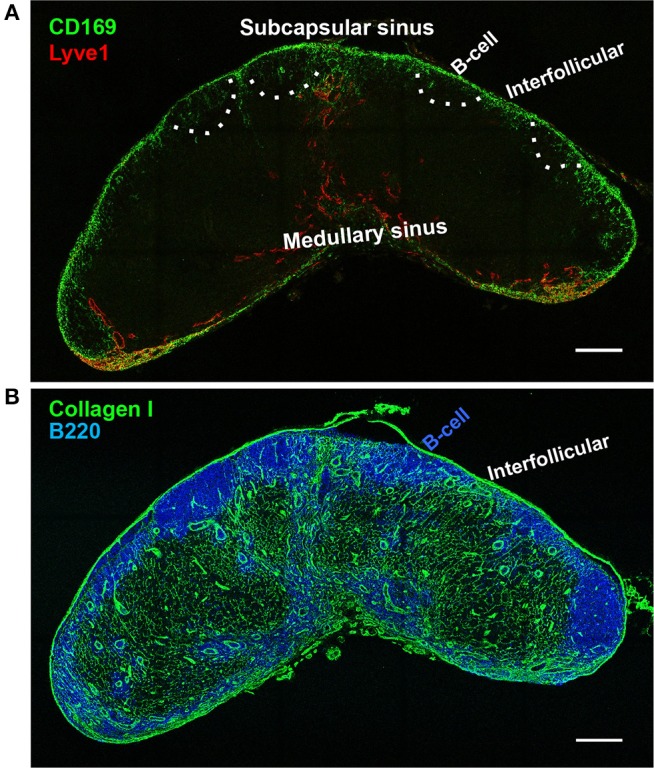
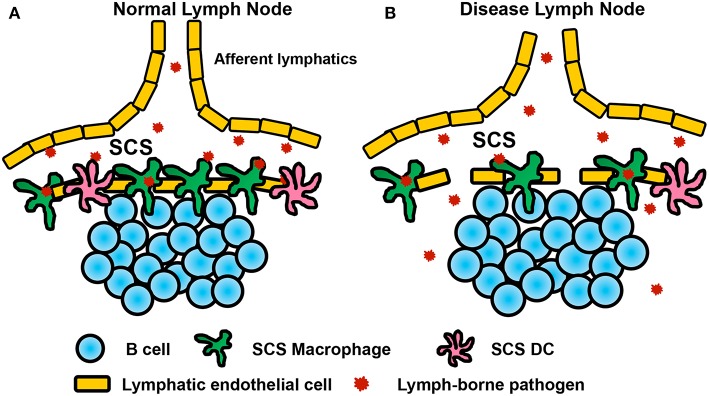
Lymphatic vessels collect and transport lymph and pathogens to the draining lymph node (LN) to generate proper immune protection. A layer of macrophages that strategically line the LN subcapsular sinus (SCS) is directly exposed to the afferent lymph and are denoted as SCS macrophages. These macrophages are the frontline of immune defense that interact with lymph-borne antigens. The importance of these macrophages in limiting the spread of pathogens has been demonstrated in both viral and bacterial infection. In anti-microbial responses, these macrophages can directly or indirectly activate other LN innate immune cells to fight against pathogens, as well as activate T cells or B cells for adaptive immunity. As the first layer of immune cells embracing the tumor-derived antigens, SCS macrophages also actively participate in cancer immune regulation. Recent studies have shown that the LNs' SCS macrophage layer is interrupted in disease models. Despite their importance in fighting the spread of pathogens and in activating anti-tumor immunity, the mechanism and the immunological functional consequences for their disruption are not well-understood. Understanding the mechanism of these macrophages will enhance their capability for therapeutic targeting.
淋巴管收集和运输淋巴和病原体到引流的淋巴结 (LN) 以产生适当的免疫保护。一层巨噬细胞策略性地排列在 LN 被膜下窦 (SCS) 中,直接暴露于输入的淋巴液中,并被称为 SCS 巨噬细胞。这些巨噬细胞是与淋巴源性抗原相互作用的免疫防御的第一线。这些巨噬细胞在限制病原体传播方面的重要性已在病毒和细菌感染中得到证实。在抗微生物反应中,这些巨噬细胞可以直接或间接地激活其他 LN 固有免疫细胞来对抗病原体,以及激活 T 细胞或 B 细胞以产生适应性免疫。作为拥抱肿瘤源性抗原的第一层免疫细胞,SCS 巨噬细胞也积极参与癌症免疫调节。最近的研究表明,在疾病模型中,LN 的 SCS 巨噬细胞层被中断。尽管它们在对抗病原体传播和激活抗肿瘤免疫方面很重要,但它们中断的机制和免疫学功能后果尚不清楚。了解这些巨噬细胞的机制将增强其治疗靶向的能力。