MRC Human Immunology Unit, Weatherall Institute of Molecular Medicine, University of Oxford, Headley Way, Oxford OX3 9DS, UK.
Department of Mechanical Engineering, University College London, London WC1E 7JE, UK.
Cell Rep. 2019 Mar 19;26(12):3369-3379.e5. doi: 10.1016/j.celrep.2019.02.074.
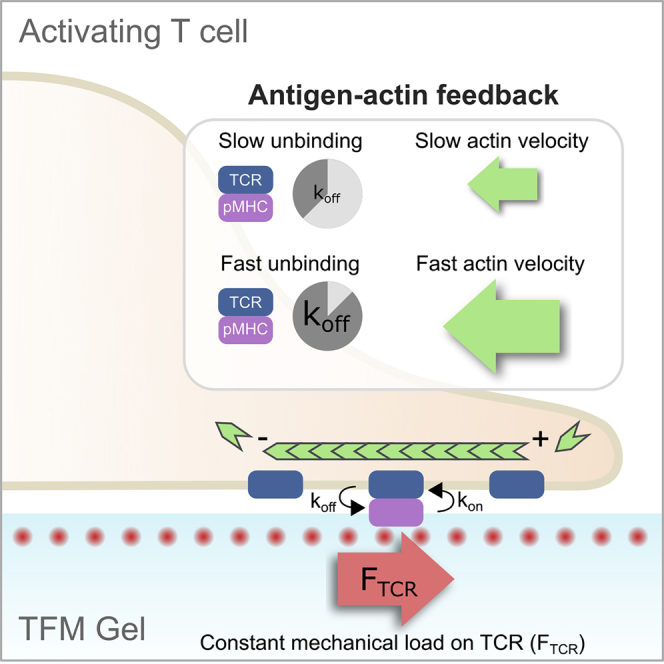
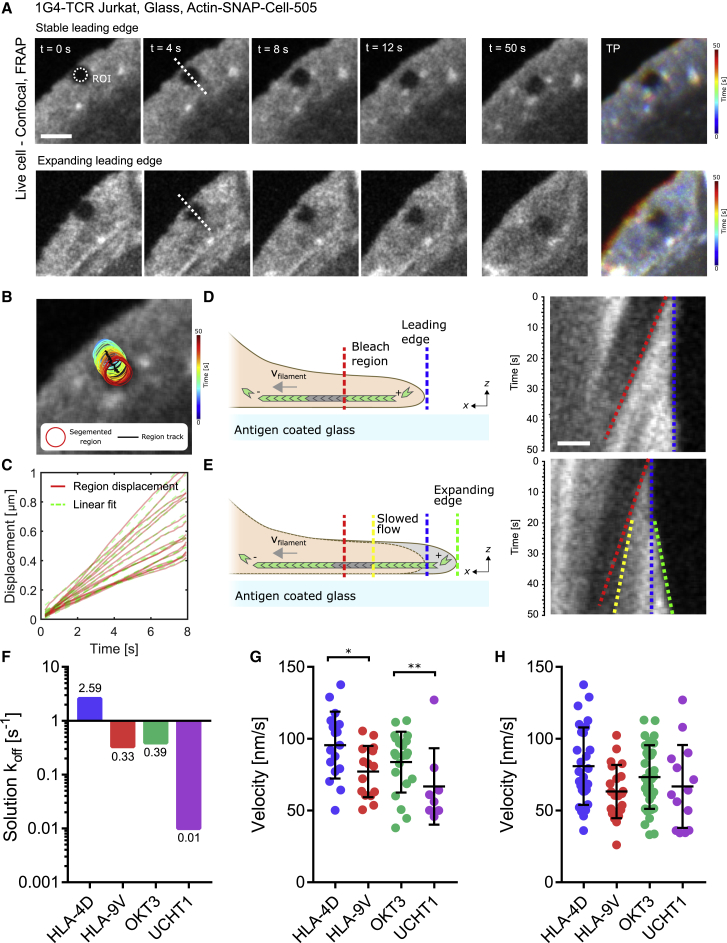
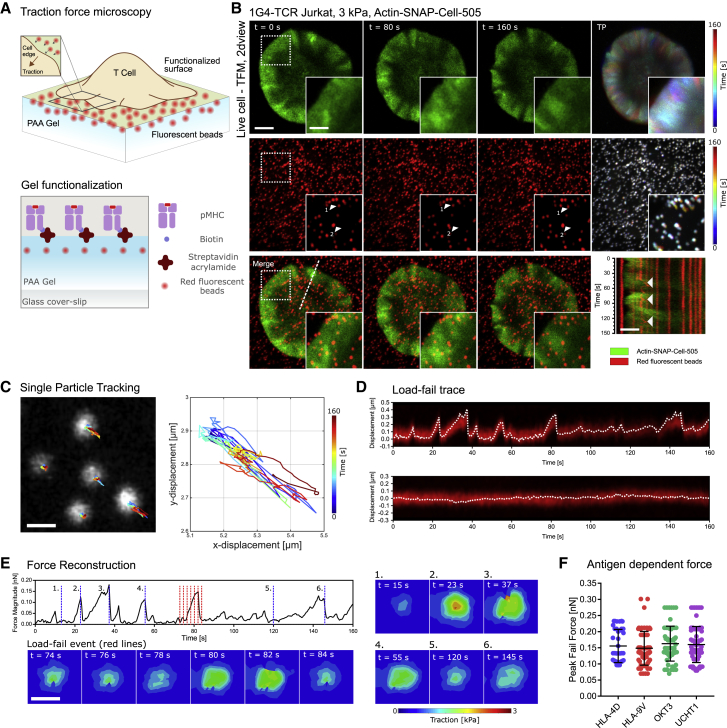
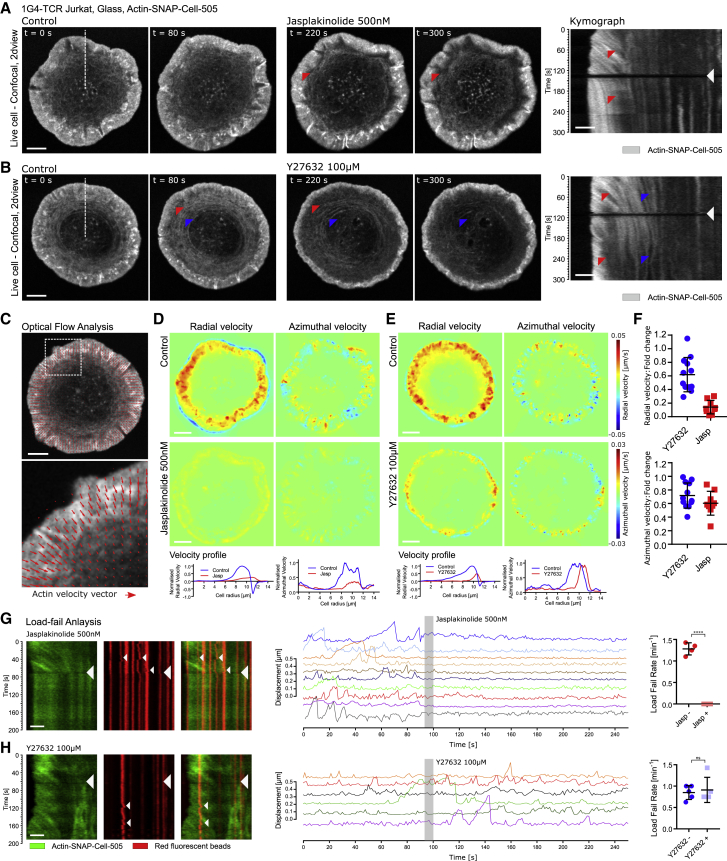
Cytoskeletal actin dynamics is essential for T cell activation. Here, we show evidence that the binding kinetics of the antigen engaging the T cell receptor influences the nanoscale actin organization and mechanics of the immune synapse. Using an engineered T cell system expressing a specific T cell receptor and stimulated by a range of antigens, we found that the peak force experienced by the T cell receptor during activation was independent of the unbinding kinetics of the stimulating antigen. Conversely, quantification of the actin retrograde flow velocity at the synapse revealed a striking dependence on the antigen unbinding kinetics. These findings suggest that the dynamics of the actin cytoskeleton actively adjusted to normalize the force experienced by the T cell receptor in an antigen-specific manner. Consequently, tuning actin dynamics in response to antigen kinetics may thus be a mechanism that allows T cells to adjust the lengthscale and timescale of T cell receptor signaling.
细胞骨架肌动蛋白动力学对于 T 细胞的激活至关重要。在这里,我们证明了与 T 细胞受体结合的抗原的结合动力学会影响免疫突触的纳米级肌动蛋白组织和力学特性。我们使用一种表达特定 T 细胞受体的工程化 T 细胞系统,并通过一系列抗原进行刺激,发现 T 细胞受体在激活过程中所经历的峰值力与刺激抗原的非结合动力学无关。相反,对突触处肌动蛋白逆行流动速度的定量分析显示,其与抗原的非结合动力学有显著的依赖性。这些发现表明,肌动蛋白细胞骨架的动力学主动进行调整,以特异性的方式使 T 细胞受体所经历的力正常化。因此,响应抗原动力学来调节肌动蛋白动力学可能是一种机制,使 T 细胞能够调整 T 细胞受体信号的长度和时间尺度。