Zhou Dabo, Ouyang Quchang, Liu Liping, Liu Jingyu, Tang Yu, Xiao Mengjia, Wang Yikai, He Qiongzhi, Hu Zhe-Yu
The Affiliated Cancer Hospital of Xiangya Medical School, Central South University / Hunan Cancer Hospital, Changsha, 410013, China; Department of Breast Cancer Medical Oncology, Hunan Cancer Hospital, Changsha, 410013, China; Department of Breast Cancer Medical Oncology, the Affiliated Cancer Hospital of Xiangya Medical School, Central South University, Changsha 410013, China.
The Affiliated Cancer Hospital of Xiangya Medical School, Central South University / Hunan Cancer Hospital, Changsha, 410013, China; Department of Breast Cancer Medical Oncology, Hunan Cancer Hospital, Changsha, 410013, China; Department of Breast Cancer Medical Oncology, the Affiliated Cancer Hospital of Xiangya Medical School, Central South University, Changsha 410013, China.
Transl Oncol. 2019 May;12(5):764-774. doi: 10.1016/j.tranon.2019.02.014. Epub 2019 Mar 17.
Accumulation of PIK3CA, ESR1, and GATA3 mutations results in resistance to endocrine therapy in breast cancer patients; however, the response of these genes to chemotherapy is unclear. Therefore, we sought to evaluate the genetic response of circulating tumor DNA (ctDNA) to chemotherapy in metastatic breast cancer patients.
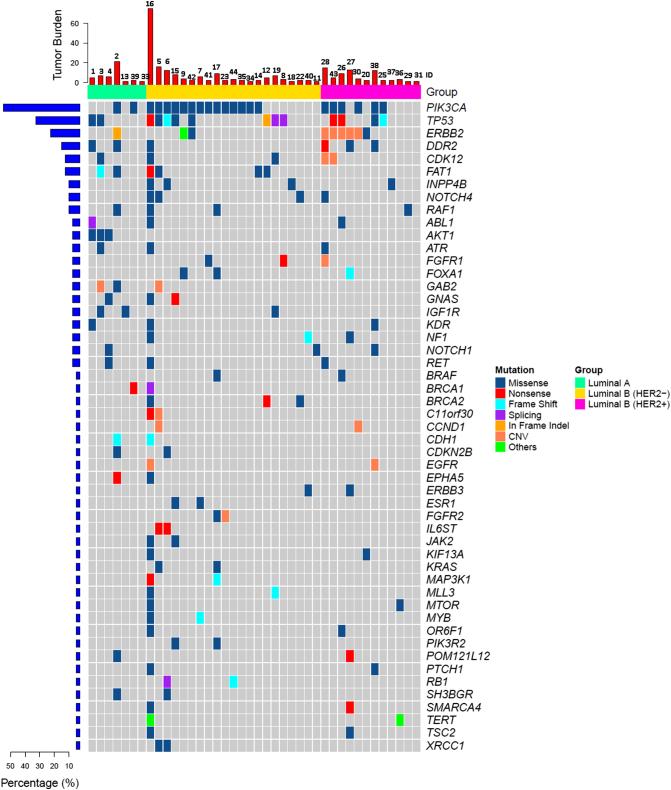
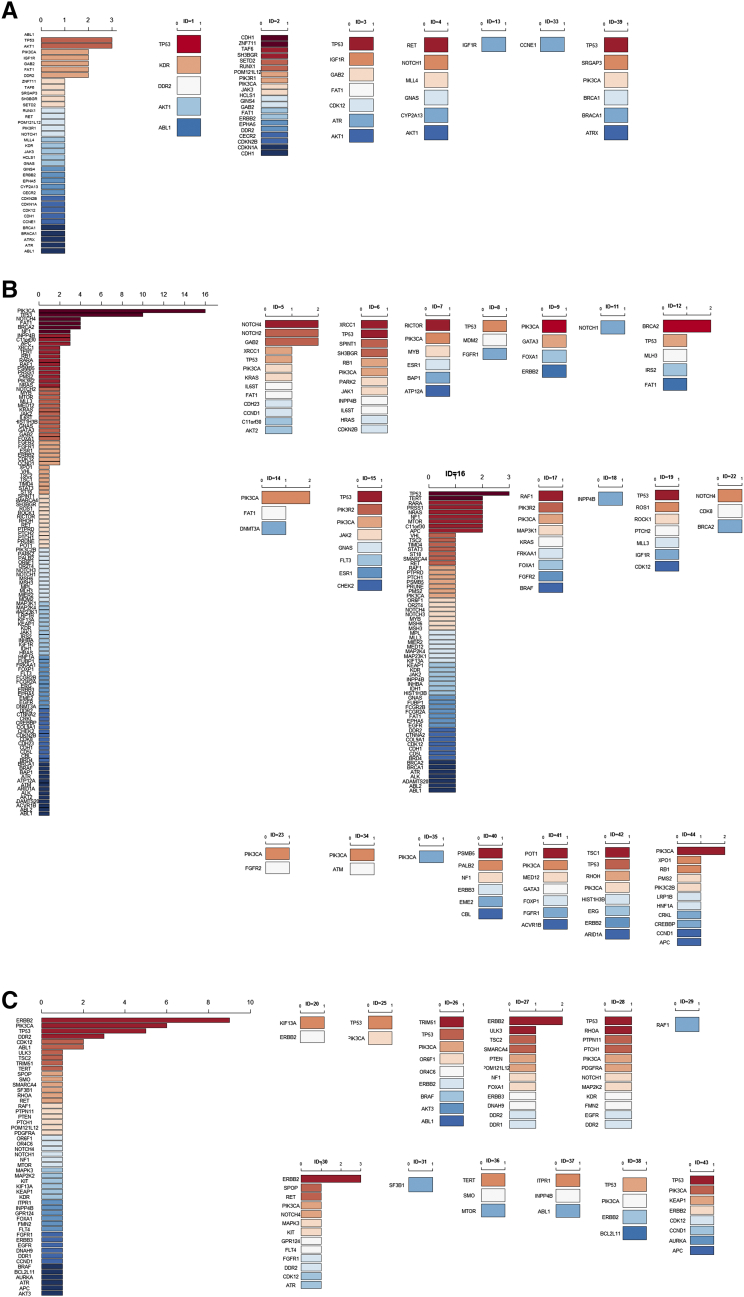
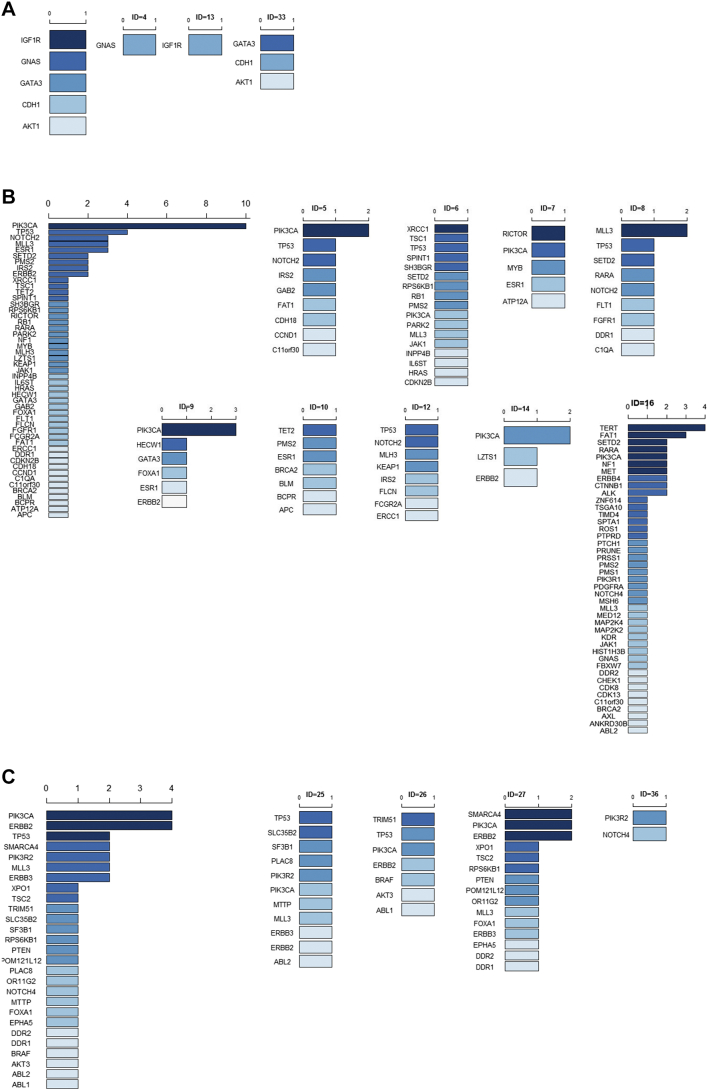
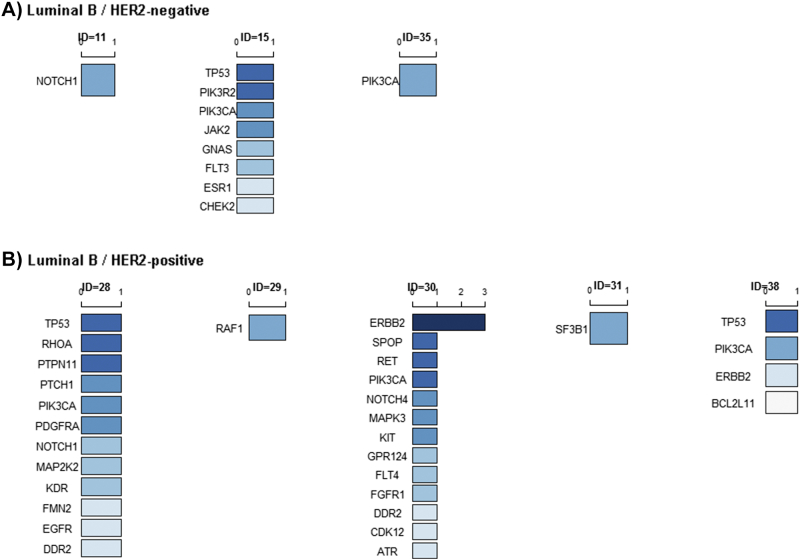
The mutation frequency of 1021 genes was examined prior to chemotherapy in ctDNA of 44 estrogen receptor-positive metastatic breast cancer patients. These genes were evaluated again in a subset of patients (n=24) following chemotherapy. Mutation frequency was defined as the percentage of mutations found in ctDNA compared to total cell-free DNA.
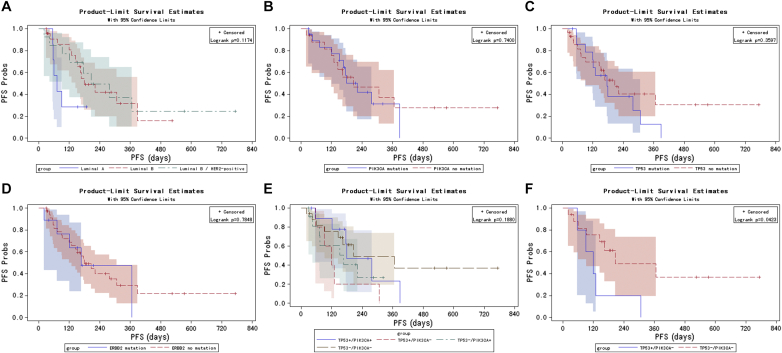
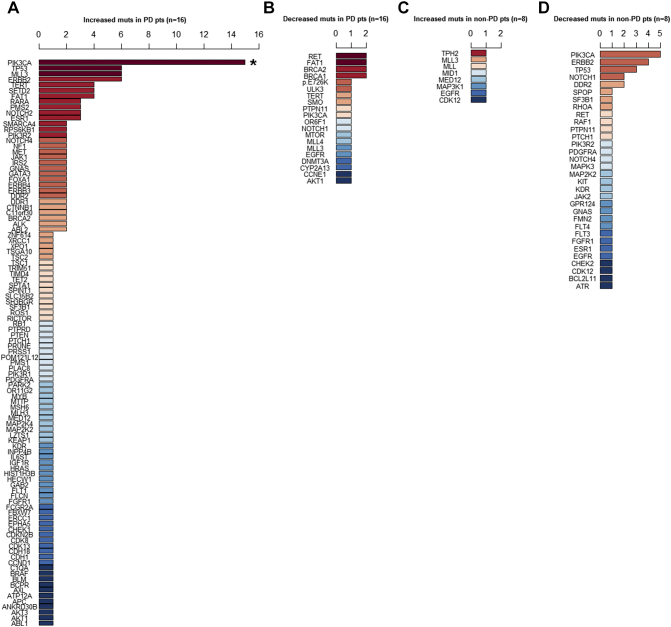
Prior to chemotherapy, PIK3CA was the most commonly mutated gene, with mutation found in 22 of the metastatic breast cancer patients. Following chemotherapy, 16 patients exhibited progressive disease (PD), and 8 patients experienced no progression (non-PD). PIK3CA mutation frequency increased in 56.25% (9/16) of the PD patients but decreased in 62.5% (5/8) of the non-PD patients. As a result, more PD patients exhibited increased PIK3CA mutation frequency than non-PD patients (56.25% vs 0%, P=.002). Further, ESR1 and GATA3 mutations correlated with PIK3CA mutation. Interestingly, patients receiving the mTOR inhibitor everolimus exhibited a lower progression rate (0% vs 62.5%, P=.001), and the combination of everolimus and chemotherapy effectively suppressed PIK3CA, ESR1, and GATA3 gene mutations.
Together, these results suggest that mTOR inhibition may be a useful chemotherapy adjuvant to suppress chemotherapy-induced gene mutations that render tumors resistant to endocrine therapy in metastatic breast cancer patients with PD.
PIK3CA、ESR1和GATA3基因突变的积累会导致乳腺癌患者对内分泌治疗产生耐药性;然而,这些基因对化疗的反应尚不清楚。因此,我们试图评估转移性乳腺癌患者循环肿瘤DNA(ctDNA)对化疗的基因反应。
在44例雌激素受体阳性转移性乳腺癌患者的ctDNA中,于化疗前检测了1021个基因的突变频率。在一部分患者(n = 24)化疗后再次评估这些基因。突变频率定义为ctDNA中发现的突变占总游离DNA的百分比。
化疗前,PIK3CA是最常发生突变的基因,在22例转移性乳腺癌患者中发现了突变。化疗后,16例患者出现疾病进展(PD),8例患者无进展(非PD)。PIK3CA突变频率在56.25%(9/16)的PD患者中增加,但在62.5%(5/8)的非PD患者中降低。因此,PD患者中PIK3CA突变频率增加的比例高于非PD患者(56.25%对0%,P = 0.002)。此外,ESR1和GATA3突变与PIK3CA突变相关。有趣的是,接受mTOR抑制剂依维莫司治疗的患者进展率较低(0%对62.5%,P = 0.001),依维莫司与化疗联合使用可有效抑制PIK3CA、ESR1和GATA3基因突变。
总之,这些结果表明,mTOR抑制可能是一种有用的化疗辅助手段,可抑制化疗诱导的基因突变,使转移性乳腺癌PD患者的肿瘤对内分泌治疗产生耐药性。