Alqahtani Ali, Ayesh Hazem S K, Halawani Hafez
Department of Internal Medicine, University of Toledo College of Medicine and Life Sciences, Toledo, OH 43614, USA.
Department of Oncology, Cabrini Cancer Center, Alexandria, LA 71301, USA.
Cancers (Basel). 2019 Dec 30;12(1):93. doi: 10.3390/cancers12010093.
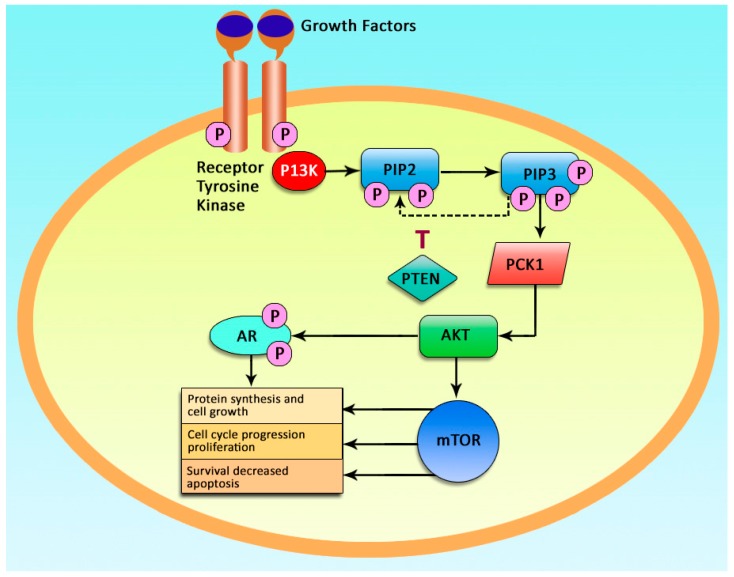
Phosphoinositide kinases (PIKs) are a group of lipid kinases that are important upstream activators of various significant signaling pathways. Hyperactivation of the PI3K/AKT/mTOR pathways-either via mutations or genomic amplification-confers key oncogenic activity, essential for the development and progression of several solid tumors. Alterations in the gene are associated with poor prognosis of solid malignancies. Although the literature reports contradictory prognostic values of in aggressive cancers, most of the available data highlight the important role of mutation in mediating tumorigenesis via increased signaling of the PI3K/AKT/mTOR survival pathway. Several inhibitors of PI3K/AKT/mTOR pathways are investigated as potential therapeutic options in solid malignancies. This article reviews the role of mutations and inhibitors of PI3K/AKT/mTOR pathways in major cancer types and examines its association with clinicopathological parameters and prognosis.
磷酸肌醇激酶(PIKs)是一类脂质激酶,是各种重要信号通路的重要上游激活剂。PI3K/AKT/mTOR通路的过度激活——无论是通过突变还是基因组扩增——赋予关键的致癌活性,这对几种实体瘤的发生和发展至关重要。该基因的改变与实体恶性肿瘤的不良预后相关。尽管文献报道了其在侵袭性癌症中的预后价值相互矛盾,但大多数现有数据强调了该突变在通过增加PI3K/AKT/mTOR生存通路信号传导介导肿瘤发生中的重要作用。几种PI3K/AKT/mTOR通路抑制剂正在作为实体恶性肿瘤的潜在治疗选择进行研究。本文综述了PI3K/AKT/mTOR通路的该突变和抑制剂在主要癌症类型中的作用,并探讨了其与临床病理参数和预后的关系。