Shandong Province Key Laboratory of Agricultural Microbiology, Department of Plant Pathology, College of Plant Protection, Shandong Agricultural University, Tai'an, Shandong, 271018, People's Republic of China.
Key Laboratory of Tobacco Pest Monitoring Controlling & Integrated Management, Qingdao, 266101, China.
Virol J. 2019 Mar 20;16(1):36. doi: 10.1186/s12985-019-1143-7.
Cross protection is a promising alternative to control plant viral diseases. One critical factor limiting the application of cross protection is the availability of attenuated mutants or mild strains. Potato virus X (PVX) infects many crops and induces huge economic losses to agricultural production. However, researches on the variability and mechanism of PVX virulence are scarce.
The mutants were obtained by introducing mutations into the RNA dependent RNA polymerase (RdRp) gene of PVX via site-directed mutagenesis. Attenuated mutants were screen according to their symptoms in Nicotiana benthamiana plants. The protection efficacy against severe infection were evaluated with interval of 5, 10 and 15 days.
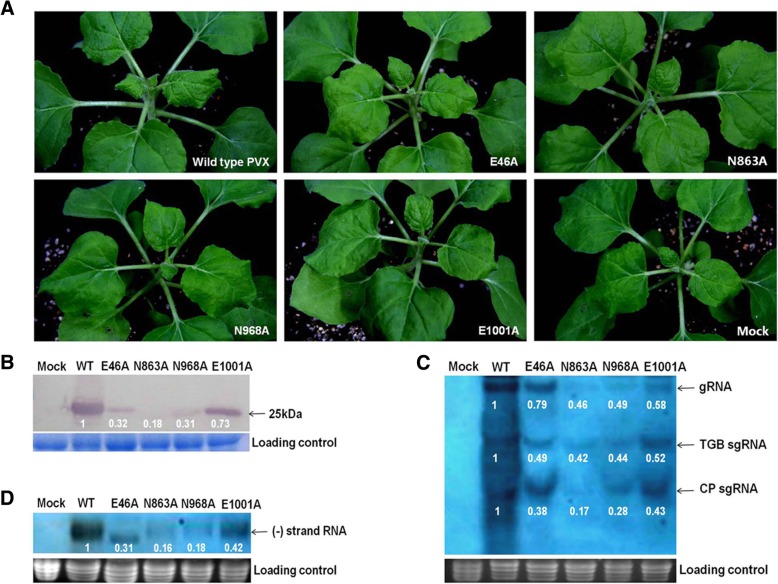
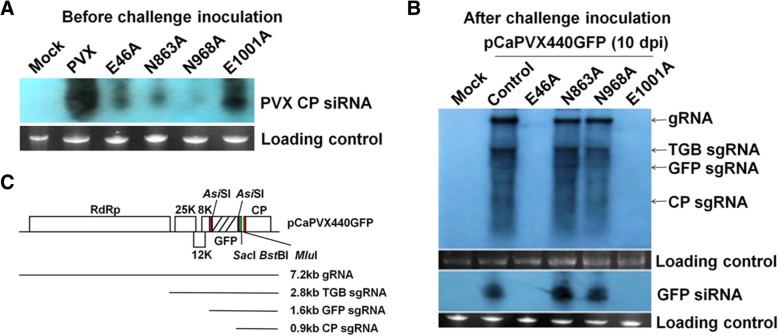
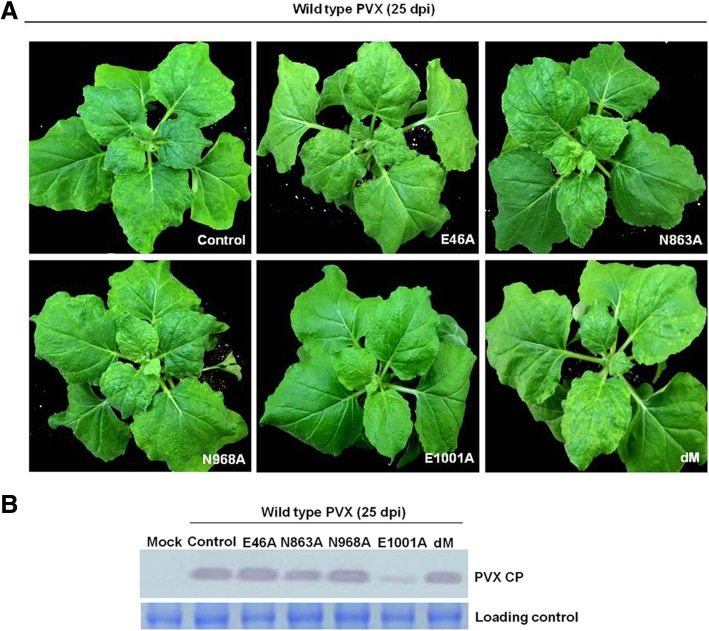
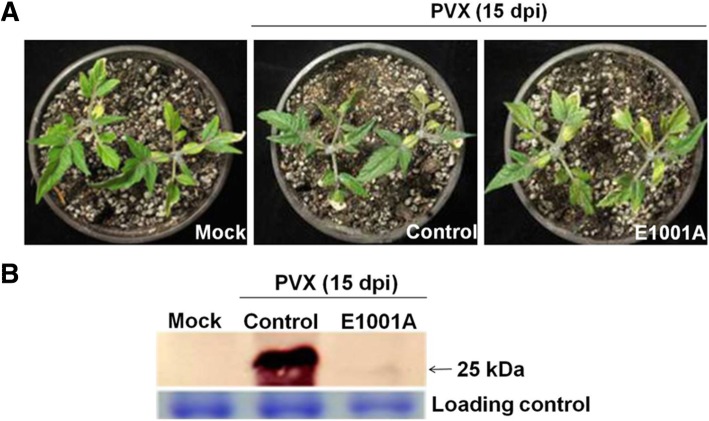
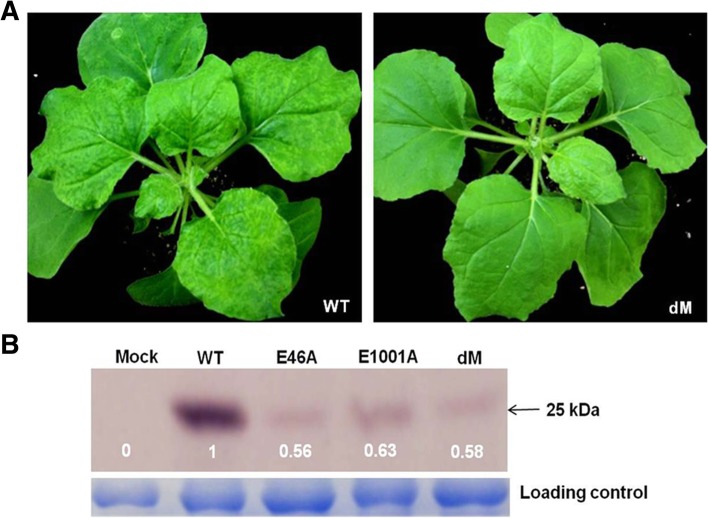
Among the 40 mutants obtained, four mutants carrying substitutions of either Glu, Asn, Asn or Glu to Ala in PVX RdRp showed drastically attenuated symptom, accompanying with reduced accumulation levels of coat protein, plus- and minus-sense RNAs. When the interval between protective and challenging inoculations was 15 days, mutant E1001A (with substitution of Glu to Ala in RdRp) provided complete protection against severe infection in both Nicotiana benthamiana and tomato, while E46A (Glu mutated to Ala) provided incomplete protection. To reduce the risk of reverse mutation, we constructed mutant dM which carries double mutations of both Glu and Glu to Ala in RdRp. The mutant dM could provide effective protection against severe PVX infection.
Mutations of Glu, Asn, Asn or Glu to Ala in PVX RdRp significantly reduced the viral symptoms. Mutants E1001A and E46A could provide effective protection against wild type PVX in both Nicotiana benthamiana and tomato. These results provide theoretical and practical bases for the control of PVX via cross protection.
交叉保护是控制植物病毒病的一种很有前途的方法。限制交叉保护应用的一个关键因素是缺乏减毒突变体或弱毒株。马铃薯 X 病毒(PVX)感染许多作物,给农业生产造成巨大的经济损失。然而,关于 PVX 毒力的变异性和机制的研究很少。
通过定点突变将突变引入 PVX 的 RNA 依赖性 RNA 聚合酶(RdRp)基因,获得突变体。根据在本氏烟植物中的症状筛选出弱毒突变体。用 5、10 和 15 天的间隔评估对严重感染的保护效果。
在获得的 40 个突变体中,有 4 个携带突变的突变体,其 RdRp 中的 Glu、Asn、Asn 或 Glu 突变为 Ala,表现出明显的症状减弱,同时伴随衣壳蛋白、正链和负链 RNA 的积累水平降低。当保护性和挑战性接种之间的间隔为 15 天时,突变体 E1001A(RdRp 中的 Glu 突变为 Ala)在本氏烟和番茄中对严重感染提供完全保护,而 E46A(Glu 突变为 Ala)提供不完全保护。为了降低回复突变的风险,我们构建了携带 RdRp 中 Glu 和 Glu 双重突变的突变体 dM。突变体 dM 可有效抵抗严重的 PVX 感染。
PVX RdRp 中的 Glu、Asn、Asn 或 Glu 突变为 Ala 显著降低了病毒症状。突变体 E1001A 和 E46A 可在本氏烟和番茄中有效抵抗野生型 PVX。这些结果为通过交叉保护控制 PVX 提供了理论和实践基础。