Department of Biological Sciences, Arkansas State University, State University, USA.
Molecular Biosciences Graduate Program, Arkansas State University, State University, USA.
Sci Rep. 2019 Mar 20;9(1):4925. doi: 10.1038/s41598-019-41346-3.
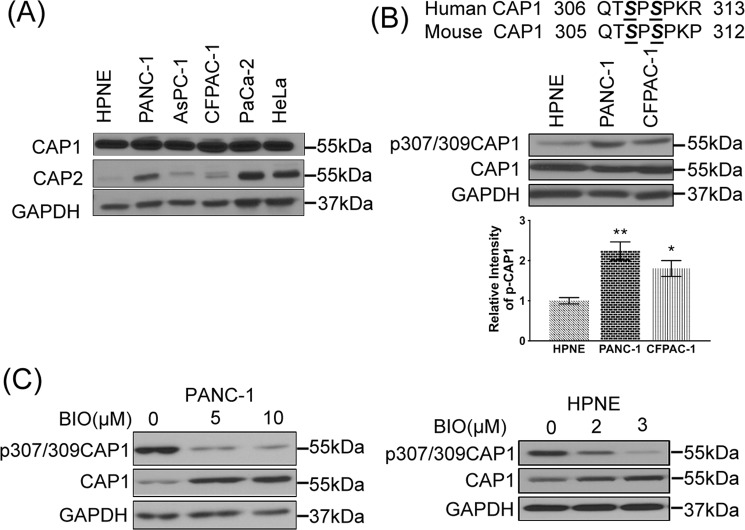
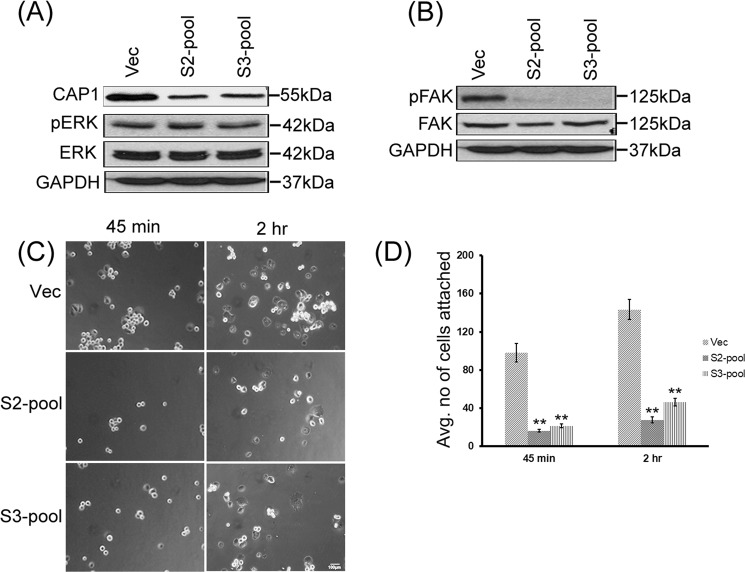
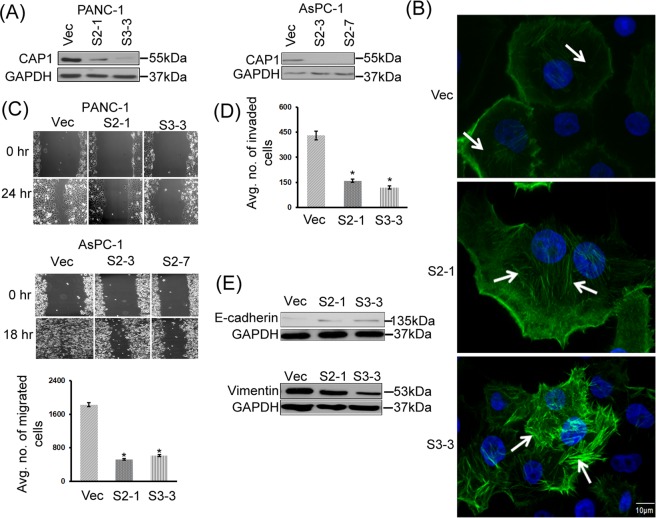
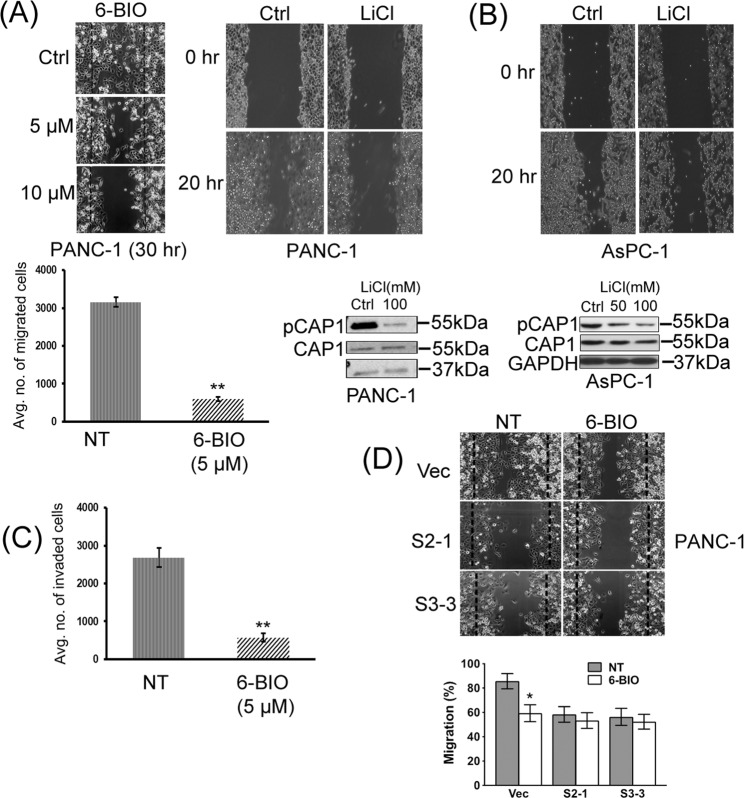
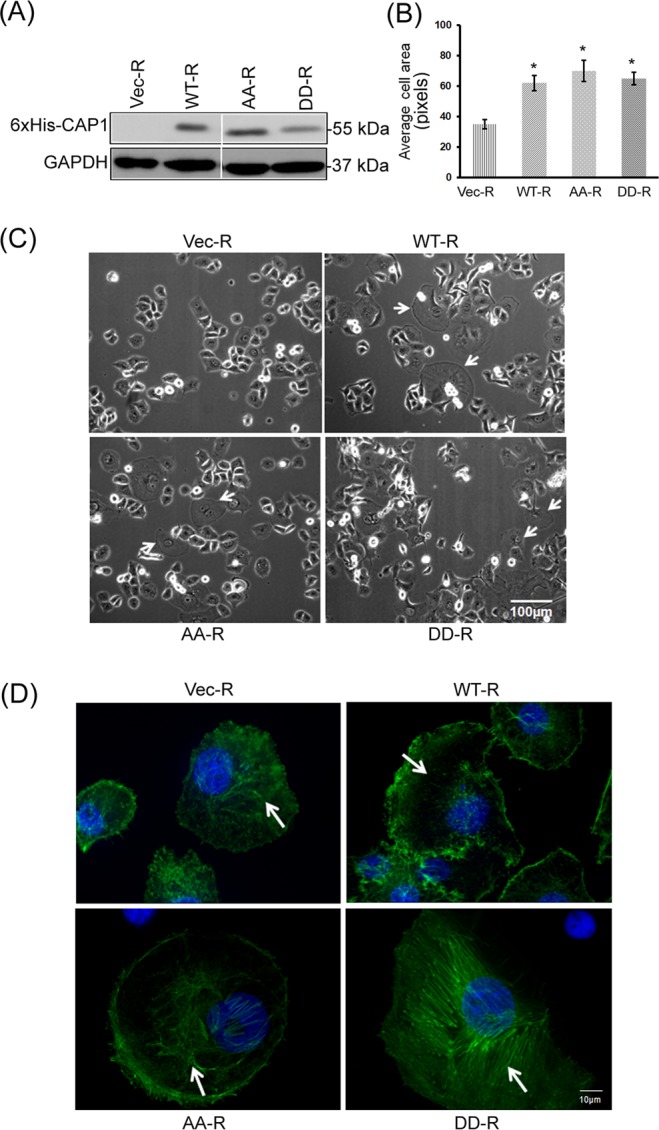
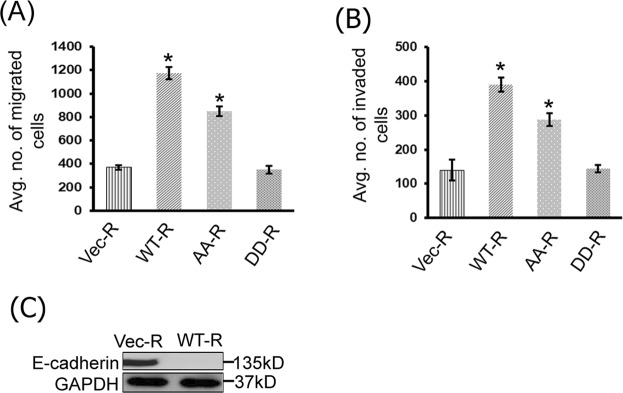
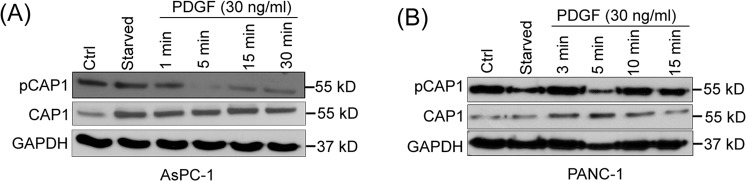
Pancreatic cancer has the worst prognosis among major malignancies, largely due to its highly invasive property and difficulty in early detection. Mechanistic insights into cancerous transformation and especially metastatic progression are imperative for developing novel treatment strategies. The actin-regulating protein CAP1 is implicated in human cancers, while the role still remains elusive. In this study, we investigated roles for CAP1 and its phosphor-regulation in pancreatic cancer cells. No evidence supports remarkable up-regulation of CAP1 in the panel of cancer cell lines examined. However, knockdown of CAP1 in cancer cells led to enhanced stress fibers, reduced cell motility and invasion into Matrigel. Phosphorylation of CAP1 at the S308/S310 tandem regulatory site was elevated in cancer cells, consistent with hyper-activated GSK3 reported in pancreatic cancer. Inhibition of GSK3, a kinase for S310, reduced cell motility and invasion. Moreover, phosphor mutants had defects in alleviating actin stress fibers and rescuing the reduced invasiveness in the CAP1-knockdown PANC-1 cells. These results suggest a required role for transient phosphorylation for CAP1 function in controlling cancer cell invasiveness. Depletion of CAP1 also reduced FAK activity and cell adhesion, but did not cause significant alterations in ERK or cell proliferation. CAP1 likely regulates cancer cell invasiveness through effects on both actin filament turnover and cell adhesion. Finally, the growth factor PDGF induced CAP1 dephosphorylation, suggesting CAP1 may mediate extracellular signals to control cancer cell invasiveness. These findings may ultimately help develop strategies targeting CAP1 or its regulatory signals for controlling the invasive cycle of the disease.
胰腺癌是恶性肿瘤中预后最差的一种,主要原因是其具有很强的侵袭性,且早期检测困难。深入了解癌症的转化机制,尤其是转移进展,对于开发新的治疗策略至关重要。肌动蛋白调节蛋白 CAP1 与人类癌症有关,但其作用仍不清楚。在本研究中,我们研究了 CAP1 及其磷酸化调节在胰腺癌细胞中的作用。没有证据表明 CAP1 在检查的癌症细胞系中显著上调。然而,CAP1 在癌细胞中的敲低导致应激纤维增强,细胞迁移和侵袭 Matrigel 的能力降低。CAP1 在 S308/S310 串联调节位点的磷酸化在癌细胞中升高,与胰腺癌中报道的 GSK3 过度激活一致。GSK3 的抑制剂,即 S310 的激酶,可降低细胞迁移和侵袭能力。此外,磷酸化突变体在缓解肌动蛋白应激纤维和挽救 CAP1 敲低的 PANC-1 细胞中的侵袭性降低方面存在缺陷。这些结果表明,CAP1 的短暂磷酸化对于控制癌细胞侵袭性的功能是必需的。CAP1 的耗竭还降低了 FAK 活性和细胞黏附,但对 ERK 或细胞增殖没有明显影响。CAP1 可能通过对肌动蛋白丝周转率和细胞黏附的影响来调节癌细胞的侵袭性。最后,生长因子 PDGF 诱导 CAP1 去磷酸化,表明 CAP1 可能通过细胞外信号来调节癌细胞的侵袭性。这些发现最终可能有助于开发针对 CAP1 或其调节信号的策略,以控制疾病的侵袭周期。