Department of Neurosurgery, Beijing Tiantan Hospital, Capital Medical University, Beijing 100050, P.R. China.
Mol Med Rep. 2019 May;19(5):3564-3574. doi: 10.3892/mmr.2019.10024. Epub 2019 Mar 14.
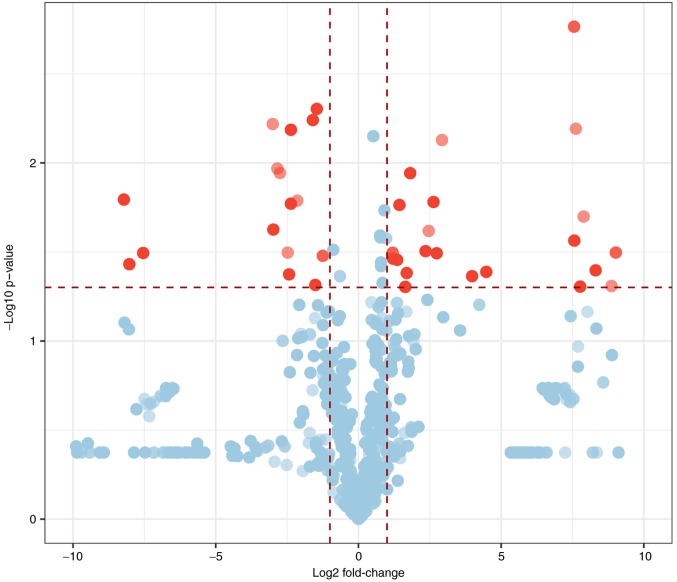
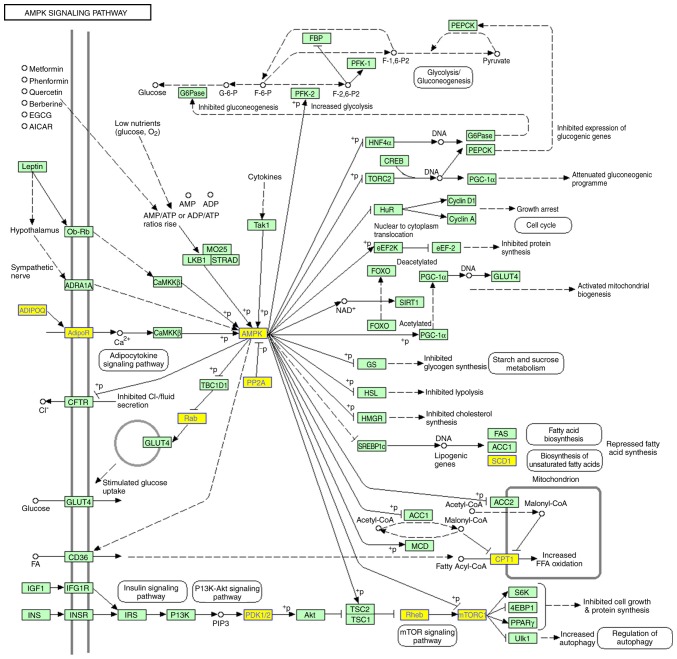
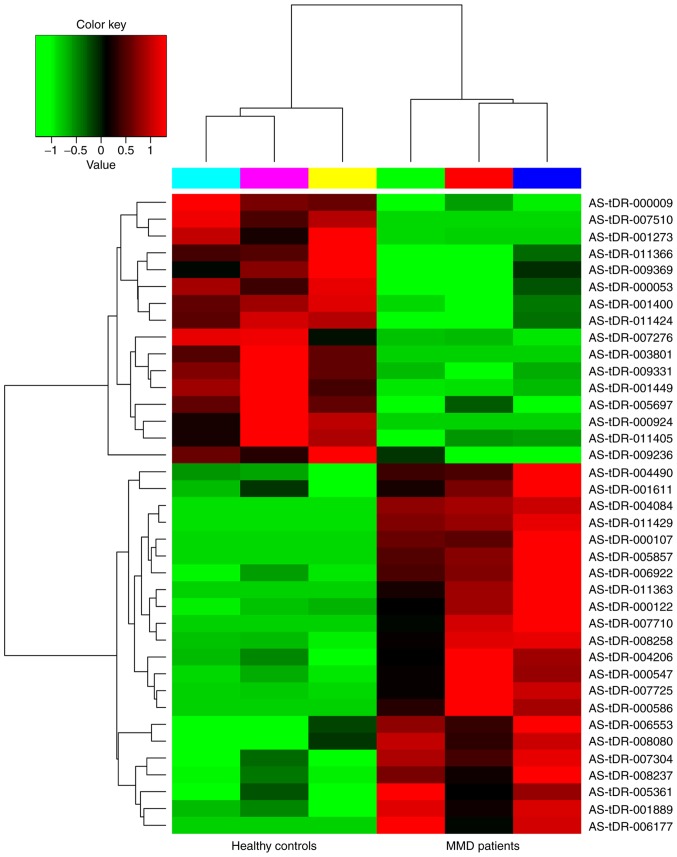
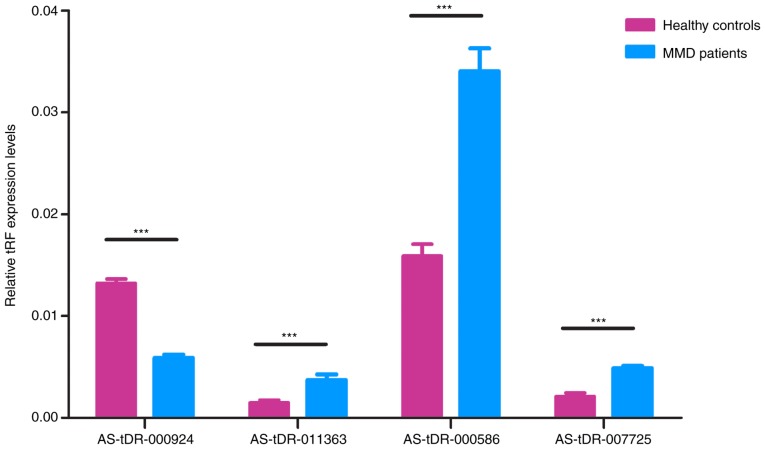
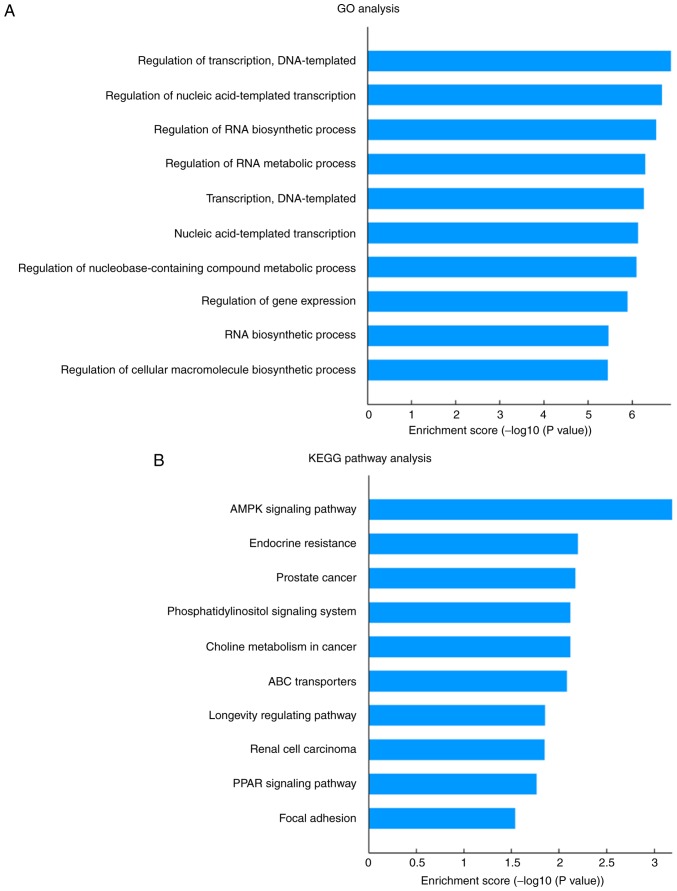
Moyamoya disease (MMD) is a rare chronic cerebrovascular disease mainly found in individuals of East Asian ethnicity, and its pathogenesis is largely unknown. Transfer RNA‑derived fragments (tRFs) are novel biological entities involved in many biological processes; however, whether tRFs contribute towards MMD pathogenesis remains unexplored. In the present study, deep sequencing technology was used to identify alterations in tRF expression profiles between patients with MMD and healthy controls. The sequencing findings were validated using reverse transcription‑quantitative polymerase chain reaction (RT‑qPCR). Subsequently, the putative target genes of tRFs were predicted using miRNA target prediction algorithms. Gene Ontology (GO) and Kyoto Encyclopedia of Genes and Genomes (KEGG) pathway analyses were performed to further evaluate potential functions of tRFs. The sequencing results demonstrated that 38 tRFs were differentially expressed between patients and controls, of which 22 were upregulated and 16 were downregulated. RT‑qPCR analysis confirmed the validity of the sequencing results. GO and KEGG pathway enrichment analyses indicated that 15 pathways were associated with the selected tRFs. These pathways were mainly involved in angiogenesis and metabolism, both of which are physiopathological fundamentals of MMD. The results provided a novel insight into the mechanisms underlying MMD pathogenesis, and demonstrated that tRFs may serve as potential therapeutic targets for the future treatment of MMD.
烟雾病(MMD)是一种罕见的慢性脑血管疾病,主要发生在东亚人群中,其发病机制在很大程度上尚不清楚。转移 RNA 衍生的片段(tRFs)是参与许多生物学过程的新型生物实体;然而,tRFs 是否有助于 MMD 的发病机制仍未得到探索。在本研究中,使用深度测序技术来鉴定 MMD 患者和健康对照之间 tRF 表达谱的变化。使用逆转录-定量聚合酶链反应(RT-qPCR)验证测序结果。随后,使用 miRNA 靶标预测算法预测 tRF 的假定靶基因。进行基因本体论(GO)和京都基因与基因组百科全书(KEGG)通路分析,以进一步评估 tRFs 的潜在功能。测序结果表明,患者与对照组之间有 38 个 tRF 表达存在差异,其中 22 个上调,16 个下调。RT-qPCR 分析证实了测序结果的有效性。GO 和 KEGG 通路富集分析表明,有 15 个通路与选定的 tRFs 相关。这些通路主要涉及血管生成和代谢,这两者都是 MMD 的病理生理学基础。这些结果为 MMD 发病机制的研究提供了新的见解,并表明 tRFs 可能成为未来治疗 MMD 的潜在治疗靶点。