Department of Experimental and Clinical Neuropathology, Mossakowski Medical Research Centre, Polish Academy of Sciences, 02‑106 Warsaw, Poland.
Oncol Rep. 2019 May;41(5):2703-2716. doi: 10.3892/or.2019.7064. Epub 2019 Mar 14.
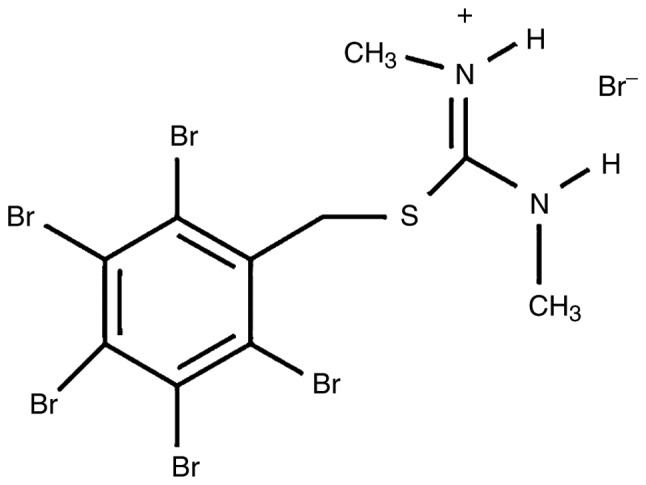
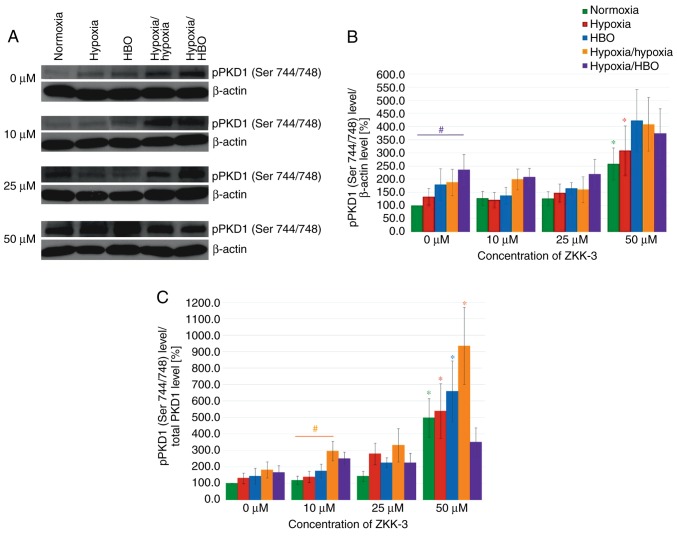
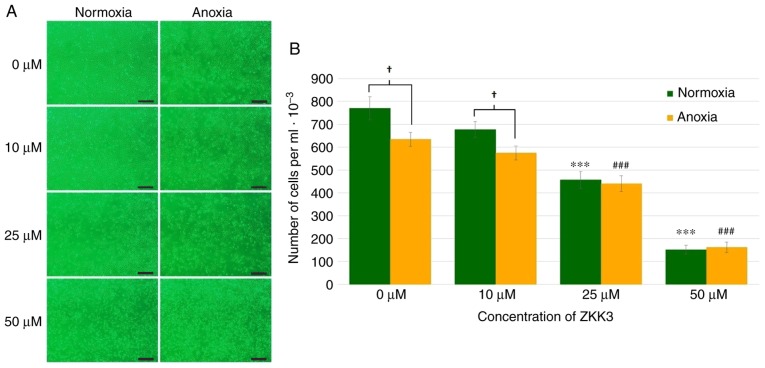
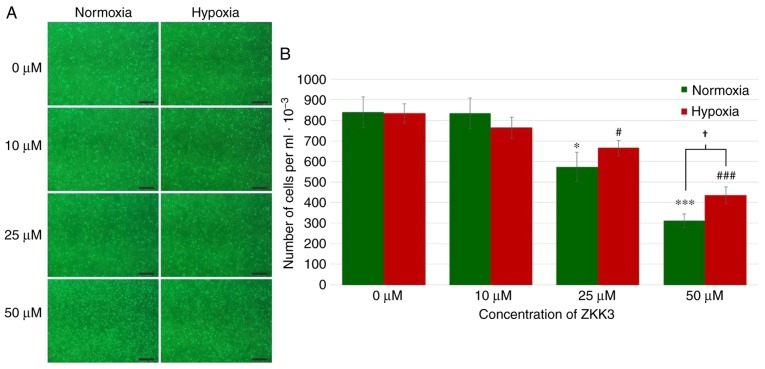
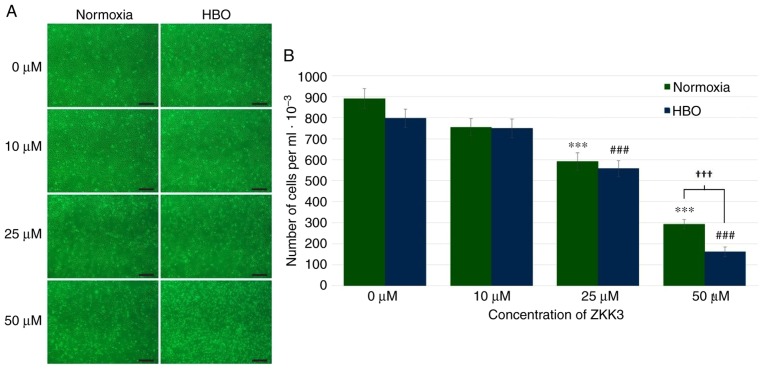
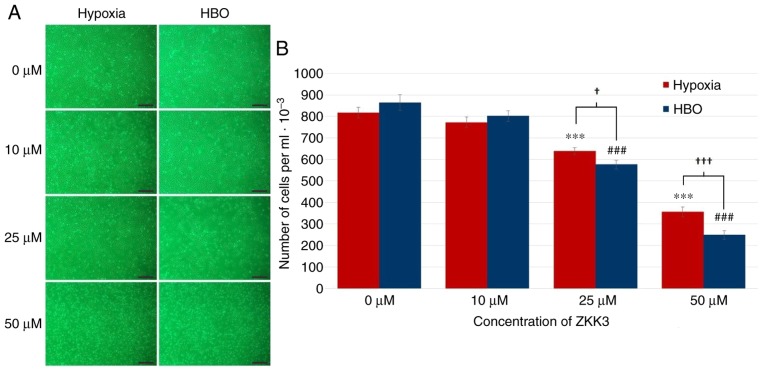
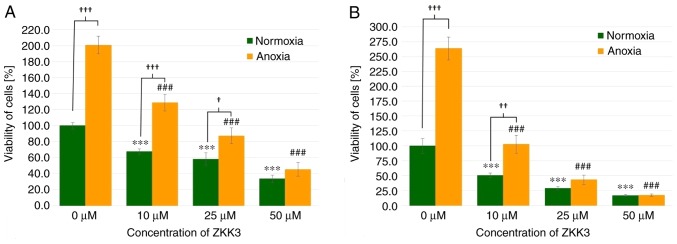
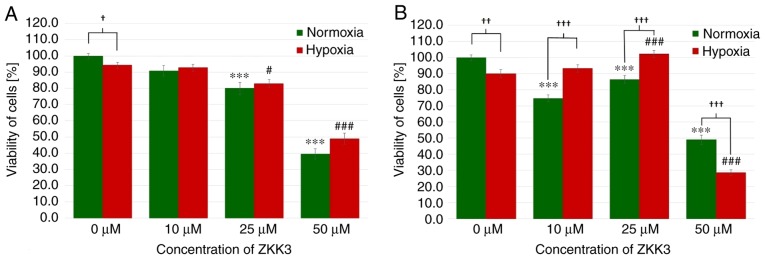
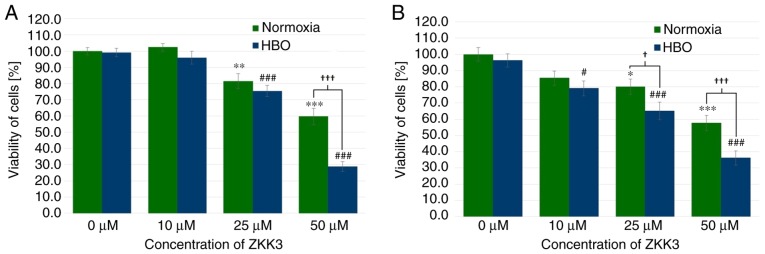
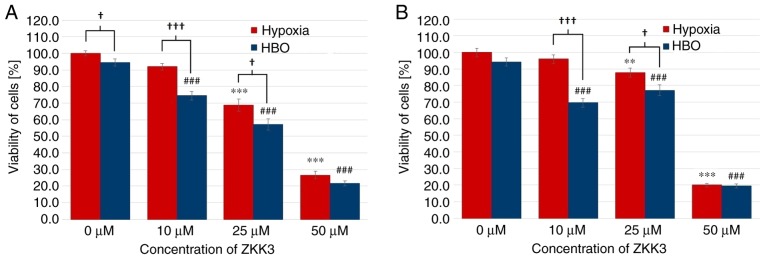
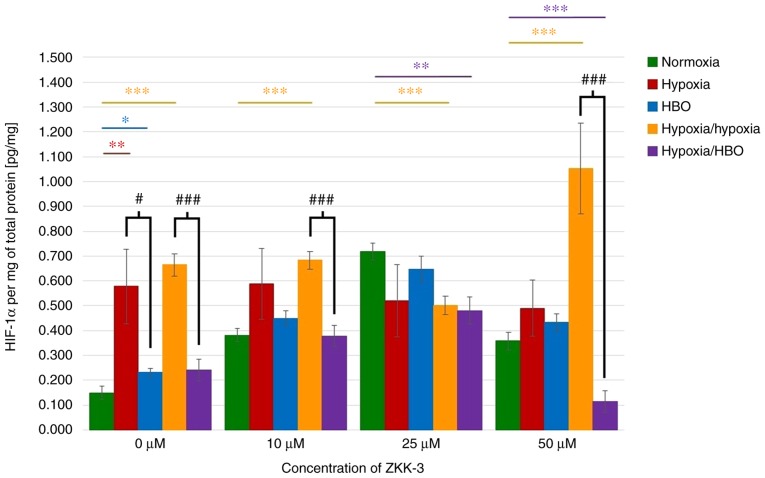
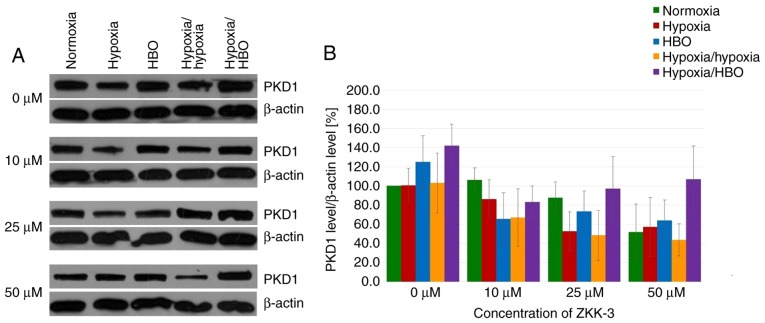
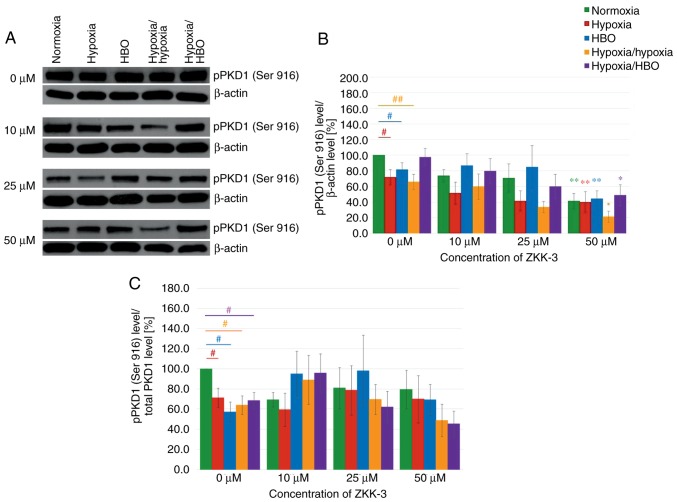
Glioblastoma (GBM) is the most common primary brain tumor. Tumor hypoxia is a pivotal factor responsible for the progression of this malignant glioma, and its resistance to radiation and chemotherapy. Thus, improved tumor tissue oxygenation may promote greater sensitivity to anticancer treatment. Protein kinase D1 (PKD1) protects cells from oxidative stress, and its abnormal activity serves an important role in multiple malignancies. The present study examined the effects of various oxygen conditions on the cytotoxic potential of the novel isothiourea derivate N,N'‑dimethyl‑S‑(2,3,4,5,6‑pentabromobenzyl)‑isothiouronium bromide (ZKK‑3) against the T98G GBM cell line. ZKK‑3 was applied at concentrations of 10, 25 and 50 µM, and cells were maintained under conditions of normoxia, anoxia, hypoxia, hyperbaric oxygen (HBO), hypoxia/hypoxia and hypoxia/HBO. The proliferation and viability of neoplastic cells, and protein expression levels of hypoxia‑inducible factor 1α (HIF‑1α), PKD1, phosphorylated (p)PKD1 (Ser 916) and pPKD1 (Ser 744/748) kinases were evaluated. Oxygen deficiency, particularly regarding hypoxia, could diminish the cytotoxic effect of ZKK‑3 at 25 and 50 µM and improve T98G cell survival compared with normoxia. HBO significantly reduced cell proliferation and increased T98G cell sensitivity to ZKK‑3 when compared with normoxia. HIF‑1α expression levels were increased under hypoxia compared with normoxia and decreased under HBO compared with hypoxia/hypoxia at 0, 10 and 50 µM ZKK‑3, suggesting that HBO improved oxygenation of the cells. ZKK‑3 exhibited inhibitory activity against pPKD1 (Ser 916) kinase; however, the examined oxygen conditions did not appear to significantly influence the expression of this phosphorylated form in cells treated with the tested compound. Regarding pPKD1 (Ser 744/748), a significant difference in expression was observed only for cells treated with 10 µM ZKK‑3 and hypoxia/hypoxia compared with normoxia. However, there were significant differences in the expression levels of both phosphorylated forms of PKD1 under different oxygen conditions in the controls. In conclusion, the combination of isothiourea derivatives and hyperbaric oxygenation appears to be a promising therapeutic approach for malignant glioma treatment.
胶质母细胞瘤(GBM)是最常见的原发性脑肿瘤。肿瘤缺氧是导致这种恶性神经胶质瘤及其对放疗和化疗产生耐药性的关键因素。因此,提高肿瘤组织的氧合作用可能会促进对癌症治疗的更大敏感性。蛋白激酶 D1(PKD1)可保护细胞免受氧化应激,其异常活性在多种恶性肿瘤中起着重要作用。本研究探讨了不同氧条件对新型异硫脲衍生物 N,N'-二甲基-S-(2,3,4,5,6-五溴苄基)-异硫脲溴化物(ZKK-3)对 T98G 胶质母细胞瘤细胞系的细胞毒性潜力的影响。ZKK-3 的浓度分别为 10、25 和 50µM,细胞在常氧、缺氧、低氧、高压氧(HBO)、低氧/低氧和低氧/HBO 条件下维持。评估了肿瘤细胞的增殖和活力以及缺氧诱导因子 1α(HIF-1α)、PKD1、磷酸化(p)PKD1(Ser 916)和 pPKD1(Ser 744/748)激酶的蛋白表达水平。与常氧相比,缺氧,尤其是低氧,可降低 25 和 50µM 时 ZKK-3 的细胞毒性作用,并改善 T98G 细胞的存活率。与常氧相比,HBO 可降低细胞增殖并增加 T98G 细胞对 ZKK-3 的敏感性。与常氧相比,HIF-1α 在低氧下的表达水平升高,在 HBO 下的表达水平降低,在 0、10 和 50µM ZKK-3 下,提示 HBO 改善了细胞的氧合作用。ZKK-3 对 pPKD1(Ser 916)激酶表现出抑制活性;然而,所检查的氧气条件似乎并未显着影响用测试化合物处理的细胞中这种磷酸化形式的表达。关于 pPKD1(Ser 744/748),仅在常氧与 10µM ZKK-3 和低氧/低氧相比时观察到表达的显着差异。然而,在不同的氧气条件下,对照组中 PKD1 的两种磷酸化形式的表达水平均存在显着差异。总之,异硫脲衍生物与高压氧联合使用似乎是治疗恶性神经胶质瘤的一种很有前途的治疗方法。