Gerhard-Domagk-Institute of Pathology, Münster University Hospital, Münster, Germany.
Division of Translational Pathology, Gerhard-Domagk-Institute of Pathology, Münster University Hospital, Münster, Germany.
EMBO Mol Med. 2019 May;11(5). doi: 10.15252/emmm.201809889.
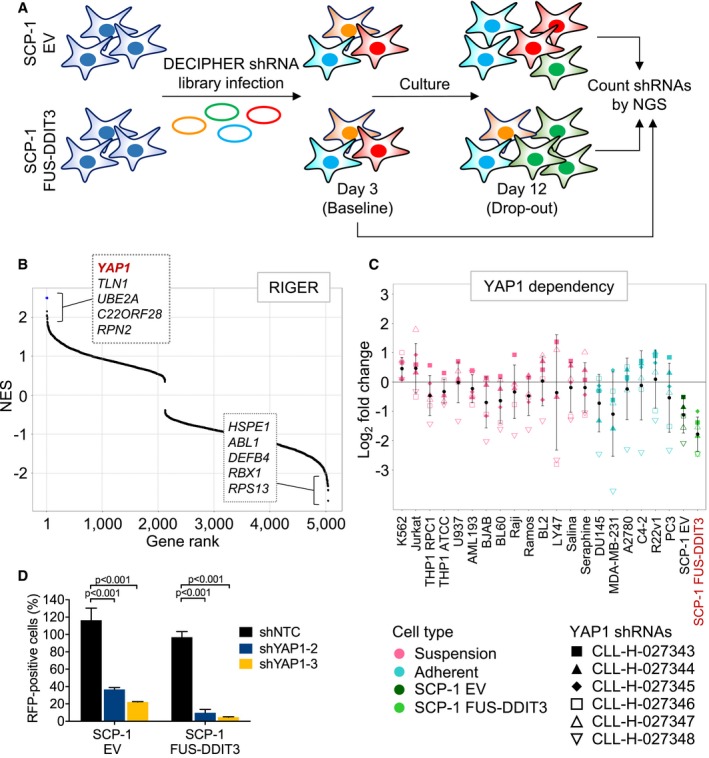
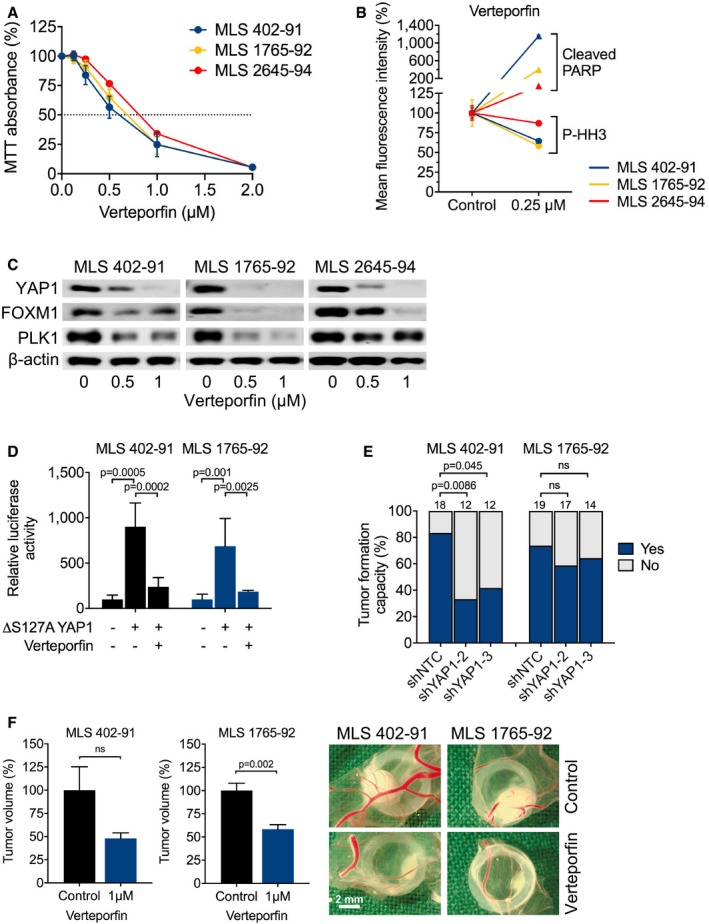
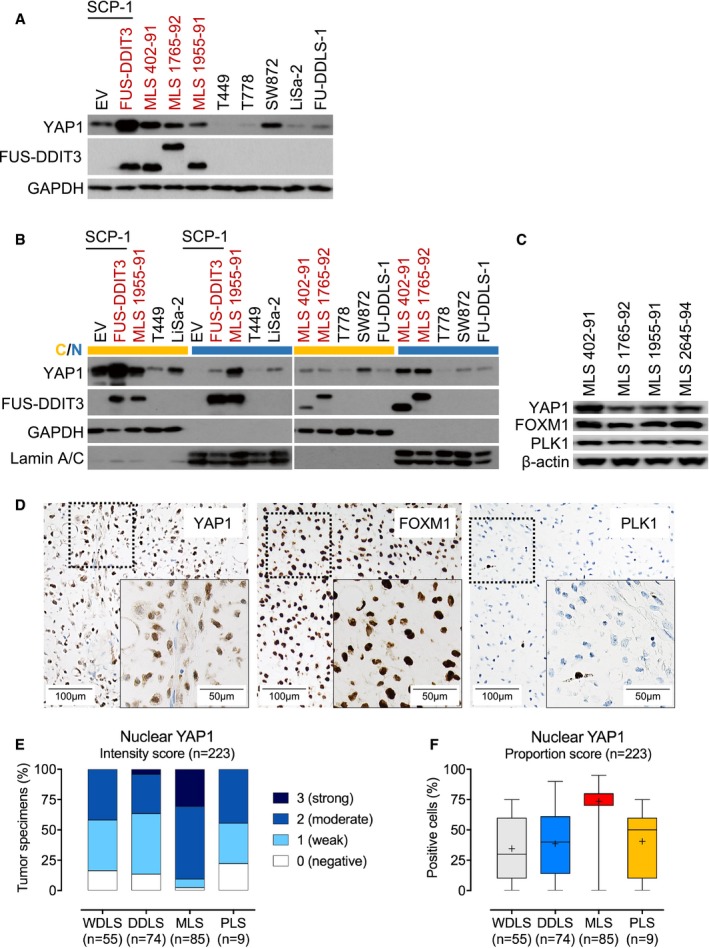
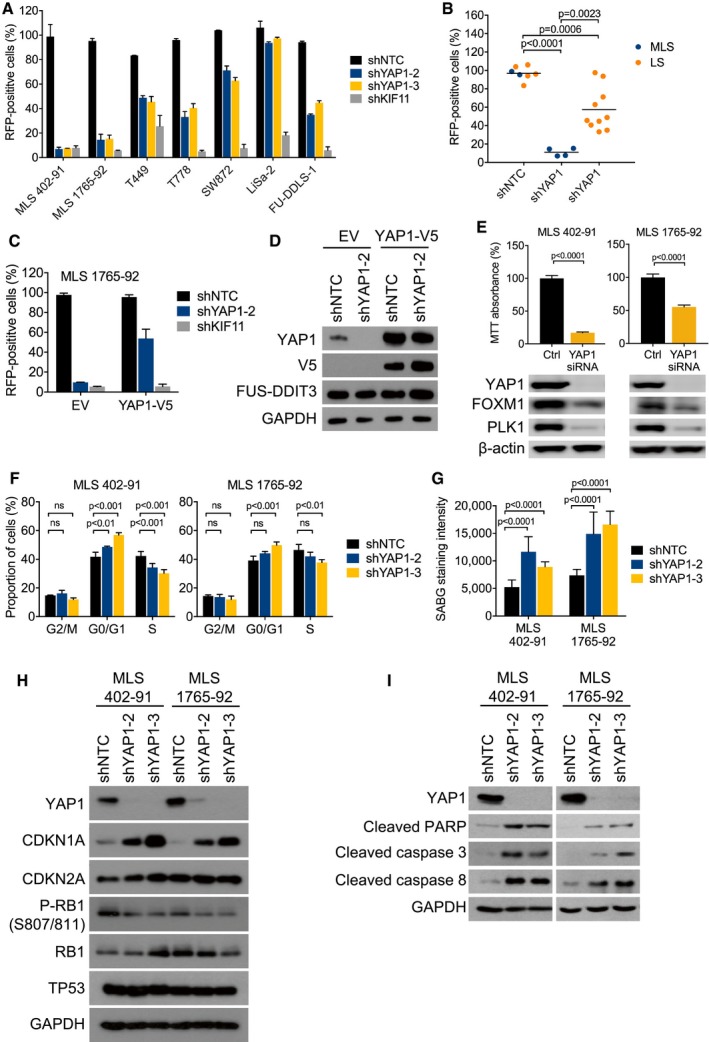
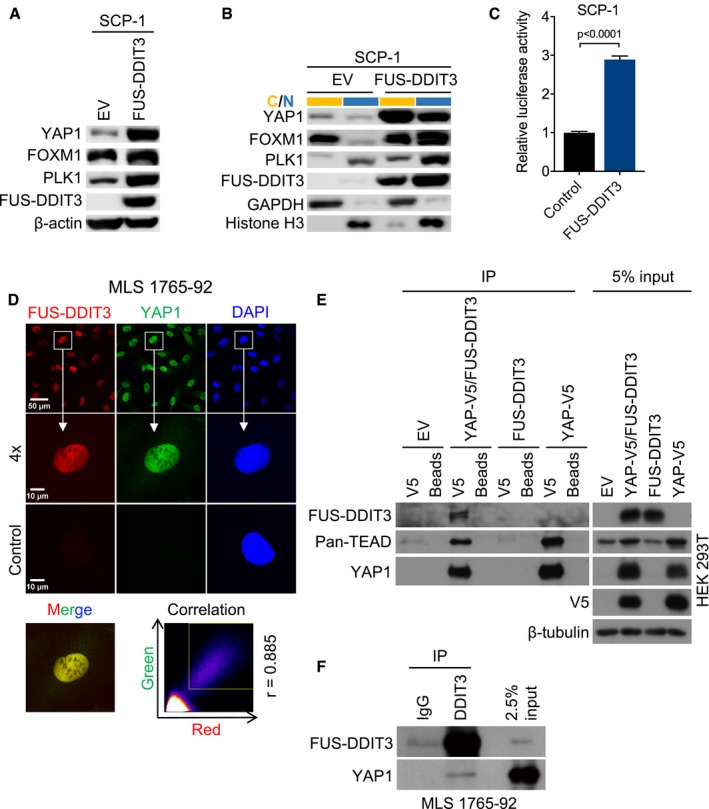
Myxoid liposarcomas (MLS), malignant tumors of adipocyte origin, are driven by the fusion gene encoding an aberrant transcription factor. The mechanisms whereby FUS-DDIT3 mediates sarcomagenesis are incompletely understood, and strategies to selectively target MLS cells remain elusive. Here we show, using an unbiased functional genomic approach, that FUS-DDIT3-expressing mesenchymal stem cells and MLS cell lines are dependent on YAP1, a transcriptional co-activator and central effector of the Hippo pathway involved in tissue growth and tumorigenesis, and that increased YAP1 activity is a hallmark of human MLS Mechanistically, FUS-DDIT3 promotes YAP1 expression, nuclear localization, and transcriptional activity and physically associates with YAP1 in the nucleus of MLS cells. Pharmacologic inhibition of YAP1 activity impairs the growth of MLS cells and These findings identify overactive YAP1 signaling as unifying feature of MLS development that could represent a novel target for therapeutic intervention.
黏液样脂肪肉瘤(MLS)是一种源自脂肪细胞的恶性肿瘤,由编码异常转录因子的融合基因驱动。FUS-DDIT3 介导肉瘤发生的机制尚不完全清楚,选择性靶向 MLS 细胞的策略仍然难以捉摸。在这里,我们使用一种无偏的功能基因组方法表明,表达 FUS-DDIT3 的间充质干细胞和 MLS 细胞系依赖于 YAP1,YAP1 是 Hippo 通路的转录共激活因子和核心效应因子,该通路参与组织生长和肿瘤发生,并且增加的 YAP1 活性是人类 MLS 的标志。在机制上,FUS-DDIT3 促进 YAP1 的表达、核定位和转录活性,并在 MLS 细胞的核内与 YAP1 发生物理关联。YAP1 活性的药理学抑制会损害 MLS 细胞的生长,这些发现确定了过度活跃的 YAP1 信号传导是 MLS 发展的统一特征,它可能代表治疗干预的新靶点。