Hall Bradley R, Cannon Andrew, Thompson Christopher, Santhamma Bindu, Chavez-Riveros Alejandra, Bhatia Rakesh, Nair Hareesh B, Nickisch Klaus, Batra Surinder K, Kumar Sushil
Department of Biochemistry and Molecular Biology, University of Nebraska Medical Center, Omaha, NE, USA.
Department of General Surgery, University of Nebraska Medical Center, Omaha, NE, USA.
Genes Cancer. 2019 Feb;10(1-2):1-10. doi: 10.18632/genesandcancer.184.
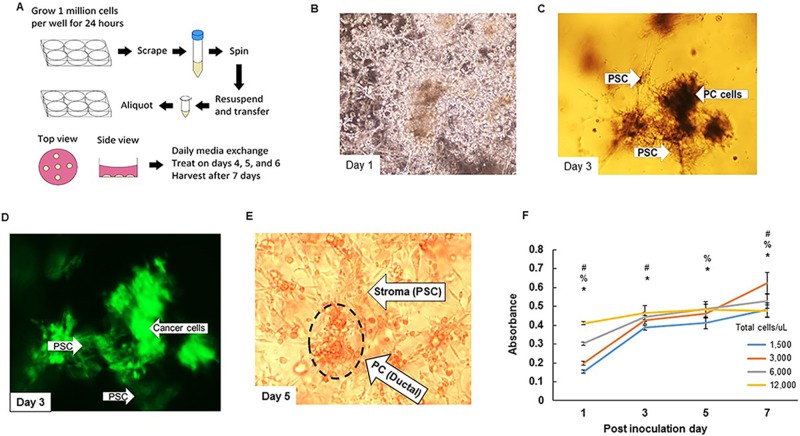
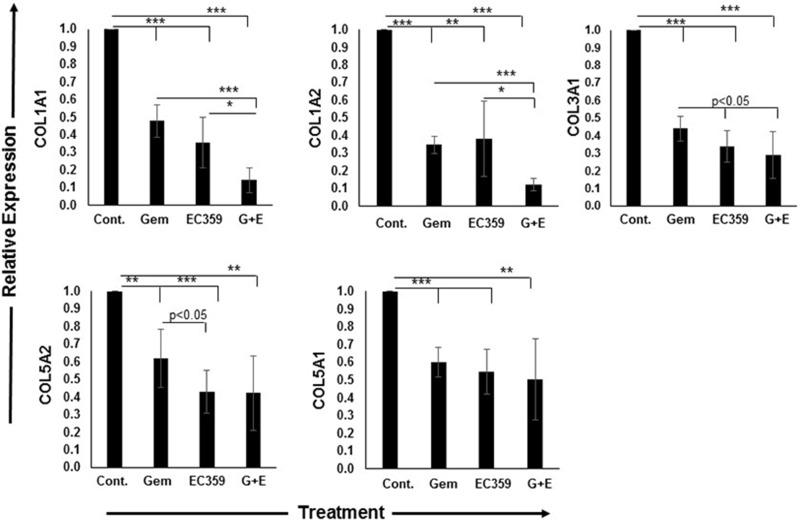
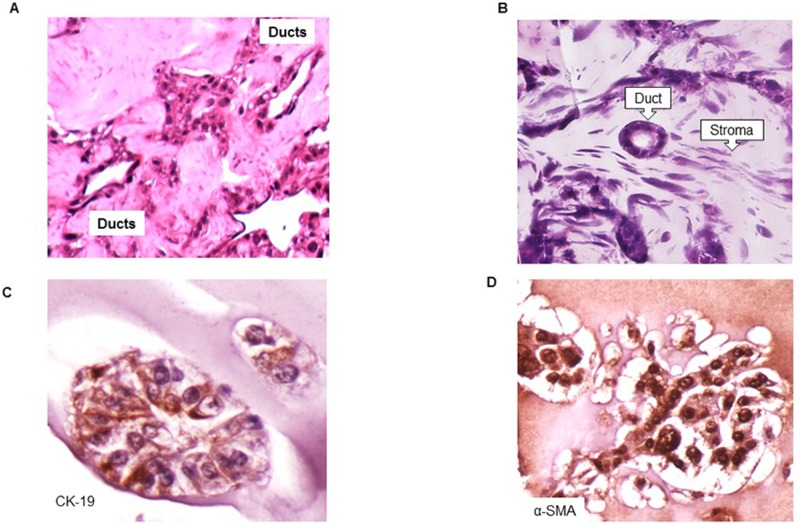
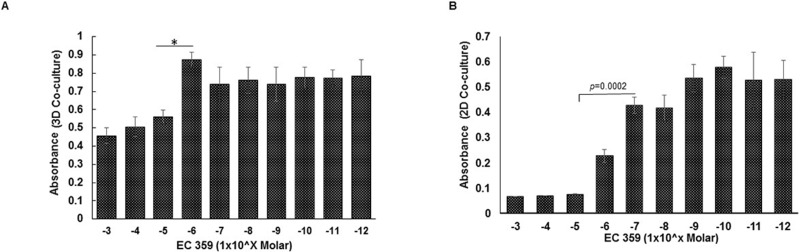
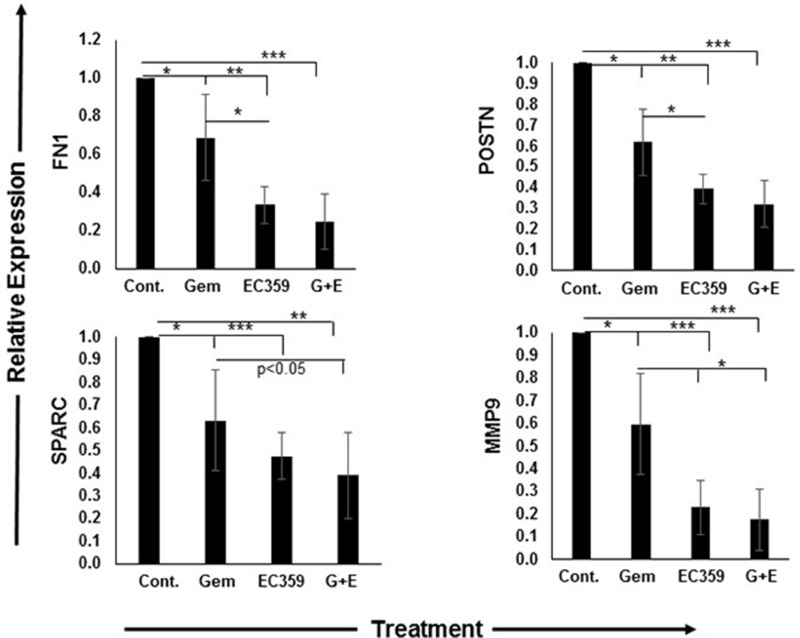
Survival of pancreatic cancer (PC) patient is poor due to lack of effective treatment modalities, which is partly due to the presence of dense desmoplasia that impedes the delivery of chemotherapeutics. Therefore, PC stroma-targeting therapies are expected to improve the efficacy of chemotherapeutics. However, evaluation of stromal-targeted therapies requires a culture system which includes components of both tumor stroma and parenchyma. We aim to generate a cell line-derived 3D organoids to test the efficacy of stromal-targeted, LIFR-inhibitor EC359. Murine PC (FC1245) and stellate (ImPaSC) cells were cultured to generate organoids that recapitulated the histological organization of PC with the formation of ducts by epithelial cells surrounded by activated fibroblasts, as indicated by CK19 and α-SMA staining, respectively. Analysis by qRT-PCR demonstrated a significant downregulation of markers of activated stroma, POSTN, FN1, MMP9, and SPARC (<0.0001), when treated with gemcitabine in combination with EC359. Concurrently, collagen proteins including COL1A1, COL1A2, COL3A1, and COL5A1 were significantly downregulated ( <0.0001) after treatment with gemcitabine in combination with EC359. Overall, our study demonstrates the utility of cell lines-derived 3D organoids to evaluate the efficacy of stroma-targeted therapies as well as the potential of EC359 to target activated stroma in PC.
由于缺乏有效的治疗方式,胰腺癌(PC)患者的生存率很低,部分原因是存在致密的促纤维增生反应,这阻碍了化疗药物的递送。因此,针对PC基质的治疗有望提高化疗药物的疗效。然而,评估基质靶向治疗需要一个包含肿瘤基质和实质成分的培养系统。我们旨在生成一种细胞系来源的3D类器官,以测试基质靶向的LIFR抑制剂EC359的疗效。培养小鼠PC(FC1245)和星状(ImPaSC)细胞以生成类器官,其重现了PC的组织学结构,上皮细胞形成导管,周围被活化的成纤维细胞包围,分别通过CK19和α-SMA染色显示。qRT-PCR分析表明,当吉西他滨与EC359联合处理时,活化基质标志物POSTN、FN1、MMP9和SPARC显著下调(<0.0001)。同时,吉西他滨与EC359联合处理后,包括COL1A1、COL1A2、COL3A1和COL5A1在内的胶原蛋白显著下调(<0.0001)。总体而言,我们的研究证明了细胞系来源的3D类器官在评估基质靶向治疗疗效方面的实用性,以及EC359靶向PC中活化基质的潜力。