Ganapathy Suthakar, Liu Jian, Xiong Rui, Yu Tianqi, Makriyannis Alexandros, Chen Changyan
The Center for Drug Discovery, Northeastern University, Boston, MA, USA.
The First Affiliated Hospital of Nanchang University, Nanchang, Jiangxi Sheng, P.R. China.
Genes Cancer. 2019 Feb;10(1-2):39-51. doi: 10.18632/genesandcancer.185.
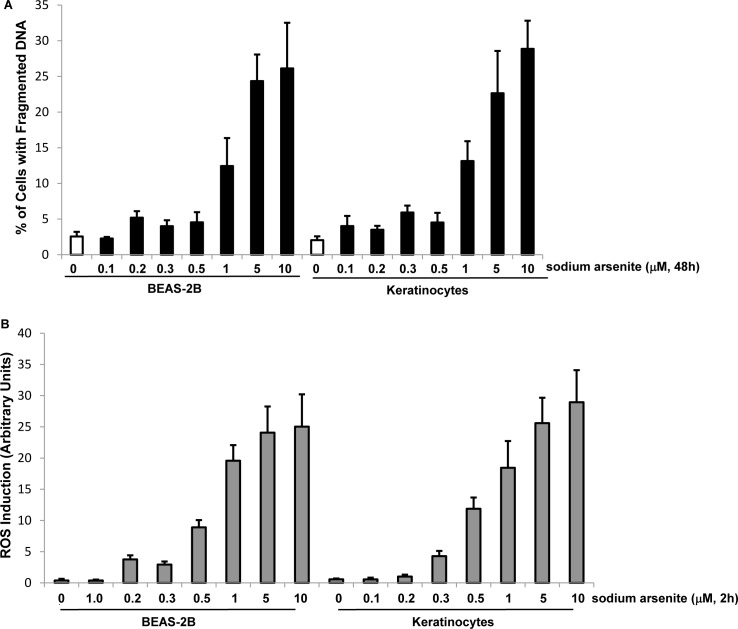
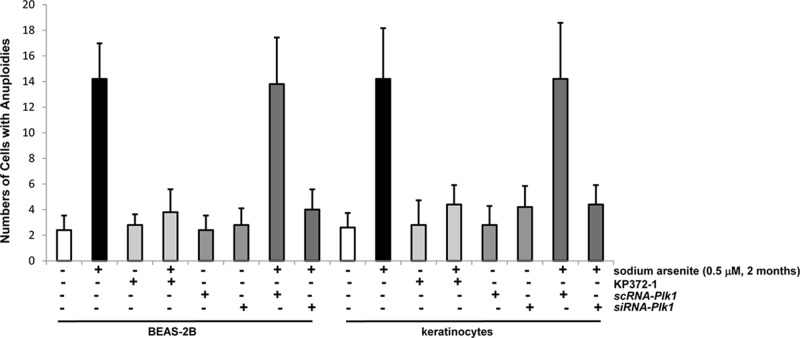
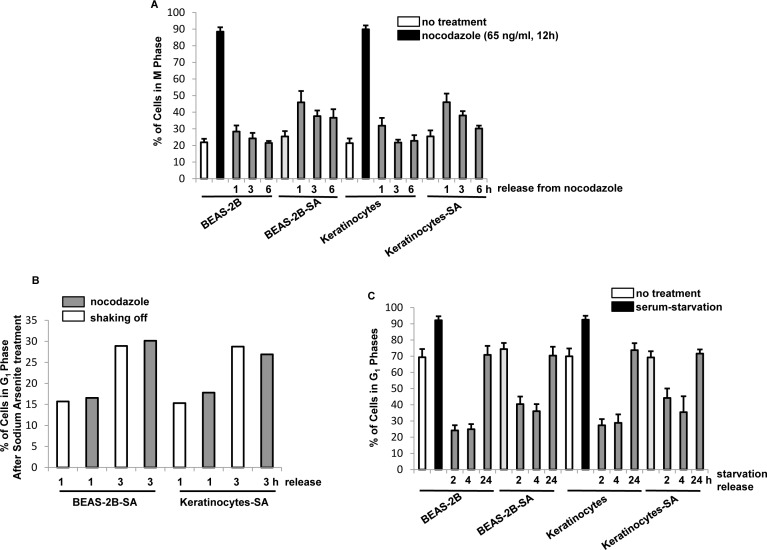
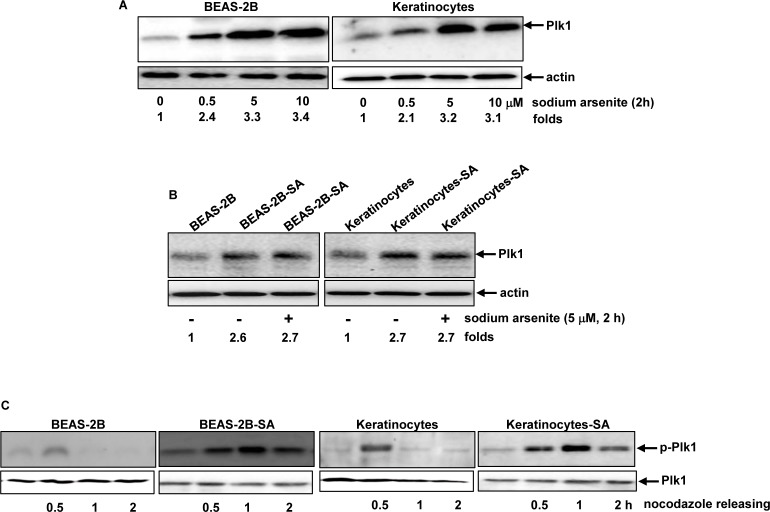
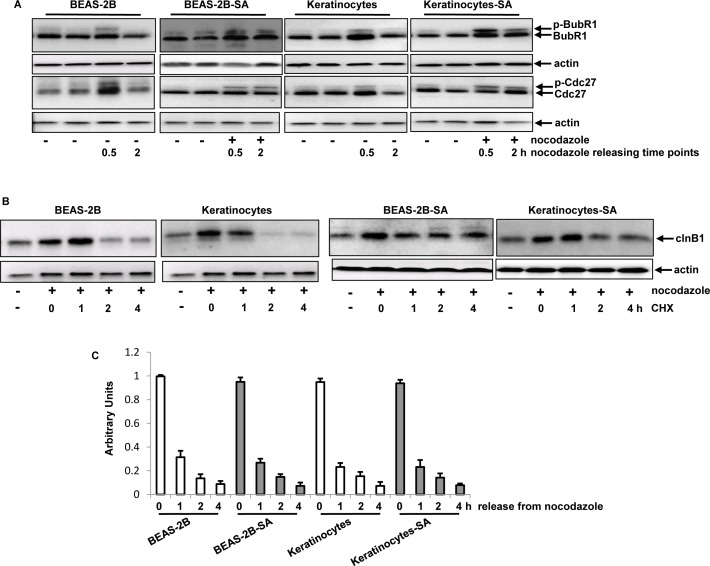
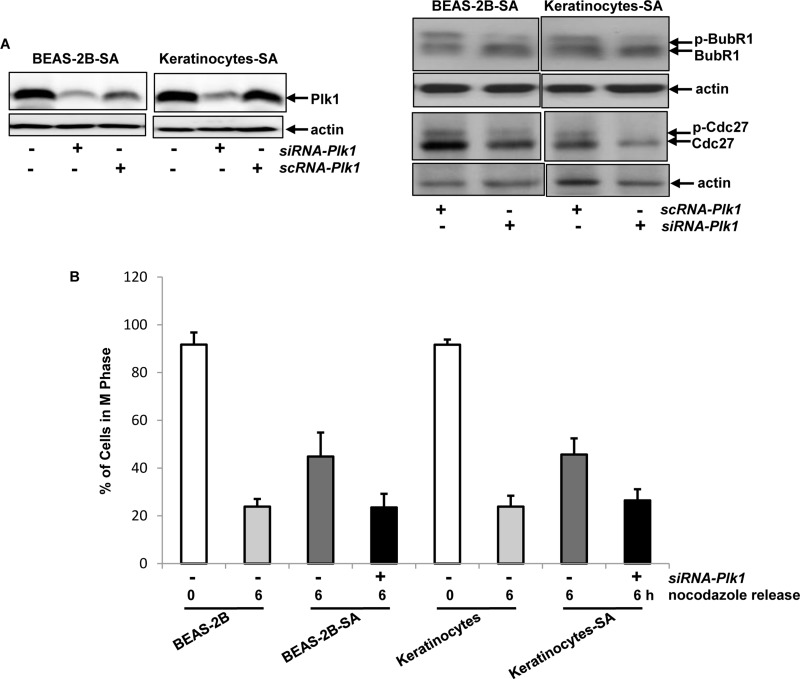
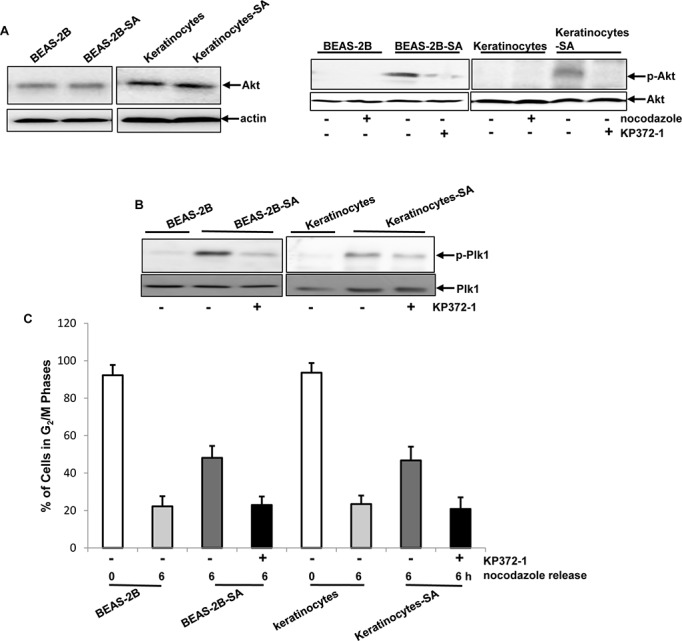
Environmental pollution is a big challenge for human survival. Arsenic compounds are well-known biohazard, the exposure of which is closely linked to onsets of various human diseases, particularly cancers. Upon chronically exposing to arsenic compounds, genomic integrity is often disrupted, leading to tumor development. However, the underlying mechanisms by which chronic, low dose arsenic exposure targets genetic stability to initiate carcinogenesis still remain not fully understood. In this study, human lung epithelial BEAS-2B cells and keratinocytes were treated with 0.5 μM of sodium arsenite for one month (designated as BEAS-2B-SA cells or keratinocytes-SA), and its effect on cell cycle responses was analyzed. After being arrested in mitotic phase of the cell cycle by nocodazole treatment, BEAS-2B-SA cells or keratinocytes-SA were delayed to enter next cytokinesis. The lagging exit of the cells from mitosis was accompanied by a sustained Plk1 phosphorylation, which led to a persistent activation of the mitotic regulators BubR1 and Cdc27. As the result, cyclin B1 (clnB1) degradation was attenuated. BEAS-2B-SA cells or keratinocytes-SA also expressed a constitutively active Akt. The cytogenetic analysis showed an increased numbers of aneuploidy in these cells. The suppression of Akt reversed the aberrant expressions of the mitotic regulators, delay of mitotic exit as well as chromosomal aberrations. Our findings suggest that a long-term exposure to low dose sodium arsenite aberrantly retains the catenation of mitosis, which facilitates establishing genetic instability and predisposes the cells to tumorigenesis.
环境污染是人类生存面临的一大挑战。砷化合物是众所周知的生物危害物,其暴露与多种人类疾病尤其是癌症的发生密切相关。长期接触砷化合物后,基因组完整性常常遭到破坏,从而导致肿瘤发展。然而,慢性低剂量砷暴露靶向遗传稳定性引发癌变的潜在机制仍未完全明确。在本研究中,人肺上皮BEAS-2B细胞和角质形成细胞用0.5μM亚砷酸钠处理一个月(命名为BEAS-2B-SA细胞或角质形成细胞-SA),并分析其对细胞周期反应的影响。在用诺考达唑处理使细胞周期停滞在有丝分裂期后,BEAS-2B-SA细胞或角质形成细胞-SA延迟进入下一个胞质分裂。细胞从有丝分裂中滞后退出伴随着Plk1持续磷酸化,这导致有丝分裂调节因子BubR1和Cdc27持续激活。结果,细胞周期蛋白B1(clnB1)降解减弱。BEAS-2B-SA细胞或角质形成细胞-SA还表达持续激活的Akt。细胞遗传学分析显示这些细胞中非整倍体数量增加。抑制Akt可逆转有丝分裂调节因子的异常表达、有丝分裂退出延迟以及染色体畸变。我们的研究结果表明,长期低剂量亚砷酸钠暴露异常地保留了有丝分裂的连锁反应,这有助于建立遗传不稳定性并使细胞易于发生肿瘤igenesis。 (最后一句中的“tumorigenesis”应改为“肿瘤发生”,整体翻译如下:环境污染是人类生存面临的一大挑战。砷化合物是众所周知的生物危害物,其暴露与多种人类疾病尤其是癌症的发生密切相关。长期接触砷化合物后,基因组完整性常常遭到破坏,从而导致肿瘤发展。然而,慢性低剂量砷暴露靶向遗传稳定性引发癌变的潜在机制仍未完全明确。在本研究中,人肺上皮BEAS-2B细胞和角质形成细胞用0.5μM亚砷酸钠处理一个月(命名为BEAS-2B-SA细胞或角质形成细胞-SA),并分析其对细胞周期反应的影响。在用诺考达唑处理使细胞周期停滞在有丝分裂期后,BEAS-2B-SA细胞或角质形成细胞-SA延迟进入下一个胞质分裂。细胞从有丝分裂中滞后退出伴随着Plk1持续磷酸化,这导致有丝分裂调节因子BubR1和Cdc27持续激活。结果,细胞周期蛋白B1(clnB1)降解减弱。BEAS-2B-SA细胞或角质形成细胞-SA还表达持续激活的Akt。细胞遗传学分析显示这些细胞中非整倍体数量增加。抑制Akt可逆转有丝分裂调节因子的异常表达、有丝分裂退出延迟以及染色体畸变。我们的研究结果表明,长期低剂量亚砷酸钠暴露异常地保留了有丝分裂的连锁反应,这有助于建立遗传不稳定性并使细胞易于发生肿瘤发生。) 你可以根据实际情况进行调整,确保翻译准确、通顺且符合医学专业术语的表达习惯。