
长期低剂量砷暴露对人肝细胞 DNA 甲基化和基因表达的影响。
Effect of Long-Term Low-Dose Arsenic Exposure on DNA Methylation and Gene Expression in Human Liver Cells.
机构信息
Department of Food Chemistry and Toxicology, Institute of Applied Biosciences (IAB), Karlsruhe Institute of Technology (KIT), 76131 Karlsruhe, Germany.
出版信息
Int J Mol Sci. 2023 Oct 16;24(20):15238. doi: 10.3390/ijms242015238.
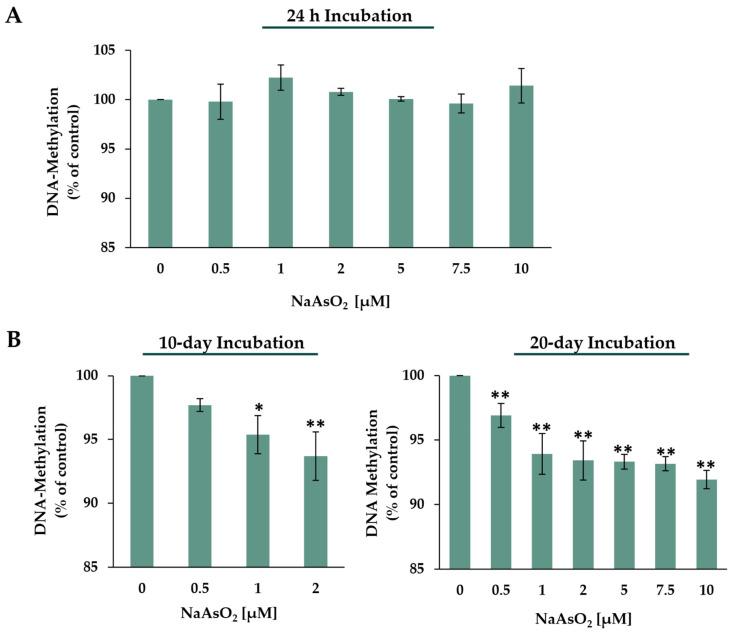
Millions of people around the world are exposed to elevated levels of arsenic through food or drinking water. Epidemiological studies have linked chronic arsenic exposure to an increased risk of several cancers, cardiovascular disease, central nervous system neuropathies, and genotoxic as well as immunotoxic effects. In addition to the induction of oxidative stress and inhibition of DNA repair processes, epigenetic effects, including altered DNA methylation patterns resulting in aberrant gene expression, may contribute to carcinogenicity. However, the underlying mechanisms by which chronic micromolar concentrations of arsenite affect the methylation status of DNA are not fully understood. In this study, human HepG2 hepatocarcinoma cells were treated with 0.5-10 μM sodium arsenite for 24 h, 10, or 20 days. During these periods, the effects on global DNA methylation, cell cycle phase distribution, and gene expression were investigated. While no impact on DNA methylation was seen after short-term exposure, global hypomethylation was observed at both long-term exposure periods, with concomitant induction of the DNA methyltransferase genes and , while was slightly down-regulated. Pronounced time- and concentration-dependent effects were also seen in the case of genes involved in DNA damage response and repair, inflammation, oxidative stress response, and metal homeostasis. These results suggest that chronic low-dose arsenite exposure can lead to global hypomethylation. As an underlying mechanism, the consistent down-regulation of DNA methyltransferase genes could be excluded; alternatively, interactions at the protein level could play an important role.
全世界数百万人通过食物或饮用水接触到升高水平的砷。流行病学研究表明,慢性砷暴露会增加患多种癌症、心血管疾病、中枢神经系统神经病变以及遗传毒性和免疫毒性的风险。除了诱导氧化应激和抑制 DNA 修复过程外,表观遗传效应,包括导致异常基因表达的 DNA 甲基化模式改变,可能有助于致癌。然而,慢性亚微摩尔浓度的亚砷酸盐如何影响 DNA 的甲基化状态的潜在机制尚不完全清楚。在这项研究中,用人 HepG2 肝癌细胞用 0.5-10 μM 亚砷酸钠处理 24 小时、10 天或 20 天。在这些时期,研究了对全球 DNA 甲基化、细胞周期阶段分布和基因表达的影响。虽然短期暴露后对 DNA 甲基化没有影响,但在长期暴露期间观察到全基因组低甲基化,同时诱导 DNA 甲基转移酶基因 和 ,而 则略有下调。在涉及 DNA 损伤反应和修复、炎症、氧化应激反应和金属稳态的基因中也观察到明显的时间和浓度依赖性效应。这些结果表明,慢性低剂量亚砷酸盐暴露会导致全基因组低甲基化。作为一种潜在的机制,可以排除 DNA 甲基转移酶基因的持续下调;相反,蛋白质水平的相互作用可能起着重要作用。


 Zotero 插件