Department of Biology, Fairfield University, Fairfield, Connecticut, United States of America.
PLoS One. 2019 Mar 22;14(3):e0213841. doi: 10.1371/journal.pone.0213841. eCollection 2019.
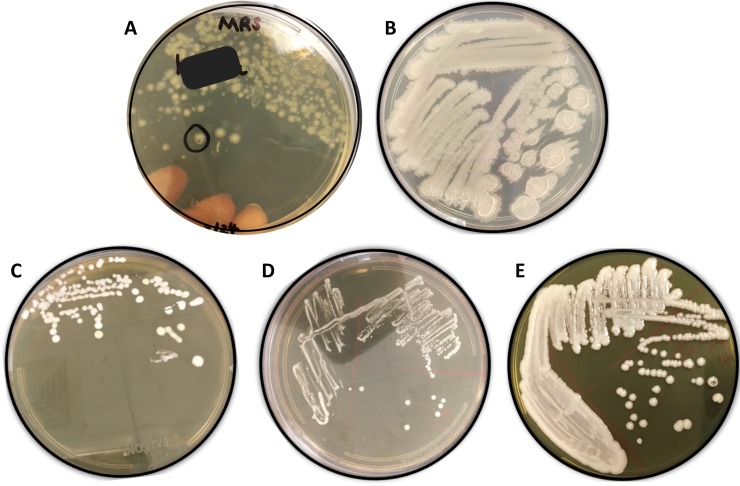
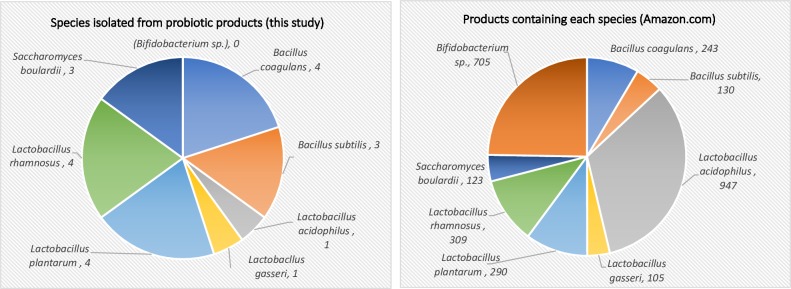
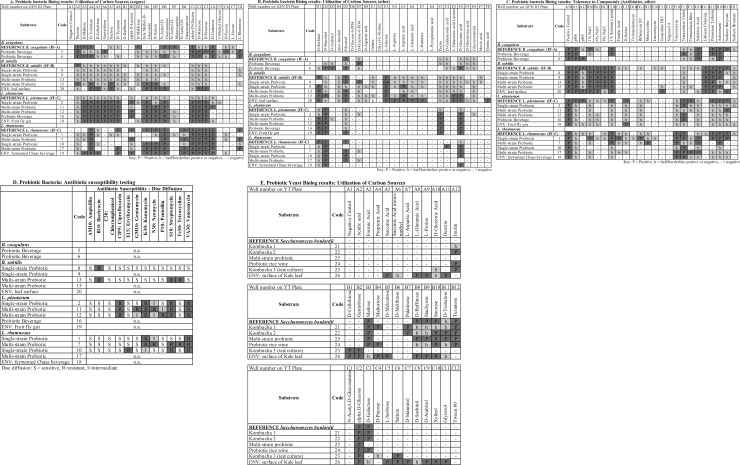
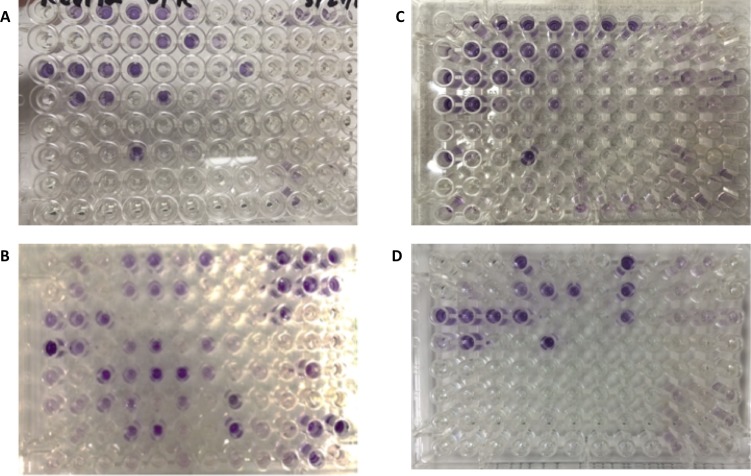
Probiotic products are becoming more prevalent as awareness of the role of beneficial microbes in health increases. Ingredient labels of these products often omit identifications at the strain level, making it difficult to track down applicable published research. In this study, we investigated whether products labeled with the same species name contained different strains of those species. From 21 commercially available probiotic supplements and beverages, we cultured five main species: Bacillus coagulans, Bacillus subtilis, Lactobacillus plantarum, Lactobacillus rhamnosus, and the yeast Saccharomyces boulardii. To confirm the identity of each bacterial isolate, we applied standard molecular approaches: 16S rRNA gene sequencing and Matrix Assisted Laser Desorption Ionization Time-of-Flight mass spectrometry (MALDI-TOF MS). Phenotypic profiling and identification were performed with the Biolog Microbial Identification system. All of the bacterial isolates were correctly identified by at least one approach. Sequencing the 16S rRNA gene led to 82% of species identifications matching the product label, with 71% of isolates identified by MALDI-TOF MS and 60% identified correctly with the Biolog system. Analysis of the Biolog phenotypic profiles revealed different patterns of carbon source usage by each species, with sugars preferentially utilized by all except B. subtilis. To assess the strain-level differences, we compared strains of the same species and found variability in carbohydrate utilization and tolerance to environmental stressors (salt, acidity, antibiotics). By demonstrating that products listing the same species often contain strains with different 16S sequences and phenotypes, this study highlights that current labels of probiotic supplements do not sufficiently convey the strain diversity in these products.
随着人们对有益微生物在健康中的作用的认识不断提高,益生菌产品越来越普及。这些产品的成分标签经常省略在菌株水平上的鉴定,使得难以追踪到适用的已发表研究。在这项研究中,我们调查了标有相同物种名称的产品是否含有这些物种的不同菌株。我们从 21 种市售益生菌补充剂和饮料中培养了五种主要物种:凝结芽孢杆菌、枯草芽孢杆菌、植物乳杆菌、鼠李糖乳杆菌和酵母布拉氏酵母。为了确认每个细菌分离株的身份,我们应用了标准的分子方法:16S rRNA 基因测序和基质辅助激光解吸电离飞行时间质谱(MALDI-TOF MS)。表型分析和鉴定使用 Biolog 微生物鉴定系统进行。所有细菌分离株都至少通过一种方法正确鉴定。测序 16S rRNA 基因导致 82%的物种鉴定与产品标签匹配,71%的分离株通过 MALDI-TOF MS 鉴定,60%的分离株通过 Biolog 系统正确鉴定。对 Biolog 表型图谱的分析显示,每个物种对碳源的利用模式不同,除枯草芽孢杆菌外,所有物种都优先利用糖。为了评估菌株水平的差异,我们比较了同一物种的菌株,发现了碳水化合物利用和对环境胁迫(盐、酸度、抗生素)的耐受性的差异。通过证明列出相同物种的产品通常含有具有不同 16S 序列和表型的菌株,本研究强调了当前益生菌补充剂的标签不能充分传达这些产品中菌株的多样性。