Unité de Biologie des Infections Virales Emergentes, Institut Pasteur, 69007 Lyon, France.
Centre International de Recherche en Infectiologie (INSERM, CNRS, ENS Lyon, Université Lyon I), 69007 Lyon, France.
Viruses. 2019 Mar 21;11(3):287. doi: 10.3390/v11030287.
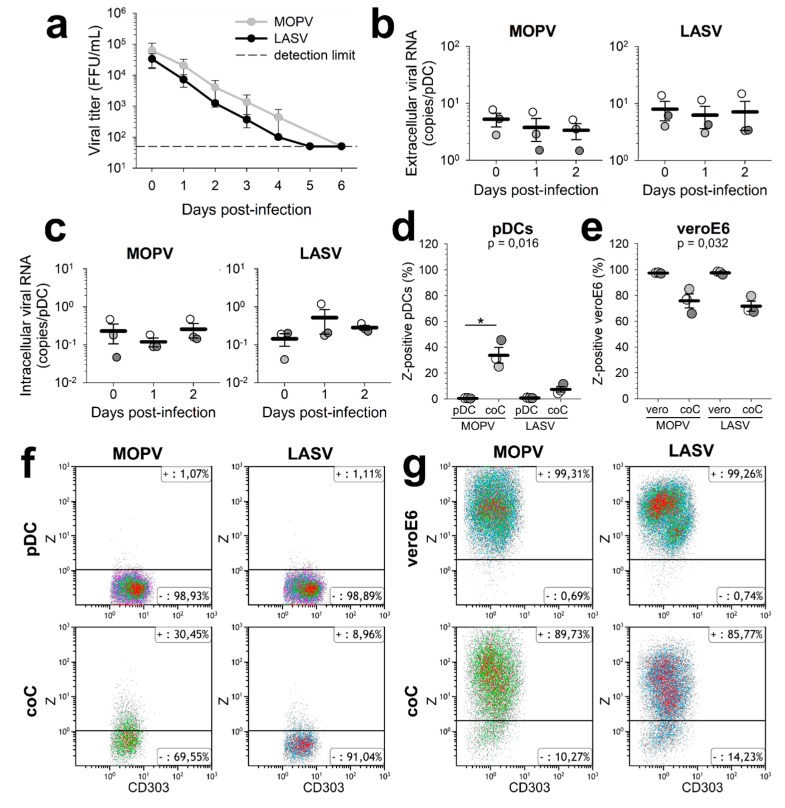
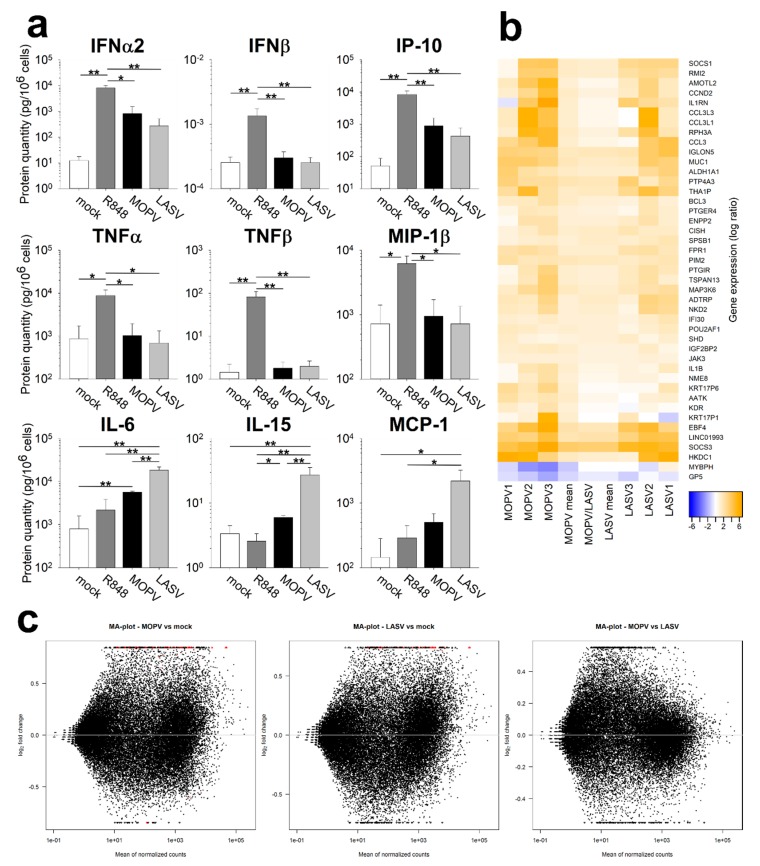
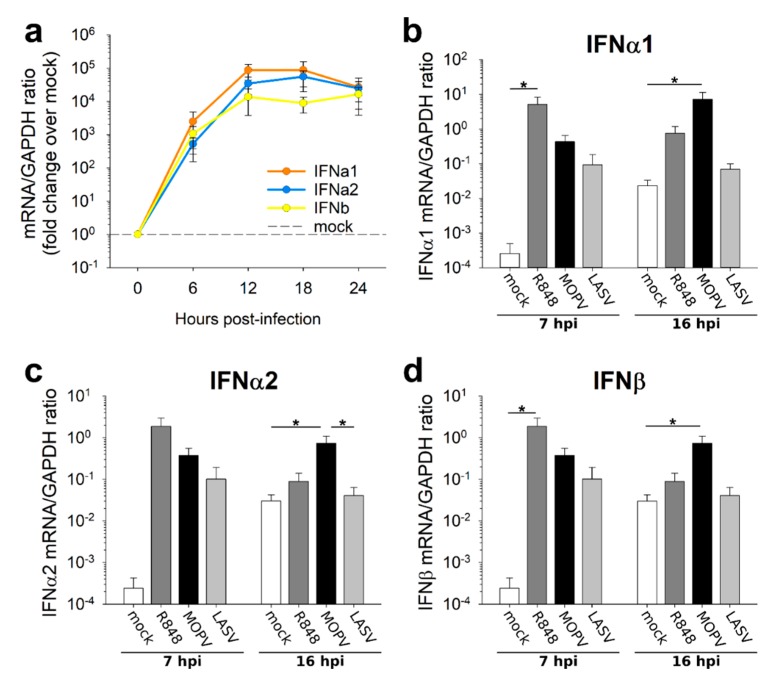
Lassa virus (LASV) causes a viral haemorrhagic fever in humans and is a major public health concern in West Africa. An efficient immune response to LASV appears to rely on type I interferon (IFN-I) production and T-cell activation. We evaluated the response of plasmacytoid dendritic cells (pDC) to LASV, as they are an important and early source of IFN-I. We compared the response of primary human pDCs to LASV and Mopeia virus (MOPV), which is very closely related to LASV, but non-pathogenic. We showed that pDCs are not productively infected by either MOPV or LASV, but produce IFN-I. However, the activation of pDCs was more robust in response to MOPV than LASV. In vivo, pDC activation may support the control of viral replication through IFN-I production, but also improve the induction of a global immune response. Therefore, pDC activation could play a role in the control of LASV infection.
拉萨病毒(LASV)可引起人类病毒性出血热,是西非地区主要的公共卫生关注点。针对 LASV 的有效免疫反应似乎依赖于 I 型干扰素(IFN-I)的产生和 T 细胞的激活。我们评估了树突状细胞(pDC)对 LASV 的反应,因为它们是 IFN-I 的重要且早期来源。我们比较了原代人 pDC 对 LASV 和与 LASV 密切相关但无致病性的 Mopeia 病毒(MOPV)的反应。结果表明,pDC 不能被 MOPV 或 LASV 有效感染,但能产生 IFN-I。然而,pDC 对 MOPV 的激活比 LASV 更为强烈。在体内,pDC 的激活可能通过 IFN-I 的产生来支持对病毒复制的控制,但也能改善对全身性免疫反应的诱导。因此,pDC 的激活可能在 LASV 感染的控制中发挥作用。