Department of Microbiology, School of Medicine, Kyung Hee University, Seoul 02447, Korea.
Molecular Dermatology Laboratory, Department of Genetic Engineering, Sungkyunkwan University, Seoul, Korea.
Molecules. 2019 Mar 21;24(6):1137. doi: 10.3390/molecules24061137.
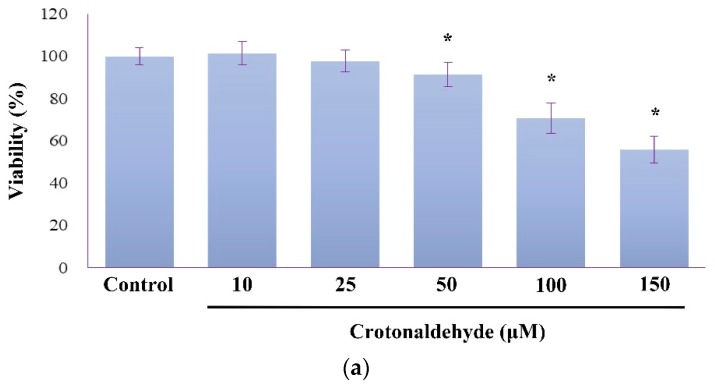
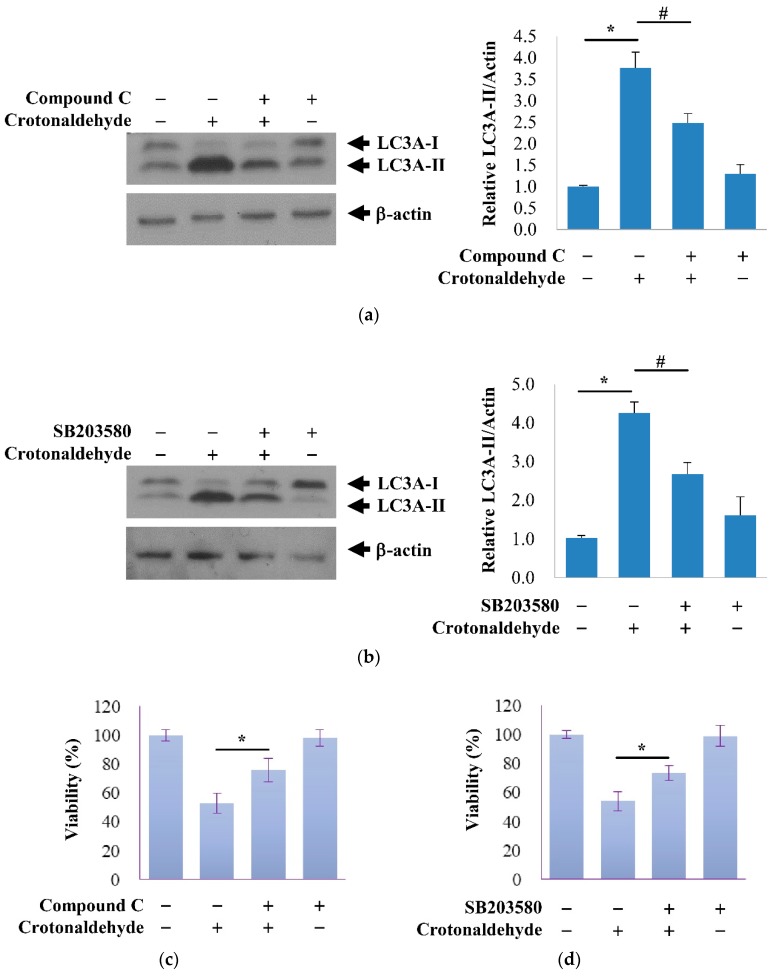
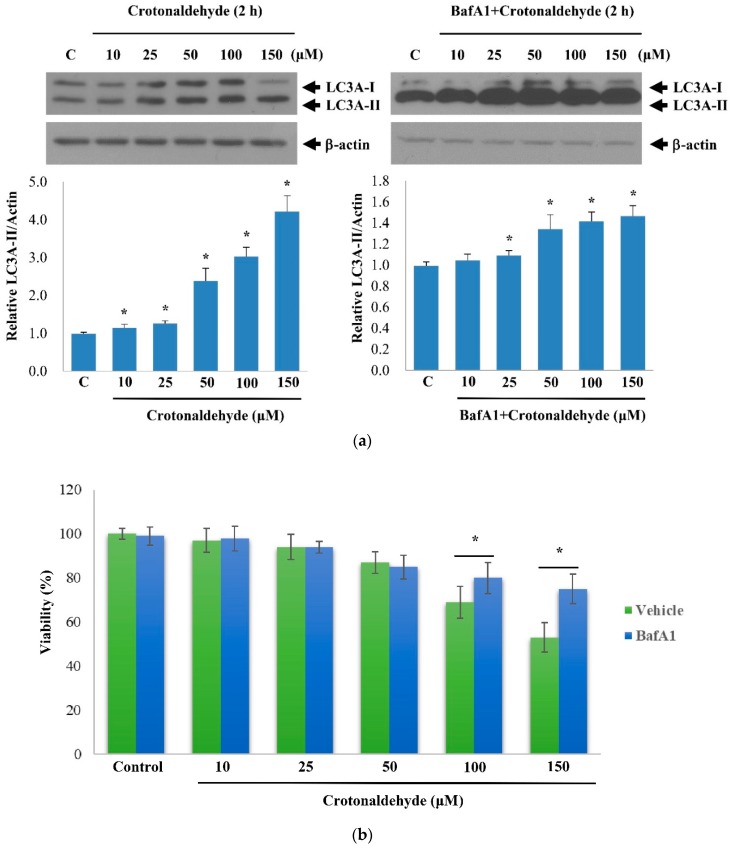
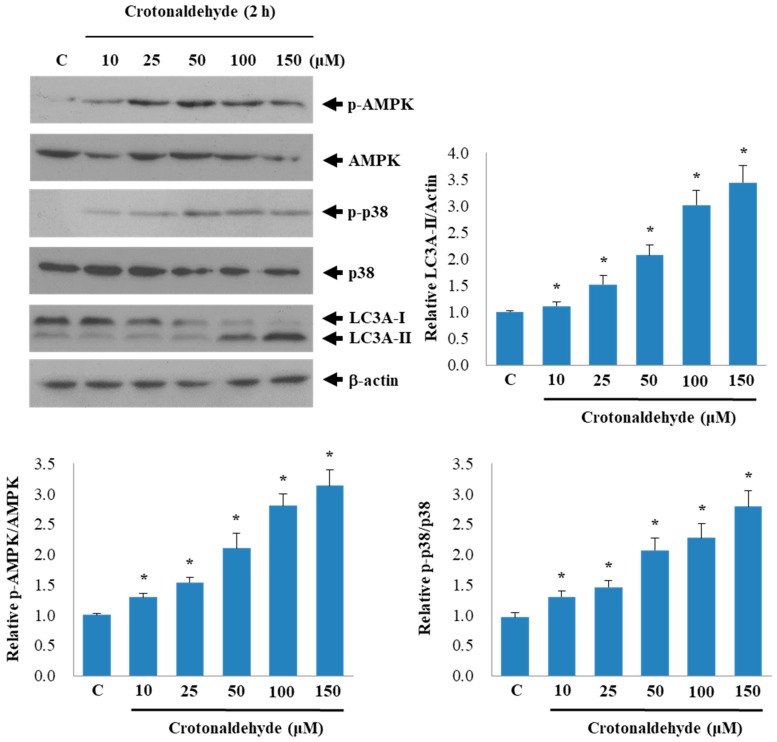
Crotonaldehyde is an extremely toxic α,β-unsaturated aldehyde found in cigarette smoke, and it causes inflammation and vascular dysfunction. Autophagy has been reported to play a key role in the pathogenesis of vascular diseases. However, the precise mechanism underlying the role of acute exposure crotonaldehyde in vascular disease development remains unclear. In the present study, we aimed to investigate the effect of crotonaldehyde-induced autophagy in endothelial cells. Acute exposure to crotonaldehyde decreased cell viability and induced autophagy followed by cell death. In addition, inhibiting the autophagic flux markedly promoted the viability of endothelial cells exposed to high concentrations of crotonaldehyde. Crotonaldehyde activated the AMP-activated protein kinase (AMPK) and p38 mitogen-activated protein kinase (MAPK) pathways, and pretreatment with inhibitors specific to these kinases showed autophagy inhibition and partial improvement in cell viability. These data show that acute exposure to high concentrations of crotonaldehyde induces autophagy-mediated cell death. These results might be helpful to elucidate the mechanisms underlying crotonaldehyde toxicity in the vascular system and contribute to environmental risk assessment.
巴豆醛是一种存在于香烟烟雾中的极毒的α,β-不饱和醛,可引起炎症和血管功能障碍。自噬被报道在血管疾病的发病机制中起关键作用。然而,急性接触巴豆醛在血管疾病发展中的作用的确切机制尚不清楚。在本研究中,我们旨在研究巴豆醛诱导的内皮细胞自噬的作用。急性暴露于巴豆醛可降低细胞活力并诱导自噬,随后导致细胞死亡。此外,抑制自噬流可显著促进高浓度巴豆醛暴露的内皮细胞的活力。巴豆醛激活了 AMP 激活的蛋白激酶(AMPK)和 p38 丝裂原激活的蛋白激酶(MAPK)途径,并用这些激酶的特异性抑制剂预处理显示出自噬抑制和细胞活力的部分改善。这些数据表明,急性暴露于高浓度的巴豆醛诱导自噬介导的细胞死亡。这些结果可能有助于阐明巴豆醛在血管系统中的毒性机制,并有助于环境风险评估。