Enteric Virus Laboratory, Department of Genetics, Microbiology and Statistics, University of Barcelona, Barcelona, Spain.
Institute of Nutrition and Food Safety (INSA·UB), University of Barcelona, Barcelona, Spain.
Food Environ Virol. 2019 Jun;11(2):184-192. doi: 10.1007/s12560-019-09378-0. Epub 2019 Mar 21.
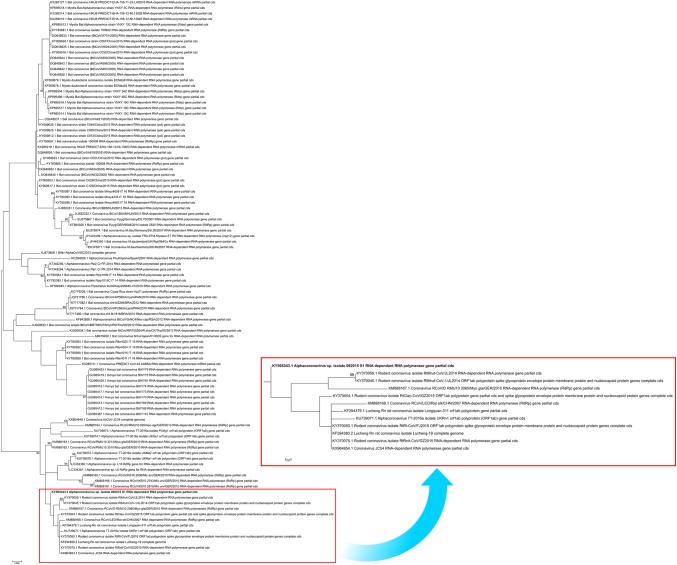
An extremely affordable virus concentration method based on adsorption-elution to glass wool and subsequent reconcentration through polyethylene glycol 6000 (PEG) precipitation was optimized to recover not only non-enveloped viruses but also enveloped viruses. Hepatitis A virus (HAV) and transmissible gastroenteritis virus (TGEV) were employed as surrogates for naked and enveloped viruses, respectively, to set up the methodology. Initial experimentation in small-volume samples showed that both types of particles readily adsorbed to the positively charged glass wool but were poorly detached from it through standard elution with 0.05 M glycine with 3% of beef extract buffer, pH 9.5, with elution efficiencies of 7.2% and 2.6%, for HAV and TGEV, respectively. To improve the recovery of enveloped viruses, several modifications in the elution were assayed: increasing the elution pH, extending glass wool and eluent contact time, adding a detergent, or performing the elution by recirculation or under agitation. Considering practicability and performance, recircularization of the eluent at pH 11.0 for 20 min was the elution procedure of choice, with efficiencies of 25.7% and 18.8% for HAV and TGEV in 50 L of water. Additionally, employing 20% PEG instead of 10% for virus reconcentration improved recoveries up to 47% and 51%, respectively. The optimized procedure was applied to detect naturally occurring HAV and coronaviruses in surface water of Wadi Hanifa, Riyadh. HAV was detected in 38% of the samples, while one sample was positive for an alphacoronavirus. This cheap virus detection system enables the comprehensive surveillance of viruses present in water samples.
一种基于吸附洗脱至玻璃棉,然后通过聚乙二醇 6000(PEG)沉淀进行再浓缩的极经济实惠的病毒浓缩方法,不仅可以回收非包膜病毒,还可以回收包膜病毒。甲型肝炎病毒(HAV)和传染性胃肠炎病毒(TGEV)分别用作裸病毒和包膜病毒的替代品,以建立该方法。在小体积样品中的初步实验表明,这两种类型的颗粒都很容易吸附到带正电荷的玻璃棉上,但通过用含 3%牛肉提取物的 0.05 M 甘氨酸缓冲液(pH 9.5)标准洗脱液从玻璃棉上洗脱时,洗脱效率分别为 7.2%和 2.6%,对于 HAV 和 TGEV 而言。为了提高包膜病毒的回收率,对洗脱液进行了几种改进:提高洗脱 pH 值、延长玻璃棉和洗脱液接触时间、添加洗涤剂或进行循环或搅拌洗脱。考虑到实用性和性能,选择在 pH 11.0 下循环洗脱液 20 分钟作为洗脱程序,对于 50 L 水中的 HAV 和 TGEV,效率分别为 25.7%和 18.8%。此外,使用 20%PEG 代替 10%PEG 进行病毒浓缩可将回收率提高至 47%和 51%。优化后的程序用于检测利雅得 Wadi Hanifa 地表水中原发性 HAV 和冠状病毒。在 38%的样品中检测到 HAV,而有一个样品对α冠状病毒呈阳性。这种廉价的病毒检测系统可以实现对水样中存在的病毒的全面监测。