Cancer Translational Research Center, St. Mary's Institute of Health Sciences, Kurume, Japan.
Department of Pharmaceutical Oncology, Graduate School of Pharmaceutical Sciences, Kyushu University, Fukuoka, Japan.
Cancer Sci. 2019 May;110(5):1536-1543. doi: 10.1111/cas.14006. Epub 2019 Apr 7.
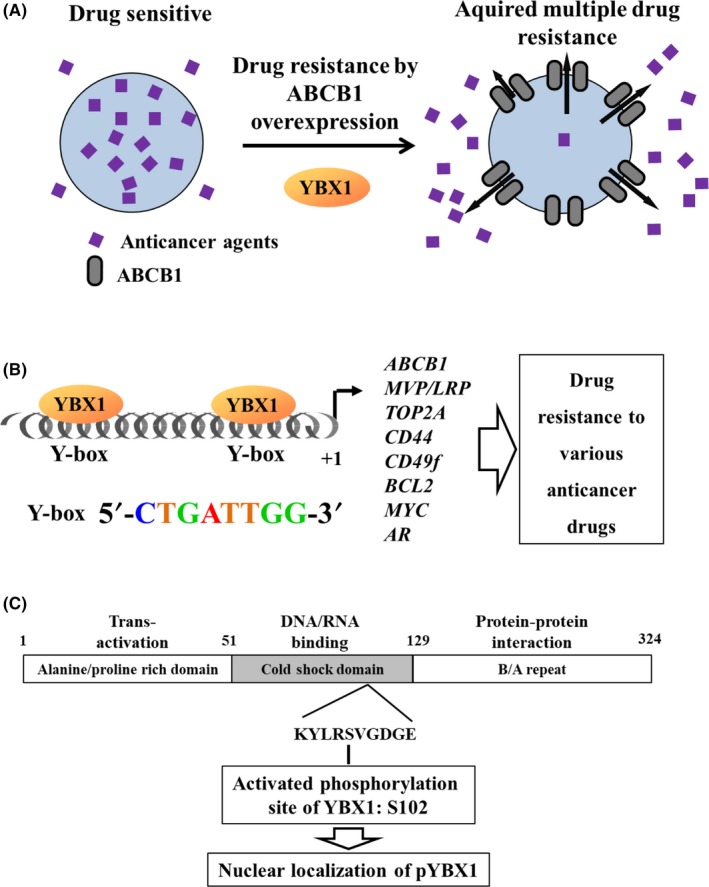
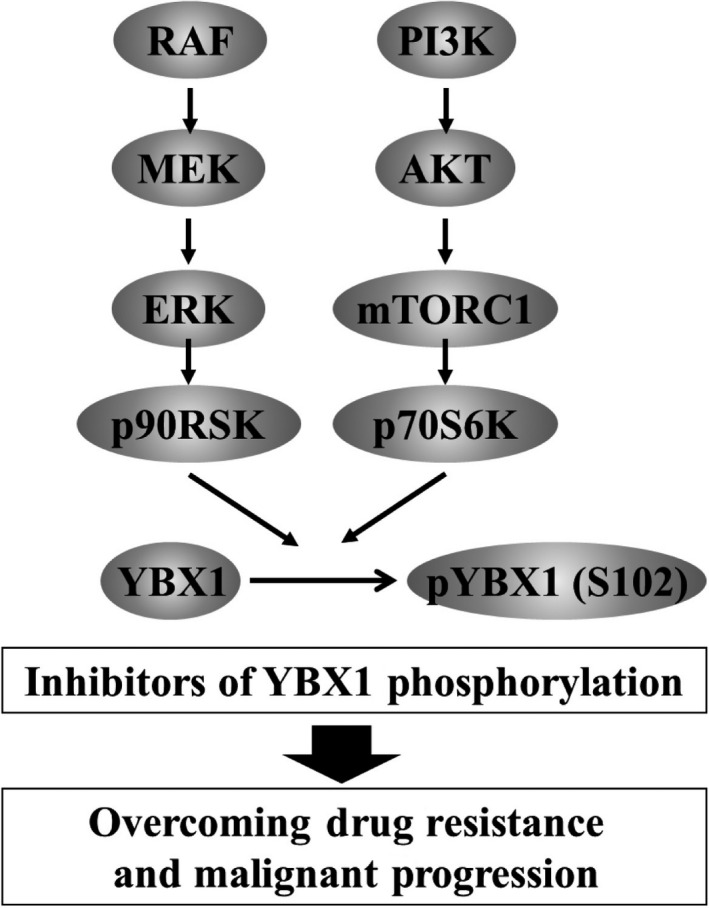
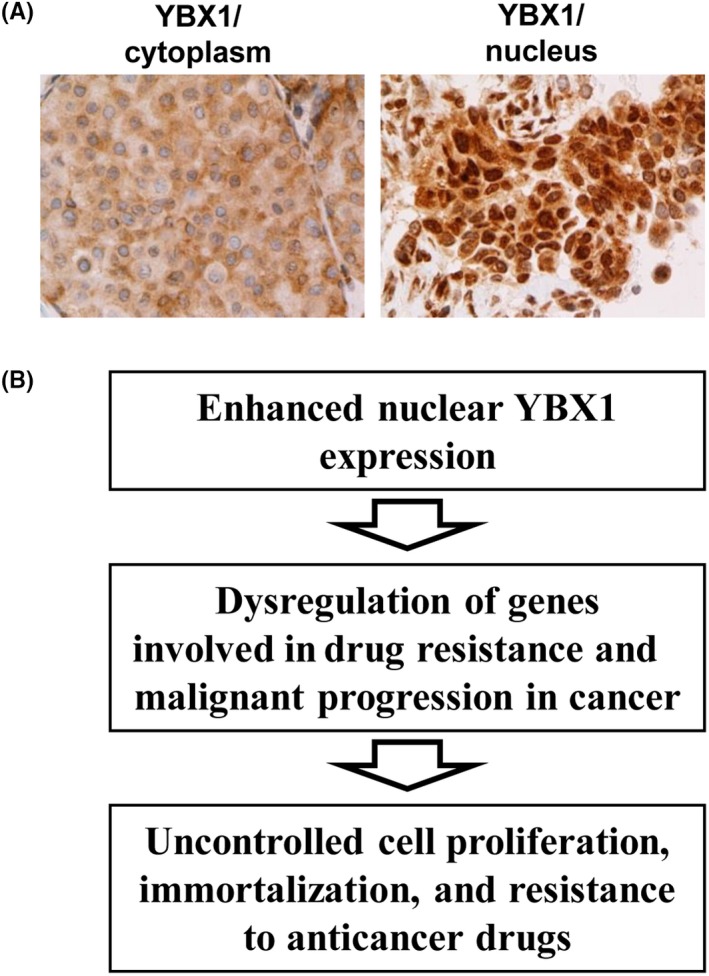
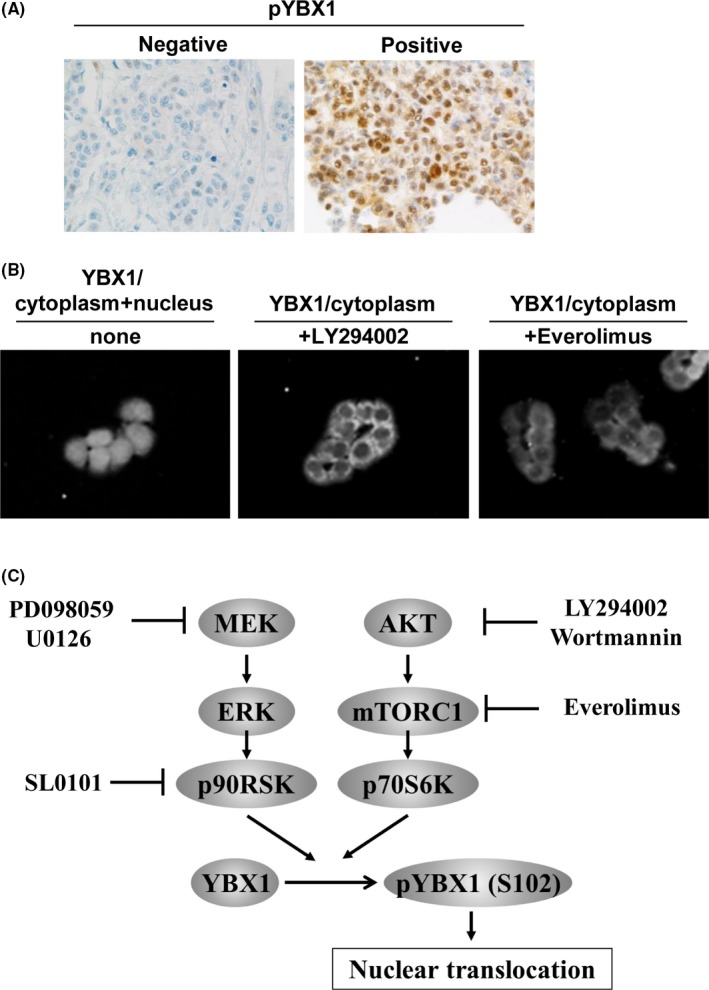
Y-box binding protein-1 (YBX1), a multifunctional oncoprotein containing an evolutionarily conserved cold shock domain, dysregulates a wide range of genes involved in cell proliferation and survival, drug resistance, and chromatin destabilization by cancer. Expression of a multidrug resistance-associated ATP binding cassette transporter gene, ABCB1, as well as growth factor receptor genes, EGFR and HER2/ErbB2, was initially discovered to be transcriptionally activated by YBX1 in cancer cells. Expression of other drug resistance-related genes, MVP/LRP, TOP2A, CD44, CD49f, BCL2, MYC, and androgen receptor (AR), is also transcriptionally activated by YBX1, consistently indicating that YBX1 is involved in tumor drug resistance. Furthermore, there is strong evidence to support that nuclear localization and/or overexpression of YBX1 can predict poor outcomes in patients with more than 20 different tumor types. YBX1 is phosphorylated by kinases, including AKT, p70S6K, and p90RSK, and translocated into the nucleus to promote the transcription of resistance- and malignancy-related genes. Phosphorylated YBX1, therefore, plays a crucial role as a potent transcription factor in cancer. Herein, a novel anticancer therapeutic strategy is presented by targeting activated YBX1 to overcome drug resistance and malignant progression.
Y 盒结合蛋白 1(YBX1)是一种多功能癌蛋白,含有进化上保守的冷休克结构域,通过癌症使涉及细胞增殖和存活、耐药性和染色质不稳定的广泛基因失调。最初发现多药耐药相关三磷酸腺苷结合盒转运蛋白基因 ABCB1 的表达以及生长因子受体基因 EGFR 和 HER2/ErbB2 的表达被 YBX1 在癌细胞中转录激活。其他耐药相关基因 MVP/LRP、TOP2A、CD44、CD49f、BCL2、MYC 和雄激素受体 (AR) 的表达也被 YBX1 转录激活,这一致表明 YBX1 参与肿瘤耐药性。此外,有强有力的证据表明,核定位和/或 YBX1 的过表达可以预测 20 多种不同肿瘤类型患者的不良预后。YBX1 被包括 AKT、p70S6K 和 p90RSK 在内的激酶磷酸化,并易位到核内以促进耐药性和恶性相关基因的转录。磷酸化的 YBX1 因此作为一种有效的转录因子在癌症中发挥着关键作用。在此,提出了一种针对激活的 YBX1 的新型抗癌治疗策略,以克服耐药性和恶性进展。