Hori Hiroyuki
Department of Materials Sciences and Biotechnology, Graduate School of Science and Engineering, Ehime University, Matsuyama, Japan.
Front Genet. 2019 Mar 8;10:204. doi: 10.3389/fgene.2019.00204. eCollection 2019.
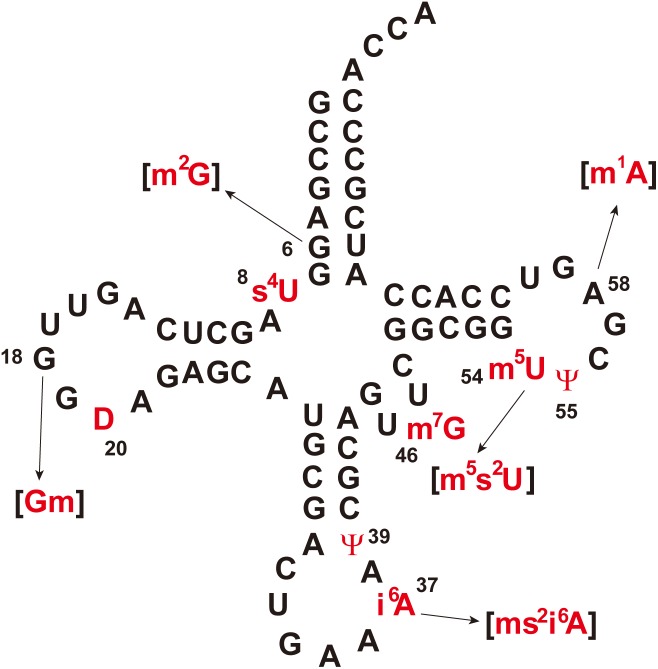
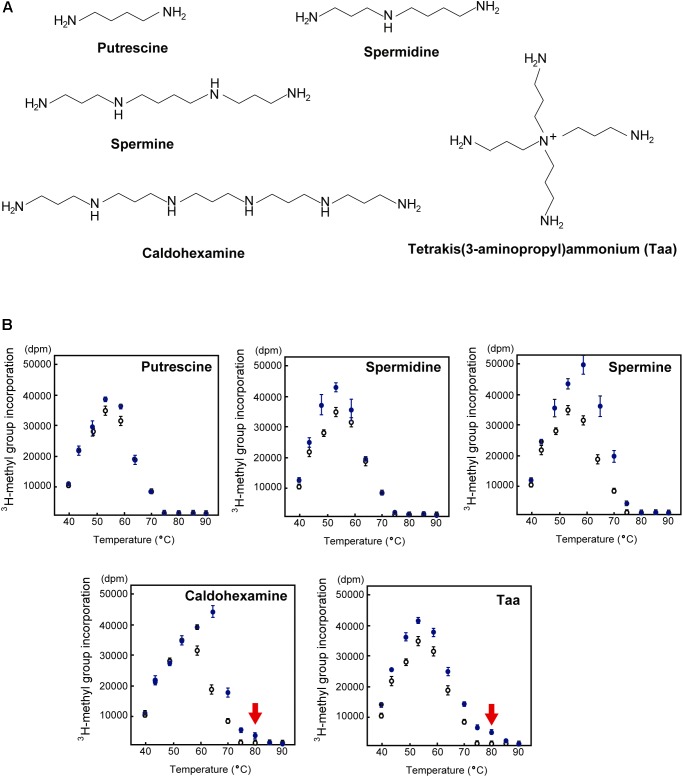
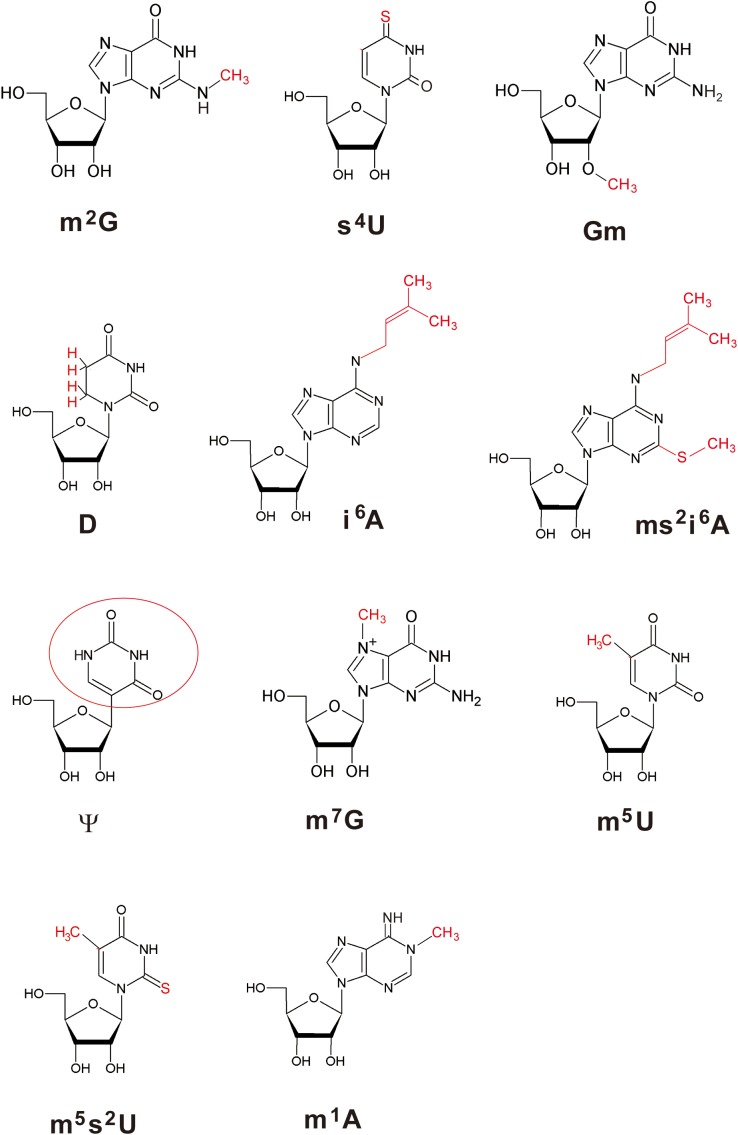
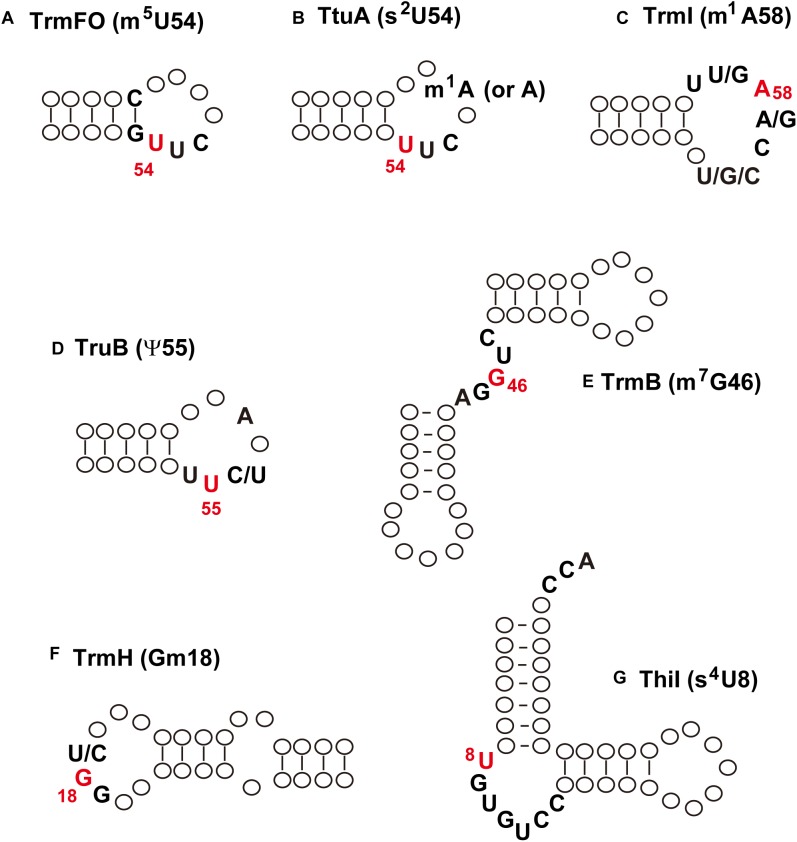
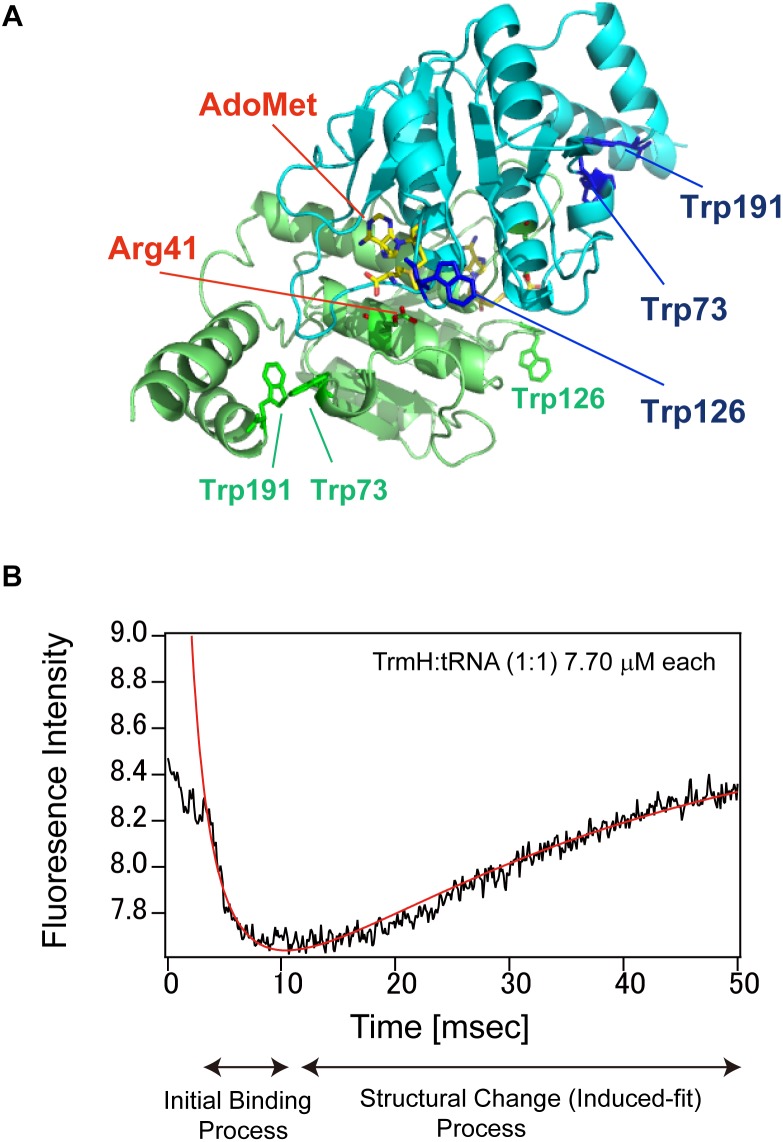
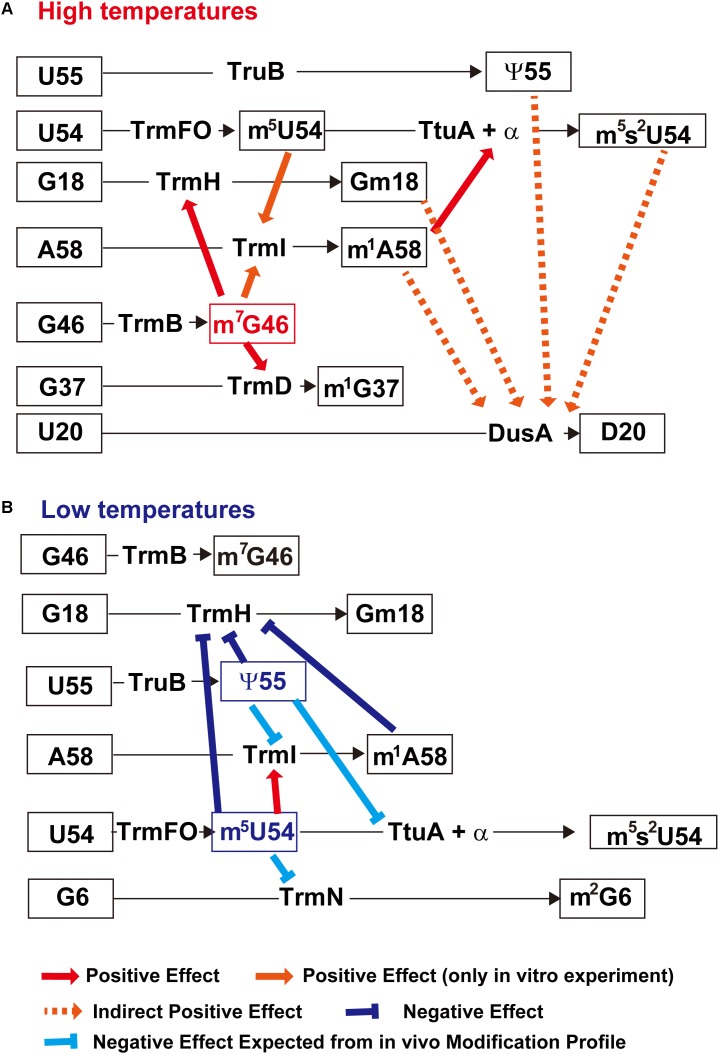
is an extreme-thermophilic bacterium that can grow at a wide range of temperatures (50-83°C). To enable to grow at high temperatures, several biomolecules including tRNA and tRNA modification enzymes show extreme heat-resistance. Therefore, the modified nucleosides in tRNA from have been studied mainly from the view point of tRNA stabilization at high temperatures. Such studies have shown that several modifications stabilize the structure of tRNA and are essential for survival of the organism at high temperatures. Together with tRNA modification enzymes, the modified nucleosides form a network that regulates the extent of different tRNA modifications at various temperatures. In this review, I describe this network, as well as the tRNA recognition mechanism of individual tRNA modification enzymes. Furthermore, I summarize the roles of other tRNA stabilization factors such as polyamines and metal ions.
是一种嗜热细菌,能在很宽的温度范围(50-83°C)内生长。为了使其能在高温下生长,包括tRNA和tRNA修饰酶在内的几种生物分子表现出极强的耐热性。因此,来自[该细菌名称未给出]的tRNA中的修饰核苷主要是从高温下tRNA稳定化的角度进行研究的。此类研究表明,几种修饰可稳定tRNA的结构,对该生物体在高温下的存活至关重要。修饰核苷与tRNA修饰酶一起形成一个网络,该网络在不同温度下调节不同tRNA修饰的程度。在这篇综述中,我描述了这个网络以及各个tRNA修饰酶的tRNA识别机制。此外,我总结了其他tRNA稳定化因子如多胺和金属离子的作用。