Edwards Katie L, Bansiddhi Pakkanut, Paris Steve, Galloway Marie, Brown Janine L
Center for Species Survival, Smithsonian Conservation Biology Institute, 1500 Remount Rd., Front Royal, VA, USA.
Center of Excellence in Elephant and Wildlife Research, Faculty of Veterinary Medicine, Chiang Mai University, 155 Irrigation Canal Road, Mae Hia, Muang, Chiang Mai, Thailand.
Conserv Physiol. 2019 Mar 20;7(1):coy077. doi: 10.1093/conphys/coy077. eCollection 2019.
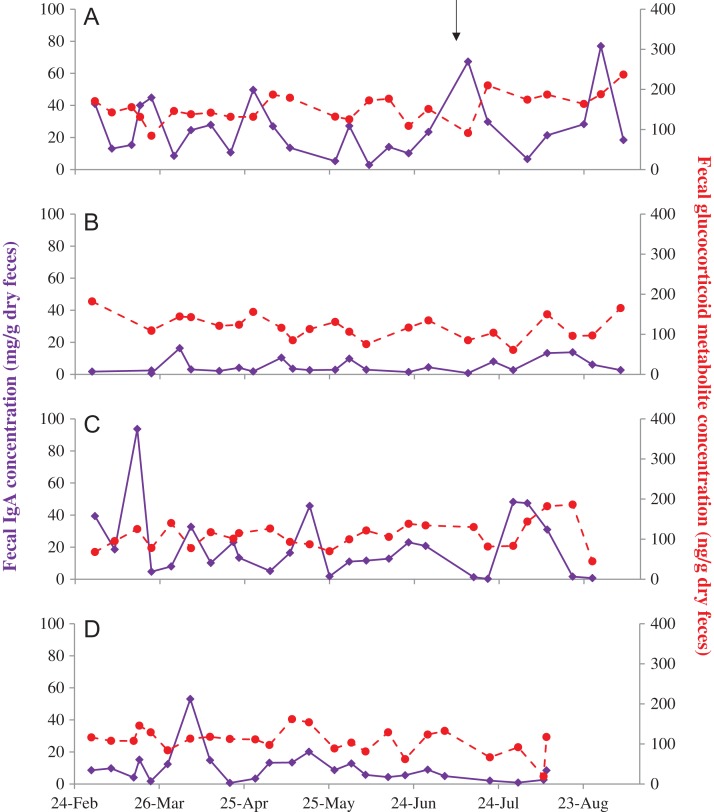
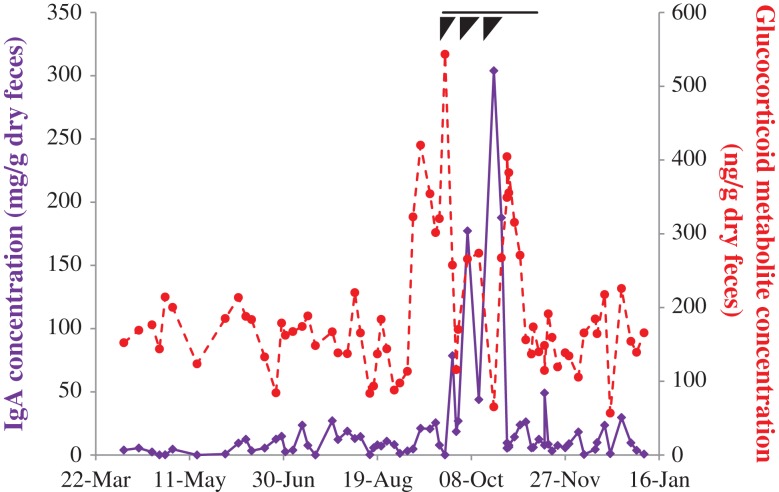
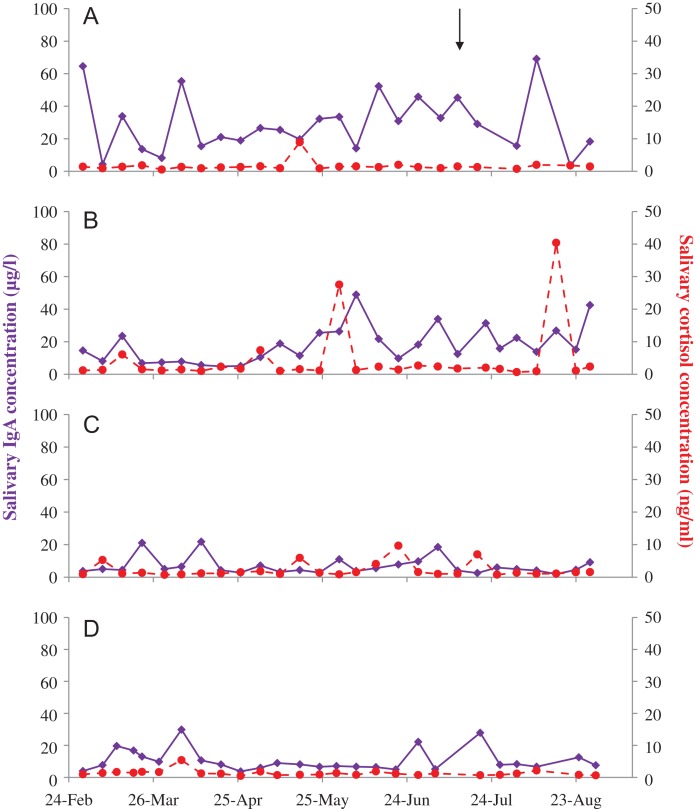
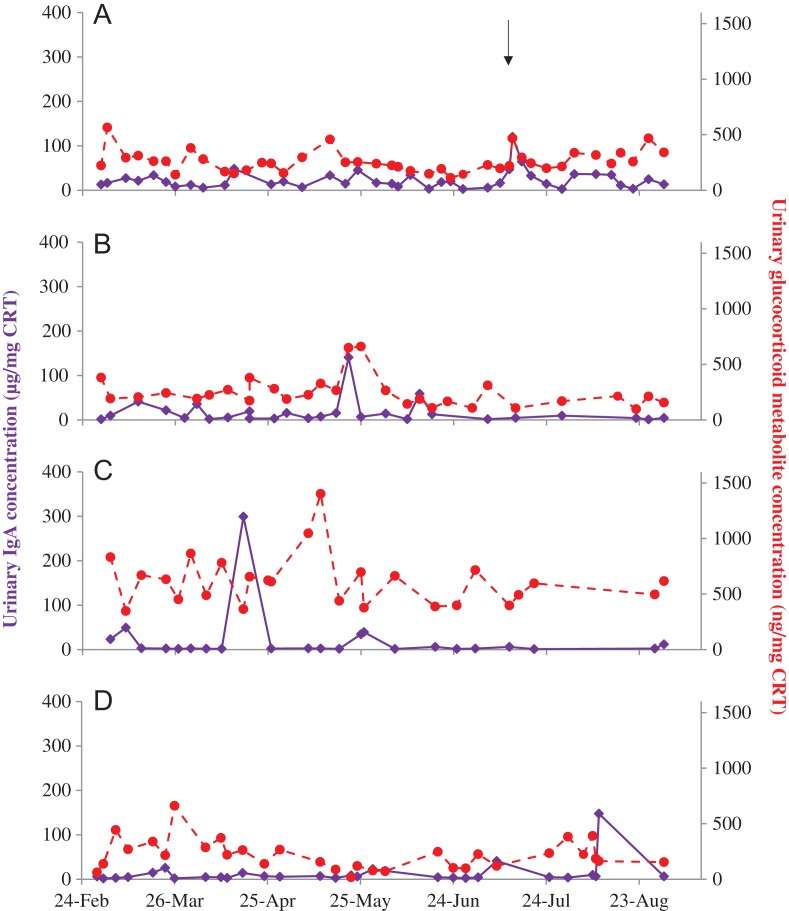
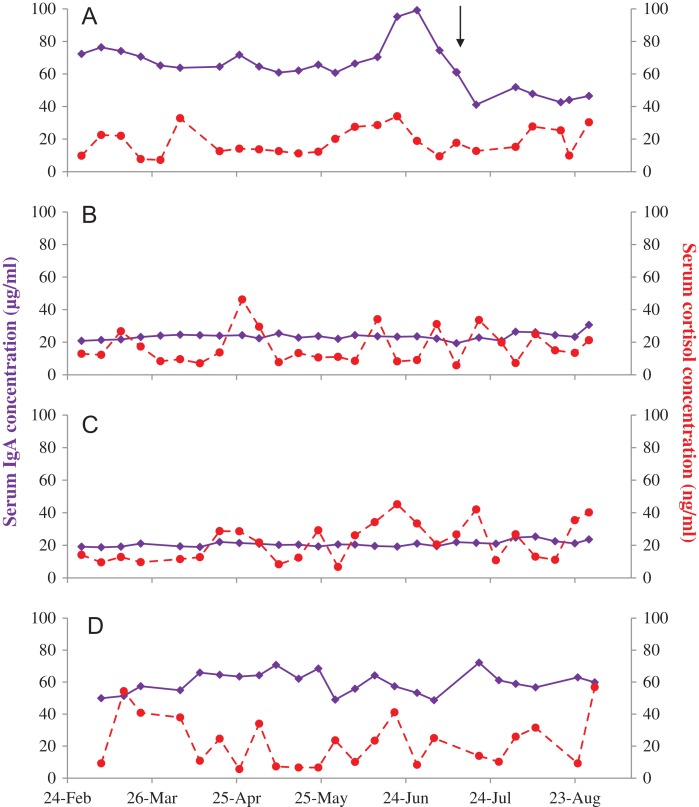
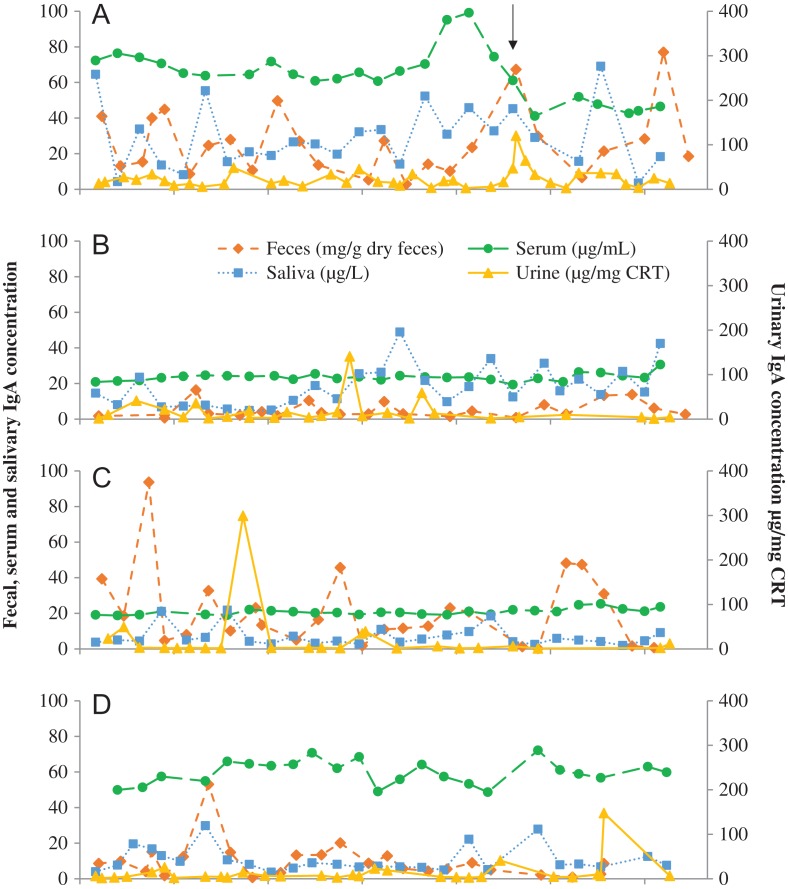
Additional measures of well-being would be beneficial to the management of a variety of species in human care, including elephants. Immunoglobulin A (IgA) is an immune protein associated with pathogen defense, which has been demonstrated to decrease during times of stress, and increase in response to positive stimuli. This paper describes the development and validation of an enzyme immunoassay (EIA) for the quantification of Asian elephant () IgA in feces, saliva, urine, and serum. Samples were collected weekly from four females for 6 months to assess IgA and glucocorticoid (GC) concentrations, establish relationships between these two biomarkers, and determine variability in IgA within and between individuals, and across sample types. IgA was quantified in all four sample types, although urinary concentrations were low and sometimes undetectable in individual samples. Concentrations were highly variable within and between individuals, with fecal, salivary and serum IgA, and fecal, salivary and urinary GCs all differing significantly across individuals. Contrary to previous findings, IgA and GC were generally not correlated. Serum IgA was less variable within individuals, with the exception of one female that experienced a brief illness during the study. However, marked inter-individual differences were still apparent. When data from all individuals were combined, fecal IgA was significantly predicted by salivary and urinary IgA; however, this relationship did not hold when individuals were analyzed separately. Analysis of a fifth female that exhibited a more severe systemic illness demonstrated clear increases in fecal IgA and GC, suggesting these may also be useful health biomarkers. Further investigation is needed to determine what sample type is most reflective of biological state in elephants, and how IgA concentrations are associated with health and positive and negative welfare states. Based on observed variability, a longitudinal approach likely will be necessary to use IgA as a measure of well-being.
其他衡量福祉的指标将有利于对包括大象在内的人类照料下的各种物种进行管理。免疫球蛋白A(IgA)是一种与病原体防御相关的免疫蛋白,已证明其在压力时期会减少,而对积极刺激会增加。本文描述了一种酶免疫分析(EIA)方法的开发和验证,该方法用于定量亚洲象粪便、唾液、尿液和血清中的IgA。每周从四只雌性大象收集样本,持续6个月,以评估IgA和糖皮质激素(GC)浓度,建立这两种生物标志物之间的关系,并确定个体内部、个体之间以及不同样本类型之间IgA的变异性。在所有四种样本类型中都对IgA进行了定量,尽管尿液中的浓度较低,个别样本中有时检测不到。个体内部和个体之间的浓度差异很大,粪便、唾液和血清中的IgA以及粪便、唾液和尿液中的GC在个体之间均有显著差异。与之前的研究结果相反,IgA和GC通常不相关。个体内部血清IgA的变异性较小,但有一只雌性大象在研究期间经历了短暂疾病除外。然而,明显的个体间差异仍然很明显。当将所有个体的数据合并时,唾液和尿液中的IgA可显著预测粪便中的IgA;然而,单独分析个体时这种关系并不成立。对第五只表现出更严重全身性疾病的雌性大象的分析表明,粪便中的IgA和GC明显增加,这表明它们也可能是有用的健康生物标志物。需要进一步研究以确定哪种样本类型最能反映大象的生物学状态,以及IgA浓度如何与健康以及正负福利状态相关联。基于观察到的变异性,可能需要采用纵向研究方法才能将IgA用作福祉的衡量指标。