Department of Macromolecular Structures, Centro Nacional de Biotecnología, Consejo Superior de Investigaciones Científicas, Madrid, Spain.
DNA:Protein Interactions Unit, School of Biochemistry, Faculty of Life Sciences, University of Bristol, Bristol, United Kingdom.
Elife. 2019 Mar 25;8:e43812. doi: 10.7554/eLife.43812.
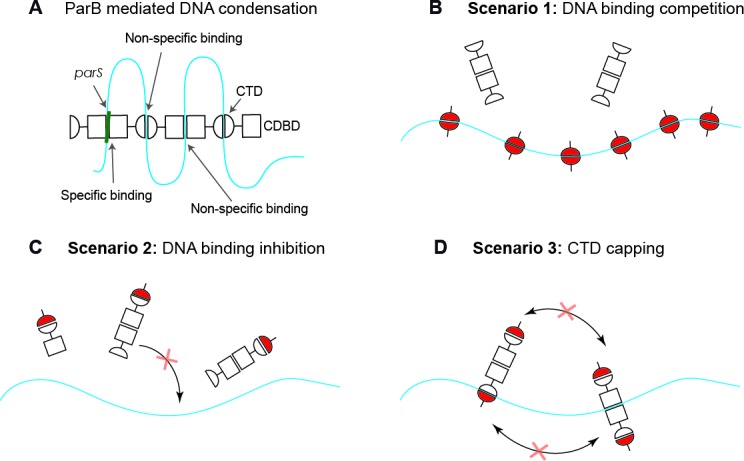
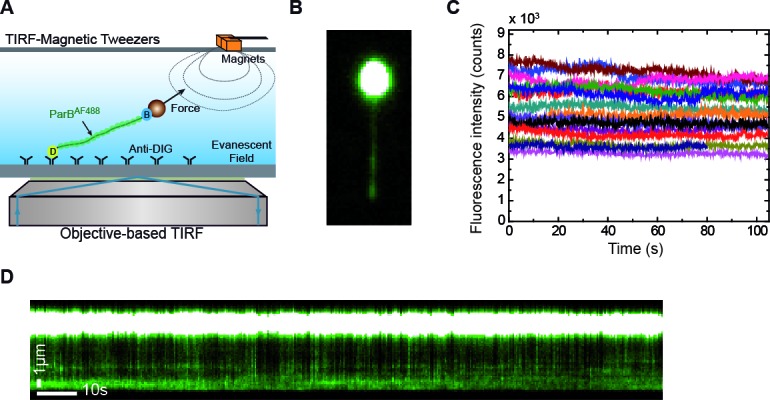
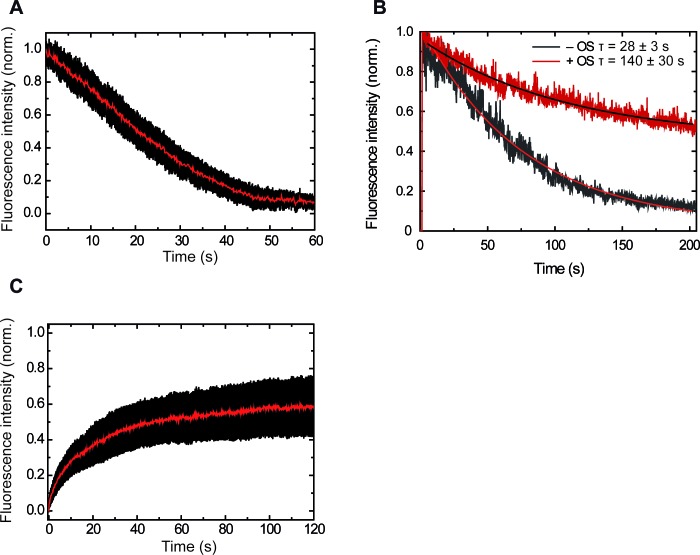
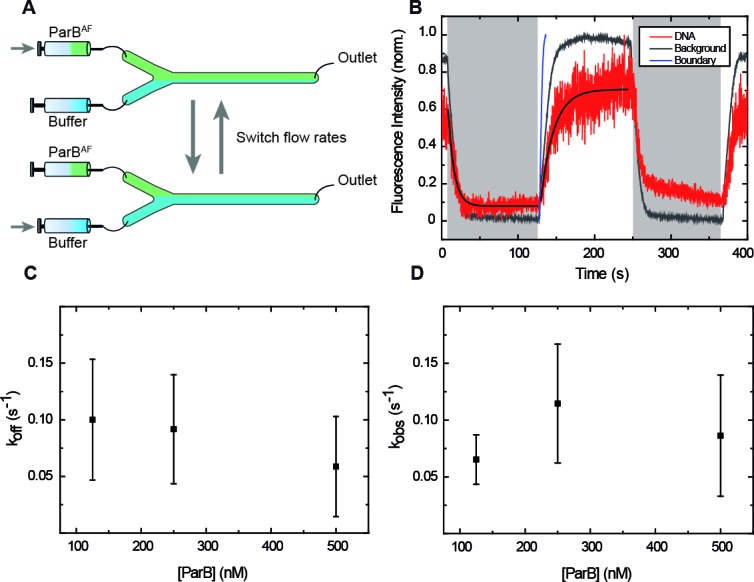
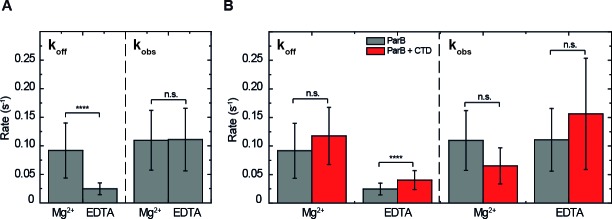
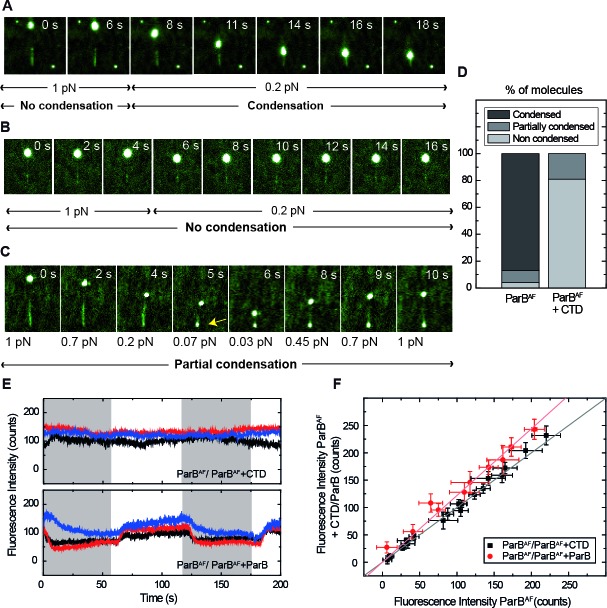
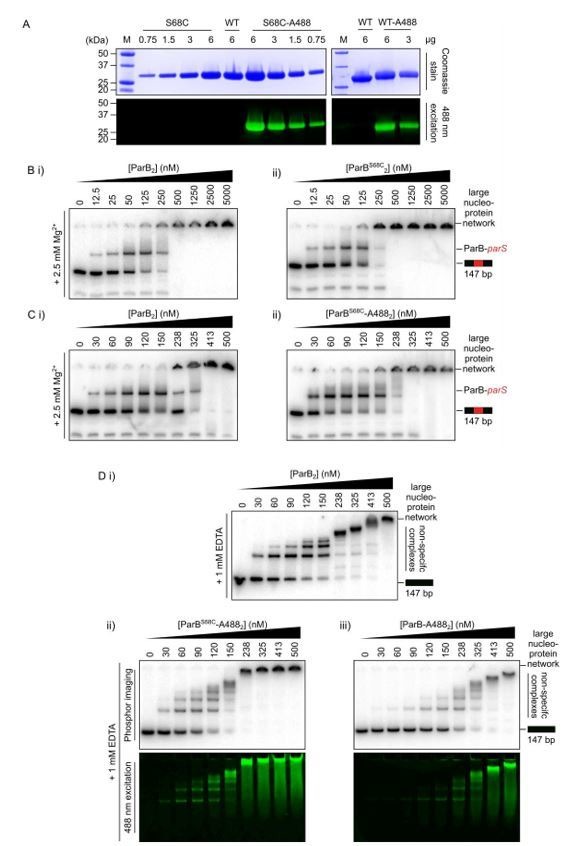
ParB forms multimeric networks involving non-specific DNA binding leading to DNA condensation. Previously, we found that an excess of the free C-terminal domain (CTD) of ParB impeded DNA condensation or promoted decondensation of pre-assembled networks (Fisher et al., 2017). However, interpretation of the molecular basis for this phenomenon was complicated by our inability to uncouple protein binding from DNA condensation. Here, we have combined lateral magnetic tweezers with TIRF microscopy to simultaneously control the restrictive force against condensation and to visualise ParB protein binding by fluorescence. At non-permissive forces for condensation, ParB binds non-specifically and highly dynamically to DNA. Our new approach concluded that the free CTD blocks the formation of ParB networks by heterodimerisation with full length DNA-bound ParB. This strongly supports a model in which the CTD acts as a key bridging interface between distal DNA binding loci within ParB networks.
ParB 形成涉及非特异性 DNA 结合的多聚体网络,导致 DNA 凝聚。此前,我们发现 ParB 的游离 C 末端结构域 (CTD) 过量会阻碍 DNA 凝聚或促进预先组装的网络解凝聚(Fisher 等人,2017 年)。然而,由于我们无法将蛋白质结合与 DNA 凝聚分离,因此对这种现象的分子基础的解释变得复杂。在这里,我们将横向磁镊与 TIRF 显微镜相结合,以同时控制对凝聚的限制力,并通过荧光可视化 ParB 蛋白结合。在非允许的凝聚力下,ParB 非特异性地和高度动态地结合到 DNA 上。我们的新方法得出的结论是,游离的 CTD 通过与全长 DNA 结合的 ParB 异二聚化来阻止 ParB 网络的形成。这强烈支持了一种模型,即 CTD 作为 ParB 网络中远端 DNA 结合位点之间的关键桥接界面。