Division of Nephrology, Tongji Hospital, Tongji Medical College, Huazhong University of Science and Technology, 1095 Jiefang Avenue, Wuhan, 430030, China.
Wuhan Institute of Biotechnology, Wuhan, 430000, China.
Cell Death Dis. 2022 May 31;13(5):511. doi: 10.1038/s41419-022-04910-w.
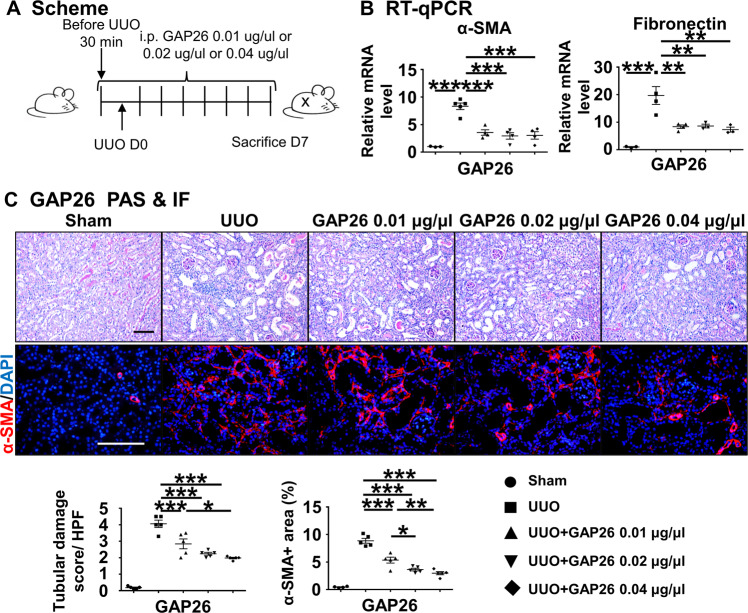
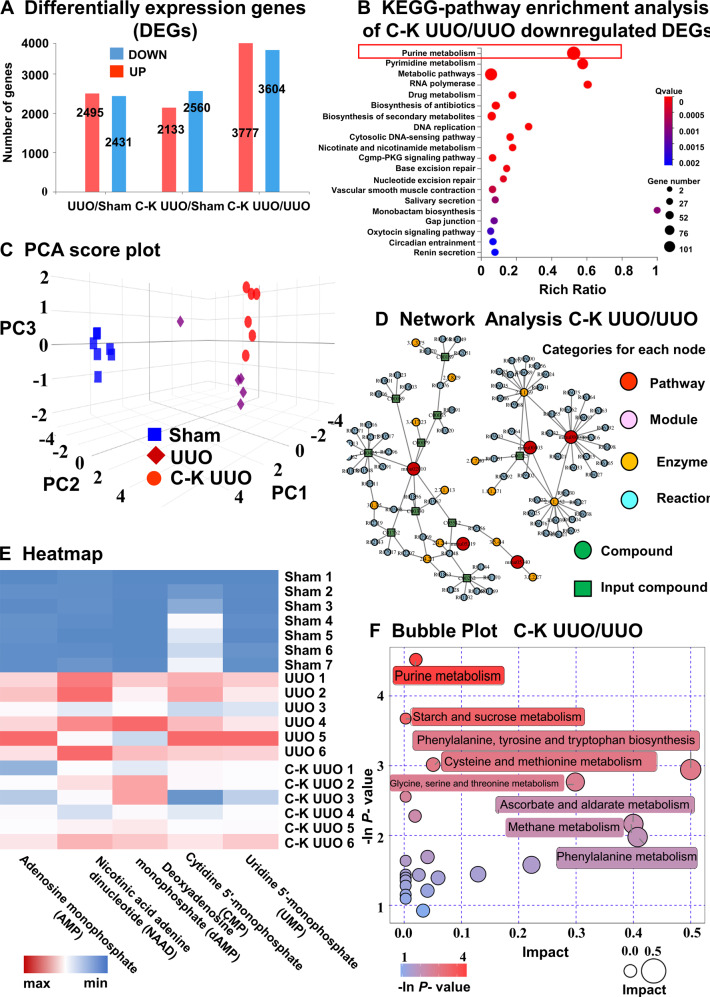
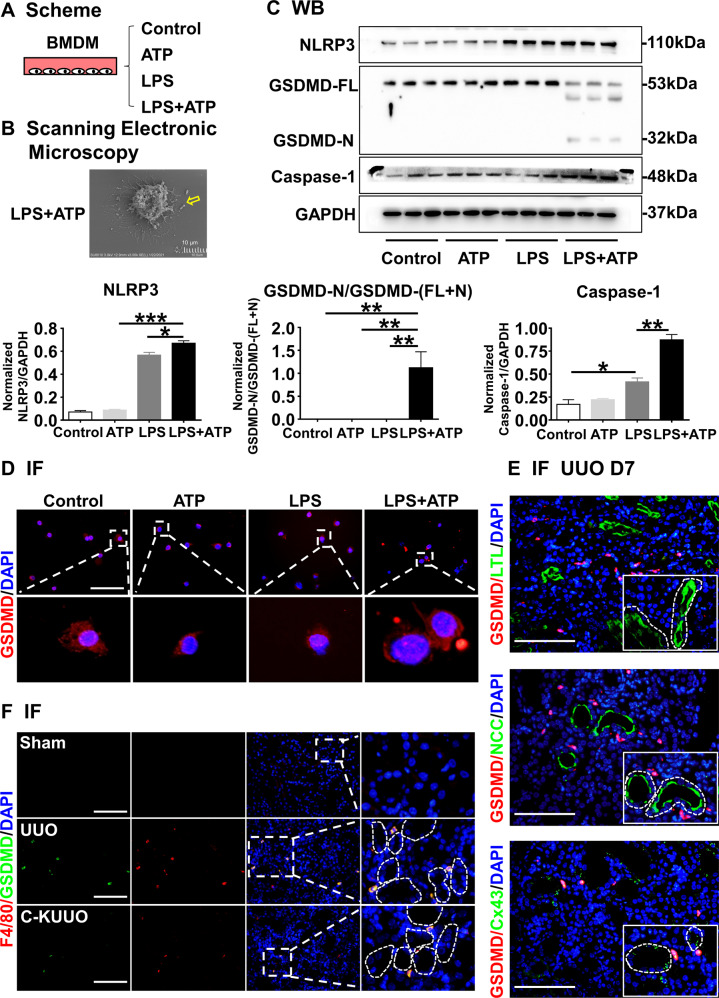
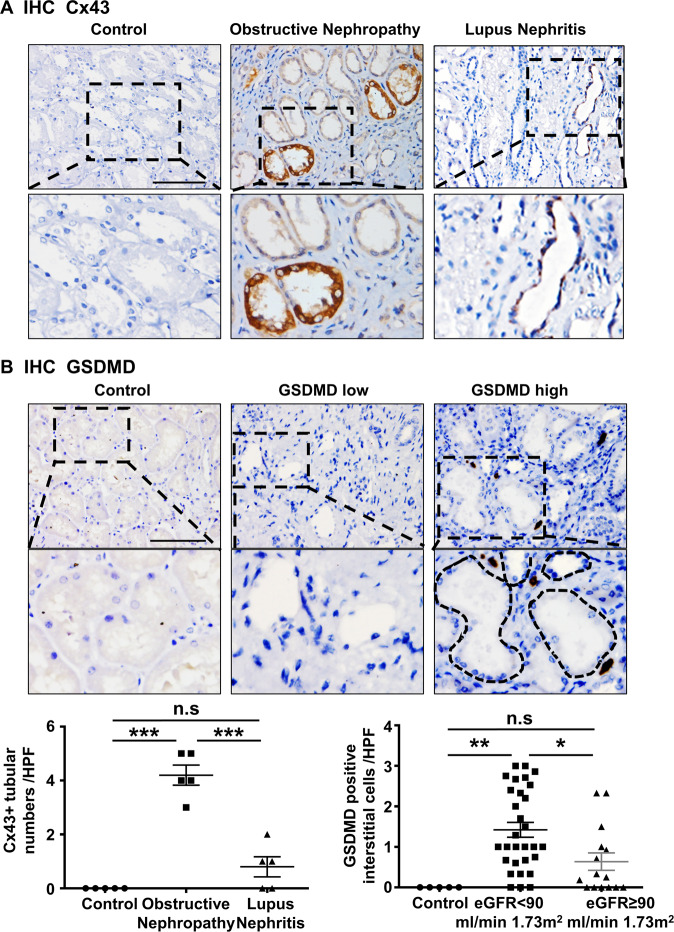
Whether metabolites derived from injured renal tubular epithelial cells (TECs) participate in renal fibrosis is poorly explored. After TEC injury, various metabolites are released and among the most potent is adenosine triphosphate (ATP), which is released via ATP-permeable channels. In these hemichannels, connexin 43 (Cx43) is the most common member. However, its role in renal interstitial fibrosis (RIF) has not been fully examined. We analyzed renal samples from patients with obstructive nephropathy and mice with unilateral ureteral obstruction (UUO). Cx43-KSP mice were generated to deplete Cx43 in TECs. Through transcriptomics, metabolomics, and single-cell sequencing multi-omics analysis, the relationship among tubular Cx43, ATP, and macrophages in renal fibrosis was explored. The expression of Cx43 in TECs was upregulated in both patients and mice with obstructive nephropathy. Knockdown of Cx43 in TECs or using Cx43-specific inhibitors reduced UUO-induced inflammation and fibrosis in mice. Single-cell RNA sequencing showed that ATP specific receptors, including P2rx4 and P2rx7, were distributed mainly on macrophages. We found that P2rx4- or P2rx7-positive macrophages underwent pyroptosis after UUO, and in vitro ATP directly induced pyroptosis by macrophages. The administration of P2 receptor or P2X7 receptor blockers to UUO mice inhibited macrophage pyroptosis and demonstrated a similar degree of renoprotection as Cx43 genetic depletion. Further, we found that GAP 26 (a Cx43 hemichannel inhibitor) and A-839977 (an inhibitor of the pyroptosis receptor) alleviated UUO-induced fibrosis, while BzATP (the agonist of pyroptosis receptor) exacerbated fibrosis. Single-cell sequencing demonstrated that the pyroptotic macrophages upregulated the release of CXCL10, which activated intrarenal fibroblasts. Cx43 mediates the release of ATP from TECs during renal injury, inducing peritubular macrophage pyroptosis, which subsequently leads to the release of CXCL10 and activation of intrarenal fibroblasts and acceleration of renal fibrosis.
尚不清楚是否源自受损肾小管上皮细胞 (TEC) 的代谢物参与了肾纤维化。TEC 损伤后,会释放出各种代谢物,其中最有效的是三磷酸腺苷 (ATP),它通过 ATP 通透性通道释放。在这些半通道中,连接蛋白 43 (Cx43) 是最常见的成员。然而,其在肾间质纤维化 (RIF) 中的作用尚未被充分研究。我们分析了梗阻性肾病患者和单侧输尿管梗阻 (UUO) 小鼠的肾组织样本。Cx43-KSP 小鼠被用来耗尽 TEC 中的 Cx43。通过转录组学、代谢组学和单细胞测序多组学分析,探索了肾小管 Cx43、ATP 和巨噬细胞在肾纤维化中的关系。在梗阻性肾病患者和小鼠中,TEC 中的 Cx43 表达上调。在 TEC 中敲低 Cx43 或使用 Cx43 特异性抑制剂可减少 UUO 诱导的小鼠炎症和纤维化。单细胞 RNA 测序显示,ATP 特异性受体,包括 P2rx4 和 P2rx7,主要分布在巨噬细胞上。我们发现 UUO 后 P2rx4 或 P2rx7 阳性巨噬细胞发生细胞焦亡,体外 ATP 直接诱导巨噬细胞发生细胞焦亡。UUO 小鼠给予 P2 受体或 P2X7 受体阻滞剂可抑制巨噬细胞细胞焦亡,与 Cx43 基因缺失的肾保护作用相当。此外,我们发现 GAP 26(Cx43 半通道抑制剂)和 A-839977(细胞焦亡受体抑制剂)缓解 UUO 诱导的纤维化,而 BzATP(细胞焦亡受体激动剂)则加剧纤维化。单细胞测序表明,细胞焦亡的巨噬细胞上调了 CXCL10 的释放,激活了肾内成纤维细胞。Cx43 在肾脏损伤期间介导 TEC 释放 ATP,诱导肾小管周围巨噬细胞细胞焦亡,随后导致 CXCL10 的释放和肾内成纤维细胞的激活,加速肾脏纤维化。