Hu Qi, Li Runmiao, Zhang Xinjiang, Gao Qin, Wang Mei, Shi Hongliang, Xiao Zhisong, Chu Paul K, Huang Anping
School of Physics, Beihang University, Beijing, 100191, China.
Department of Physics and Department of Materials Science and Engineering, City University of Hong Kong, Tat Chee Avenue, Kowloon, Hong Kong, China.
Sci Rep. 2019 Mar 25;9(1):5081. doi: 10.1038/s41598-019-41508-3.
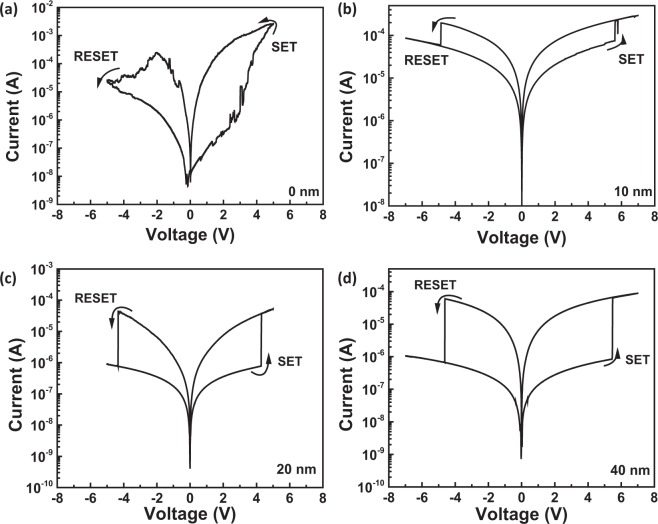
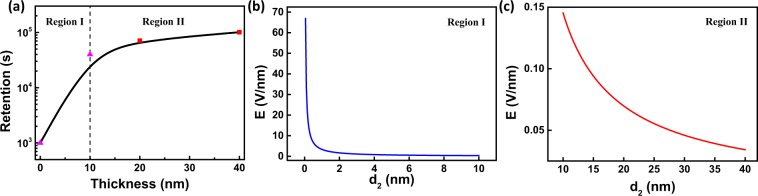
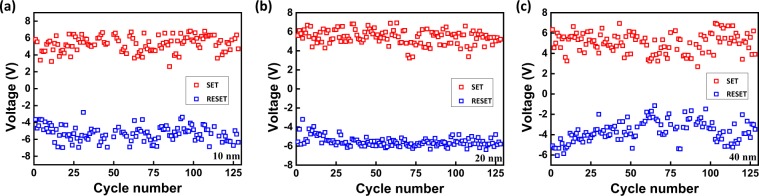
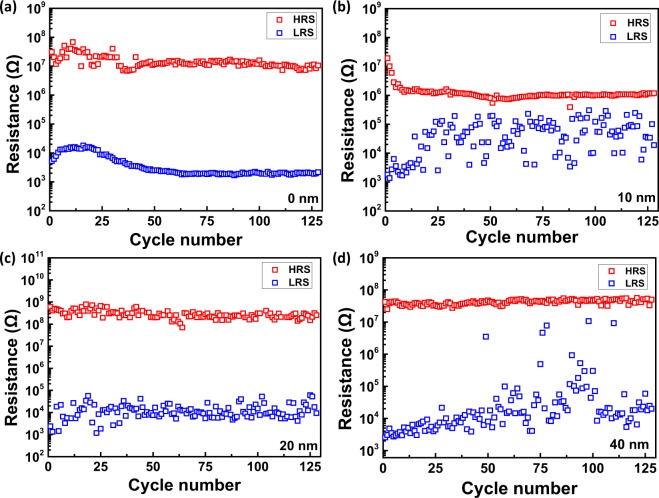
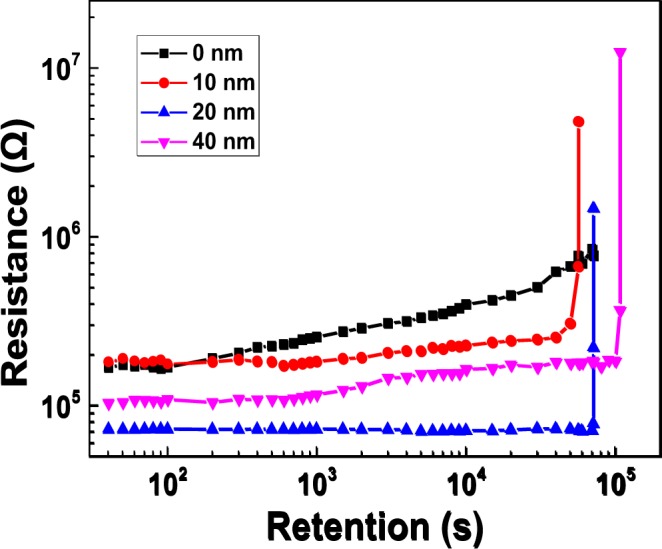
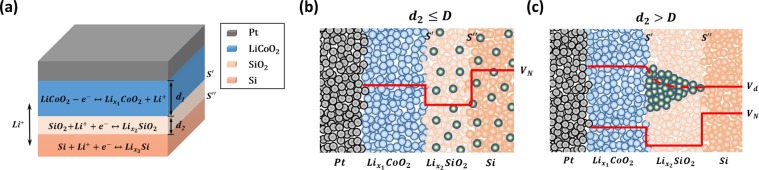
Pt/LiCoO/SiO/Si stacks with different SiO thicknesses are fabricated and the influence of SiO on memristive behavior is investigated. It is demonstrated that SiO can serve as Li ion trapping layer benefiting device retention, and the thickness of SiO must be controlled to avoid large SET voltage and state instability. Simulation model based on Nernst potential and diffusion potential is postulated for electromotive force in LiCoO based memristors. The simulation results show that SiO trapping layer decreases the total electromotive field of device and thereby prevents Li ions from migrating back to LiCoO. This model shows a good agreement with experimental data and reveals the Li ion trapping mechanism of SiO in LiCoO based memristors.
制备了具有不同SiO厚度的Pt/LiCoO/SiO/Si叠层,并研究了SiO对忆阻行为的影响。结果表明,SiO可作为锂离子俘获层,有利于提高器件的保持性能,且必须控制SiO的厚度以避免出现较大的设置电压和状态不稳定。基于能斯特电位和扩散电位假设了基于LiCoO的忆阻器中电动势的模拟模型。模拟结果表明,SiO俘获层降低了器件的总电动势,从而阻止锂离子迁移回LiCoO。该模型与实验数据吻合良好,揭示了基于LiCoO的忆阻器中SiO的锂离子俘获机制。